Sanjha Morcha

Siachen survivor extremely critical, put on ventilator; PM Modi hails his ‘indomitable spirit’

The condition of Lance Naik Hanamanthappa, who was miraculously found alive after remaining buried in snow for six days after the avalanche in Siachen, remains critical, according to the medical bulletin.
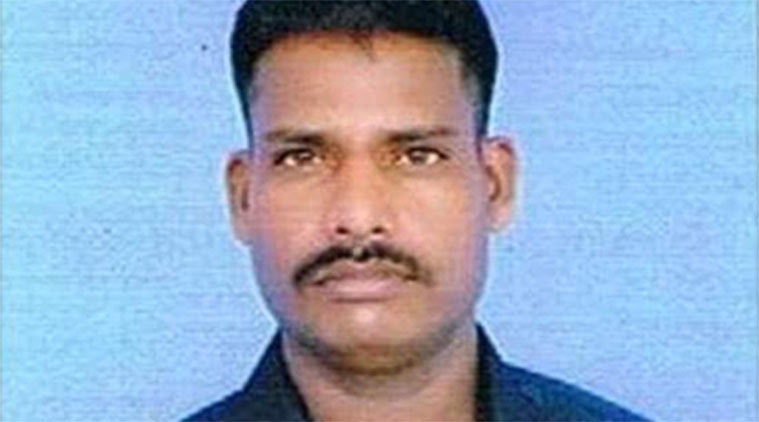
siachen, siachen survivor, siachen miracle, siachen news, thappa, siachen soldier, avalanche, Lance Naik Hanamanthappa, avalanche survivor, thappa, latest newsLance Naik Hanamanthappa, who was earlier declared dead by the authorities, was found to be conscious but drowsy and disoriented yesterday after he was located during rescue operation.

Lance Naik Hanamanthappa Koppad, who was miraculously found alive after remaining buried under snow for six days, is comatose and his condition is extremely critical, Army Hospital Research and Referral said after he was flown in here from Siachen Glacier today.

Fortunately, there was no cold exposure-related frost bite or bony injuries to him, a medical bulletin issued by the hospital said.

“He has been placed on a ventilator to protect his airway and lungs in view of his comatose state. He remains extremely critical and is expected to have a stormy course in the next 24 to 48 hrs due to the complications caused by re-warming and establishment of blood flow to the cold parts of the body,” it said.
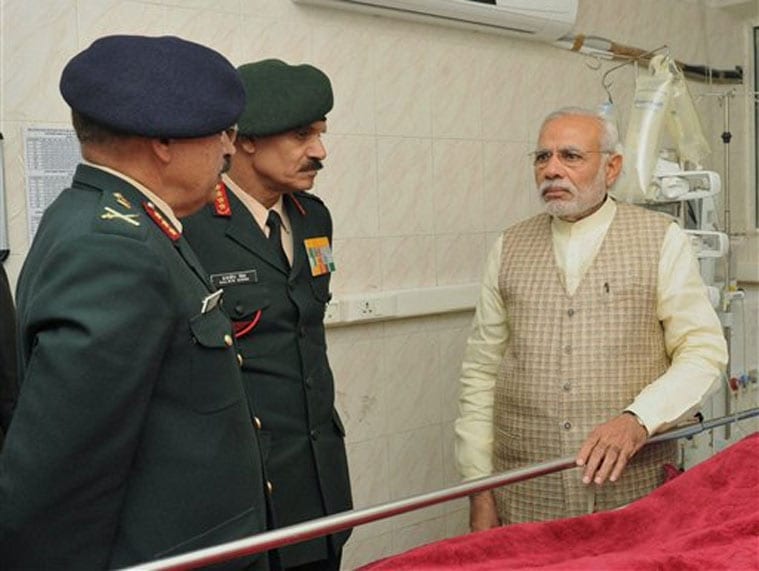
siachen, siachen survivor, siachen miracle, siachen news, thappa, siachen soldier, avalanche, Lance Naik Hanamanthappa, avalanche survivor, thappa, latest newsPrime Minister Narendra Modi with Army chief Gen Dalbir Singh and head of the medical team in the ward at a ward of Army’s Research & Referral Hospital where Lance Naik Hanumanthappa who is critical, is being treated in New Delhi on Tuesday.

The soldier, who was earlier declared dead by the authorities, was found to be conscious but drowsy and disoriented yesterday after he was located during rescue operation.

Watch: Here’s how Sashastra Seema Bal jawans brave extreme weather conditions 

“He is currently comatose and continues to be in shock with low blood pressure. He has pneumonia and his investigations have revealed liver and kidney dysfunction,” the bulletin read.

He was “severely dehydrated, hypothermic, hypoxic, hypoglycemic and in shock. He was immediately resuscitated by the doctors at the site, who had been there for the past five days in the hope of a survivor,” it said. He was treated with warm intravenous fluids, humidified warm oxygen and passive external re-warming.

Koppad was flown out from the site today by helicopter along with a medical specialist to the Siachen Base Camp, from where he was brought to the Thois air base.

He was then transferred to Delhi by a fixed-wing aircraft of IAF along with a critical care specialist of the force and a medical specialist from the base camp.

Koppad is being treated by a team of intensivists, neurologist, nephrologist, endocrinologist and surgeons. He has been administered fluids, drugs to bring up his blood pressure, besides antibiotics.

Prime Minister Narendra Modi, along with Army Chief Gen Dalbir Singh Suhag, had visited the hospital earlier today.

Modi said Koppad is an “outstanding soldier” whose “endurance and indomitable spirit” cannot be described in words. “We are all hoping & praying for the best,” Modi added.

On his part, Suhag commended the brave heart for his indomitable mental robustness and his refusal to give in to harsh elements of nature.

He also conveyed best wishes on behalf of all ranks of the army for his early and complete recovery.

– See more at: http://indianexpress.com/article/india/india-news-india/siachen-avalanche-survivor-lance-naik-hanamanthappa-critical/#sthash.2Jh4ENnw.dpuf


FOOD ADULTERATION PART-I PULSES Don’t be taken in by shiny pulses

Don’t be taken in by shiny pulses

Manav Mander

Tribune News Service

Ludhiana, February 8

Pulses are cooked in every Indian household but one hardly knows that these days, pulses are not loaded with proteins but with poison. With little check on adulteration, traders continue to put the lives of consumers at risk.From coloured stones to hazardous “khesari dal”, adulterated pulses are being openly sold in the market. The most dangerous adulteration in pulses is mixing khesari in arhar. Pure arhar costs around Rs 160-180 per kg while khesari is very cheap. Both look similar.“The cheap and low quality khesari was banned by the government in 1961. It was used to feed cattle but was banned by the government due to its side effects. Adulteration is more common in other states and traders in Punjab do not resort to such adulteration,” claims Tarsem Sharma, a wholesale pulses trader from the Kesarganj market.Commenting upon the side effects of khesari, Dr Gurmeet Singh said: “Khesari contains diamino-pro-pionic acid which could lead to paralysis of the lower body and numbness in limbs and spine”.Sources said traders start mixing khesari with normal variety of pulses after the prices of arhar soared to more than Rs 200 per kg in some markets, due to poor harvest.Khesari costs just around Rs 40-50 per kg, said sources.Don’t get attracted to the shining pulses as these may be polishes or artificially coloured.“Artificial polishing and colouring leads to cancer, so I opt for organic pulses. They might not look attractive and cost high but when it comes to health I do not compromise and always go for unpolished and chemical-free pulses,” said Neeru Grewal, a residen

Adulterants and their side-effects

  • Sand, marble chips, stones are some of the adulterants found in pulses which affect the digestive tract.
  • Asbestos in particulate or powder form (for polishing), which causes cancer.
  • Metanil yellow (non-permitted food colour) is added to old stocks of pulses to enhance colour. It is carcinogenic and causes stomach disorders. It also causes testicular degeneration in men if consumed for a long time.
  • Soluble coal tar dye is used to enhance quality and make pulses look clean. It is highly injurious to health.
  • Khesari pulse is often mixed with other pulses. Regular consumption of this pulse causes paralysis of the limbs.

What is adulteration

  • The technical definition of food adulteration according to the Food and Safety Standards Authority of India (FSSAI) is: “The addition or subtraction of any substance to or from food, so the natural composition and quality of food substance is affected.”

Be cautious

  • Buy commodities from familiar shops and cooperative stores.
  • Buy reliable brands of food with ISI mark.
  • As far as possible, buy food item in sealed packets.

Check it yourself

  • Dissolve half a spoon full of “besan” or turmeric powder in 20 ml of lukewarm water. Add a few drops of hydrochloric acid or any commonly available acid at home. If water turns pink, violet or purple, it shows that metanil yellow, a non-permitted colour, is present.

Pak helped jihadi forces rise: US daily

New York, February 7

Pakistan’s powerful intelligence service has long acted as the “manager” of international jihadi forces and it may have been involved in the rise of the Islamic State, a leading US daily today said, in a stinging commentary on Pakistan’s “intervention” in a number of foreign conflicts.Underlining that experts have found “a lot of evidence” that Pakistan facilitated the Taliban offensive, an op-ed in the New York Times said: “This behaviour is not just an issue for Afghanistan. Pakistan is intervening in a number of foreign conflicts.”“Its intelligence service has long acted as the manager of international mujahedeen forces, many of them Sunni extremists, and there is even speculation that it may have been involved in the rise of the Islamic State,” it said.It said that though Pakistan denies harbouring the Taliban and al Qaeda, and points out that it, too, is a victim of terrorism, “many analysts have detailed how the military has nurtured Islamist militant groups as an instrument to suppress nationalist movements, in particular among the Pashtun minority, at home and abroad.”“Pakistan regards Afghanistan as its backyard. Determined not to let its archrival, India, gain influence there, and to ensure that Afghanistan remains in the Sunni Islamist camp, Pakistan has used the Taliban selectively, promoting those who further its agenda and cracking down on those who don’t. The same goes for al Qaeda and other foreign fighters,” wrote Carlotta Gall, the North Africa correspondent for NYT.It said there are reports that Pakistan had a role in the rise of the Islamic State. “….It might come as a surprise that the region’s triumvirate of violent jihad is living openly in Pakistan,” Gall said as she listed out top terrorist leaders living openly in Pakistan.“First, there’s Sirajuddin Haqqani, the leader of the Haqqani network, and second in command of the Taliban. He moves freely around Pakistan, and has even visited the Pakistani intelligence headquarters of the Afghan campaign in Rawalpindi,” she said. Then there is the new leader of the Taliban, Mullah Akhtar Muhammad Mansour, who has openly assembled meetings of his military and leadership council near the Pakistani town of Quetta, the author said. — PTI

What NYT wrote

  • An op-ed in New York Times says though Pakistan denies harbouring Taliban and al-Qaeda, ‘many analysts have detailed how its military nurtured militants
  • “…Pak has used Taliban selectively, promoting those who further its agenda and cracking down on those who don’t”
  • It says the country may have been involved in the rise of the Islamic State as well

Service chiefs meet Parrikar to discuss pay panel issues

NEW DELHI: The three service chiefs on Tuesday met defence minister Manohar Parrikar to discuss the concerns of the armed forces arising from the recommendations made by the 7th pay panel. Sources said issues related to the OROP scheme were also discussed.


ndian, Chinese Army Kick Off Anti-Terrorism Exercise

Indian, Chinese Army Kick Off Anti-Terrorism Exercise

Troops of both sides will undergo intensive joint training, which will include displays, demonstrations, and a comprehensive joint exercise.

BEIJING:  Indian and Chinese armies today kicked off their fifth annual anti-terrorism exercise in China’s Kunming city as both the sides seek to share their successful experiences in counter-terrorism operations during the 10-day drill.

India for the first time fielded troops from Naga Regiment to take part in the exercises. A contingent of 175 troops from 2nd Battalion of Naga Regiment from Eastern Command reached Kunming by IAF IL-76 aircraft yesterday to take part in the exercise.

Both sides are fielding the same number of troops for the joint exercises, which will culminate on October 22, a press release from the Indian Embassy said today.

Troops from 14 Corps of China’s Chengdu Military Region which focuses on borders with India are taking in the exercise.

Troops of both sides will undergo intensive joint training, which will include displays, demonstrations, and a comprehensive joint exercise.

The purpose of the exercise is to develop joint operating capability, share useful experience in counter-terrorism operations and to promote friendly exchanges between the armies of India and China, the press release said.

Observer groups of both armies witnessed an impressive opening ceremony at Dabanqiao Training Base of 14 Group Army at Kunming today.

Indian Ambassador to China Ashok K Kantha and Head of Observers Delegation Lieutenant General Surinder Singh attended the meeting and addressed the participating troops.

From the Chinese side, Lieutenant General Zhou Xiaozhou addressed the participating troops.

This is the fifth round of exercises being held by both sides.

The first drill was held in southwest China’s Yunnan Province in 2007, followed by drills in Belgaum in Karnataka in 2008. The third round was held in southwest China’s Sichuan in 2013, followed by fourth in Pune in 2014.


Two sides of the same coin

Two sides of the same coin
President Pranab Mukherjee should have returned the government’s recommendation.

BR AMBEDKAR’S 125th birth anniversary is being celebrated with too much pomp. November 26, 1949,  the day the Constitution was adopted and which is celebrated as ‘Law Day’, was declared as ‘Constitution Day’ in November 2015. Eloquent speeches were made, reiterating the government’s commitment to the Constitution and constitutionalism. In 66 years of our republic, the BJP has been critical of successive Congress governments for their onslaught on federalism, particularly through the imposition of President’s rule. Invocation of Article 356 in Arunachal Pradesh has exposed the hypocrisy of the BJP. Since the apex court was already seized with the matter, this has become the first case of its kind where precipitative action has been taken in spite of oral assurance of Harish Salve, the Governor’s counsel. This is an effort to interfere with the judicial process. Similarly, the Governor’s decision to prepone the Assembly session without consultation with the Nabam Tuki government, with the  instruction to first take up the resolution of the Speaker’s removal,  smacks of political mala fides. The court in VB Chodhary decision of 1979 held that so long an elected government is in office, the Governor has to act on its advice. After the imposition of President’s rule, the court will have limited powers of judicial review, ie except in cases of mala  fide exercise of power. One wants to salute the Bench headed by Justice JS Khehar for asking the government to produce within 15 minutes the Governor’s report. The learned judges are aware that even serious incidents of public disorder may not be sufficient to conclude that there is breakdown of constitutional machinery.The BJP’s criticism of Congress governments as to the gross misuse of Article 356 is justified. But is it not emulating the Congress? Have earlier opposition and BJP governments been any different from Congress on President’s rule? Article 356 empowers the President to dismiss a democratically elected state government. It is an extreme and unusual power. No liberal democratic constitution of the world, except Pakistan, has such a provision. Both India and Pakistan adopted this provision from the infamous Government of India Act, 1935. Our freedom fighters protested and so the British did not implement  it. Even the Constituent Assembly witnessed a heated debate on the discretion being given to the President in dismissing a state government as presidential satisfaction, as to the breakdown of the constitutional machinery in the state, can be based either on the ‘report of the Governor or otherwise’. The term ‘otherwise’ may include anything and is against the ideals of constitutionalism.Moreover, if any advice is given by the Centre to the state and it does not pay heed, it shall be deemed under Article 365 that there is ‘breakdown of the constitutional machinery in the state and the government of the state cannot be carried on in accordance with the Constitution’. HV Kamath argued that “let us wind up the Constituent Assembly and go home. This is not the place for us: let us go to the market-place and let us go into streets”. Shibban Lal Sakena said: “We are reducing the autonomy of the states to a farce. These articles will reduce the state government to great subservience of the central government.” He said since the Government of India Act had omitted the identical provision, it was far more progressive than the proposed constitution. Naziruddin Ahmad also took it as a serious encroachment of provincial autonomy when he said: “I think we are drifting, perhaps, unconsciously, towards a dictatorship. Democracy will flourish only in a democratic atmosphere and under democratic condition.” Pointing out serious procedural flaws in the adoption of major amendments in the original clause, he said the Constitution Drafting Committee may now more aptly be called ‘Drifting Committee’.Ambedkar got Article 356 approved with the assurance that the article shall remain ‘a dead letter’. He was proved wrong as this provision has been used/abused about 150 times.In Arunachal, the Congress is making much hue and cry. There is some merit in its argument as the Congress, with 31 legislators, enjoys majority and defection was possibly engineered by the BJP. But in dismissing the Communist government in Kerala, the Congress Governor in his report had the audacity to say that “while the securing of a majority of seats in the legislature, however meagre, is a very relevant factor at the time of forming a government, it cannot be pleaded as conferring a continuing right to claim the confidence of the majority”. Indira Gandhi made extensive use of Article 356 on political considerations. She did not hesitate in using it even against the Congress governments. But the first large-scale misuse of Article 356 was made by the Janta government, of which the BJP was a constituent and its stalwarts like Advani were ministers in it. Home Minister Charan Singh wrote a letter to nine Congress chief ministers advising them to seek fresh mandate as people in the 1977 Lok Sabha polls had voted against the Congress in these states. Unfortunately, the Supreme Court approved this logic, ie President’s rule can be imposed not only in situations of political instability or loss of majority, but also if the ruling party in the state gets defeated in parliamentary elections. In 1980, when Indira returned to power, she replied in the same currency with nine similar dissolutions in one go as this time people had voted for the Congress.The dismissal of three BJP governments after the demolition of the Babri mosque in 1992 for supporting karsevaks was another instance of the misuse of powers by the Congress. This too was also upheld by the court in the famous SR Bommai case on the ground that these governments were a threat to secularism. If the court was convinced about the BJP’s lack of faith in constitutional ideals, it should have considered the cancellation of BJP’s registration as a political party rather than upholding the dismissal of BJP governments.The Vajpayee government’s recommendation for President’s rule in 1988 in Bihar was another instance of the misuse of powers under Article 356. Sunder Singh Bhandari, as Governor, sent a report that there was a breakdown of the constitutional machinery due to the deterioration of law and order. He also quoted CAG report and talked of financial anarchy. Strangely, he also noted that 1,200 contempt of court cases were pending in the Patna High Court. The charge of ‘constitutional vandalism’ was not substantiated. In fact, law and order had improved according to ‘Crime in India’ report of the Union Home Ministry. President KR Narayanan asked for the reconsideration of the recommendation and the presidential minute rebutted all charges. He also referred to the Sarkaria Commission to conclude that the Rabri government enjoyed majority. Similarly, Governor JP Rajkhowa’s report has cited absurd reasons like ‘I was abused’, ‘there was no semblance of a state government’. These are general and subjective statements. President Pranab Mukherjee should have also returned the recommendation and reminded the government that due to lack of majority in the Rajya Sabha, getting parliamentary approval would be difficult.In Bommai case, the court held that powers under Article 356 must be used sparingly. Let the Modi government rise above petty politics by revoking President’s rule in Arunachal, as the apex court is likely to quash the presidential proclamation and order a floor test. — The writer is the Vice-Chancellor of NALSAR University of Law, Hyderabad

Comrade Modi

Beware when politicians talk of poverty

Boasting, as usual, at a business summit about what a good job his government is doing, Prime Minister Modi has said that his goal is “reform to transform”. He has tried to “reform” land acquisition, making it easier for businessmen to take over land of poor farmers but it did not work out as planned. One should be cautious when politicians talk of poverty or the poor, more so when the BJP or Modi do so since they have earned a reputation for being pro-business and pro-rich.  Modi emphasises that “poor governance hurts the poor more than it hurts others”. A big government is a burden — and contrary to Modi’s own (now abandoned) slogan of “minimum government, maximum governance”. Not reining in party men instigating communal trouble or mob violence cannot be part of good governance. An atmosphere of fear and insecurity drives away foreign investment. It was amusing to see Comrade Modi bat for the poor. He chided experts who described benefits to business people as “incentives” and those to the poor as “subsidies”.  He may not like to be reminded that his government has cut budgetary allocations for the social sector, including education and health, as well as the rural employment guarantee programme. A universal access to banking is meaningless in the absence of universal social security. Recurring farmer suicides and protests indicate agrarian discontent. If 60% Indians dependent on agriculture struggle for survival, the talk of financial inclusion makes little sense. The Modi government spends to spur growth for the benefit of industry. Instead of effecting austerity and cutting administrative expenditure, it taxes people to fund its pro-business policies. Oil prices have tumbled from $115 a barrel to $30 but cooking gas, diesel and petrol still cost as much as under the UPA. New taxes have been levied for pet Modi projects such as clean Ganga and Swachh Bharat. Tax relief has been denied to the salaried class but extended to foreign firms. Service tax has been raised across the board. The promised action on black money has not happened. The government is working to create new opportunities — but mostly for the well-off in India, leaving the poor in Bharat in the cold.


India to induct women in combat roles: President

short by Prashanti Moktan / 08:18 pm on 23 Feb 2016,Tuesday
President Pranab Mukherjee on Tuesday said the government will induct women in all fighter streams of the armed forces. Mukherjee, who also serves as the supreme commander of the armed forces, informed about this step while jointly addressing the Lok Sabha and the Rajya Sabha. Earlier in October, women in the Indian Air Force were deemed eligible to fly warplanes.

India seems to be taking steps to crush all gender barriers in the armed forces to allow women to serve on-board submarines, in ground combat positions and tank units. Even the US army does not have women in infantry and armoured units.

Indicating an imminent radical overhaul in the Indian military, President Pranab Mukherjee, who is the supreme commander of the armed forces, said on Tuesday that the government would allow women to serve in all fighter streams.

“In the future, my government will induct women in all fighter streams of our armed forces,” the President said.

He made the significant announcement during his address to the joint sitting of the Lok Sabha and the Rajya Sabha, barely four months after the government approved an Indian Air Force (IAF) plan in October making women eligible to fly warplanes from June 2017.

As first reported by Hindustan Times, three IAF women are undergoing stage-II training at Hakimpet near Hyderabad to become India’s first female combat pilots.

The decision — a watershed in the airforce’s 83-year history — has been taken on an “experimental basis” and the government will review it after five years.

The IAF had to crush internal resistance to grant women equal opportunity in the service. Women were allowed to join the military outside the medical stream for the first time in 1992.

“Shakti, which means power, is the manifestation of female energy. This shakti defines our strength,” the President said.

Read: Combat ban lifted, women to fly warplanes from June 2017

However, a cross-section of armed forces officers HT spoke to appeared clueless about any plan to open all combat roles to women. The armed forces account for more than 3,300 women officers, all of whom are in non-combat roles. The Indian army does not induct women at the level of jawans, unlike the paramilitary forces.

Sceptics have raised questions about having women in close-combat roles and feel mixed-sex units may not be able to deliver in a war or even during counter-terrorism operations.

Read: Women to soon be inducted as fighter pilots in IAF: Air force chief

Other concerns revolve around women being taken as prisoners of war and their ability to serve in extreme conditions such as Siachen where a deadly avalanche killed 10 soldiers recently. “Even the US and the UK do not have women in front-line ground combat as of now. Gender equality is fine, but you may have to draw the line somewhere in the armed forces,” a source said.

Navies of the US, the UK and France have recently allowed women to serve on-board submarines. Navy sources said they were unaware of any proposal to allow women to serve on-board warships, including submarines.

Read: Live: Govt will allow women in all fighter streams, says Prez

“We do not have warships that can accommodate mixed-gender crews,” a source said. Military officials, however, said women officers were doing a splendid job in their current roles and were in no way lagging behind their male counterparts.


Brain dead Army man’s liver gives woman new lease of life

Brain dead Army man’s liver gives woman new lease of life

Tribune News Service

Chandigarh, February 28

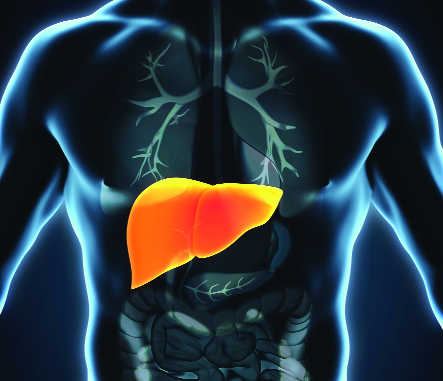
A brain dead Army man’s liver gave a new lease of life to a Patiala woman, who had a damaged liver due to autoimmune hepatitis, at the PGI here today.“Continuing with the practice of organ sharing between various hospitals in the region, an organ donated by a brain dead patient at the Command Hospital in Chandimandir was transplanted to a patient at the PGI,” an official spokesperson said.She disclosed that an Army man, aged 39, unfortunately suffered from intracranial haemorrhage and was admitted to the Command Hospital. He was declared brain dead by doctors there.“The wife of the patient took a noble decision of donating the organs of her husband. As no recipient was available at the Command Hospital for liver with the same blood group, they decided to share the liver with the PGI, Chandigarh,” the spokesperson said.She revealed that the liver was successfully harvested by a team of experts from the Command Hospital and the PGI and transported to the PGI around 10 am on Saturday. “This was successfully transplanted to a female patient from Patiala,” the PGI spokesperson said.


Terrorists change tactics to target more civilians

JAMMU/NEW DELHI: The death of two para commando officers in an encounter with terrorists has raised disturbing questions over defence forces’ new counterinsurgency tactics, especially in urban areas. A section of the army believes that instead of playing a waiting game, a pattern of conducting quick operations has emerged because of which casualties are rising.

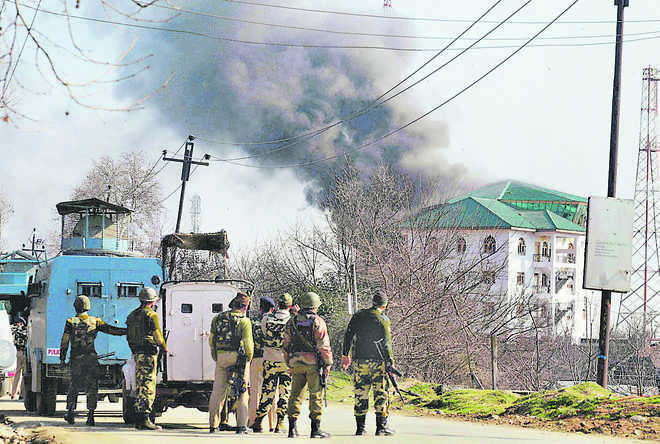
WASEEM ANDRABI/HT PHOTOSmoke emanates from the building where militants hid in Pampore on Monday.

“There could definitely be some pressure from the very top to complete the operation within the minimum possible time. Here (in Pampore), they (terrorists) were holed up in a building and couldn’t have run away, so why the rush to send paras in the first place, when we could have got them anyway?” a senior army official said, wishing not to be named. Last year, two colonels fell to the bullets of terrorists in J&K, prompting defence minister Manohar Parrikar to direct the army to ensure it took no casualties “as far as possible”.

Army officials say one reason why the casualties have risen is that terrorists have refined their tactics and are striking targets where they can cause a high number of casualties, hold out for a long time against the security forces and create media hype.

“We can easily blow up a building and kill the terrorists but what about the collateral damage? So we have to strike a delicate balance and are willing to suffer casualties to save civilians,” Lieutenant General BS Jaswal, a former northern army commander, said.

China almost doubles arms exports, Pak biggest buyer

Islamabad bought 35% of weapons; India remains largest importer

BEIJING: China has become the world’s third largest weapons exporters with Pakistan emerging as the top recipient of its arms, according to a report from a leading think tank on Monday.

Communist China, which has the world’s largest military, nearly doubled its arms exports in the past 10 years, said the report on global arms trade by the Stockholm International Peace Research Institute (SIPRI). Beijing is now capable of producing advanced weapons and is less dependent on imports.

With its 5.9% share of the global arms market, China is still dwarfed by the US and Russia but Beijing’s clout is clearly increasing and Islamabad is making the most of it.

“Pakistan was the main recipient of Chinese exports, accounting for 35%, followed by Bangladesh and Myanmar, accounting for 20% and 16% respectively (all three states are neighbours of India, the leading importer of arms in the region),” the report said.

China is scheduled to transfer eight submarines to Pakistan and two more to Bangladesh, the report said. Beijing and Islamabad are key allies who describe themselves as “allweather friends”, and the SIPRI report indicates a further strengthening of their military ties. China, reports say, has aided Pakistan to set up its nuclear and ballistic missiles programmes, besides supplying conventional arms. The report further said India continued to be the largest importer of major arms in 2011-15, accounting for 14% of the global total. “In 201115 India’s imports were three times greater than those of either of its regional rivals: China and Pakistan,” it said.

Unlike India, which has failed to produce “competitive indigenously designed weapons”, China has become increasingly capable of producing advanced hardware, the report said. China imported 25% less arms between 2006-10 and 2011-15.

“While in the early-2000s China was by far the largest importer, it dropped to third place in 2011-15,” the report said.

It added: “However, China remains partly dependent on imports for some key weapons and components, including large transport aircraft and helicopters, and engines for aircraft, vehicles and ships.”

In 2015, China signed orders for air defence systems and 24 combat jets from Russia, indicating that it is “not yet self-sufficient in those categories”. China’s largest supplier was Russia, which accounted for 59% of the imports, followed by France with 15% and Ukraine with 14%.

LARGEST EXPORTERS, IMPORTERS OF ARMS

China’s military budget in 2015 was over 886 billion Yuan, 10% more than the year before

AFPWeapons deals 2011-2015 Export Import % of market United States 33 / 2.9 Germany Netherlands Britain 4.5 France 5.6 2.0 Spain 3.5 4.7 Italy 2.7 Ukraine 2.6 Turkey 3.4 Pakistan UAE 4.6 Saudi Arabia 7.0 3.3 India 14 Vietnam 2.9 Russia 25 China 5.9 / Australia 3.6 South Korea 2.6 4.7 SOURCE : STOCKHOLM INTERNATIONAL PEACE RESEARCH INSTITUTE


Unlearn fast to fight Kashmir’s new battle

It is high time that the counter-terrorism strategy in J&K. is reviewed to factor in militancy’s changing face. The terrorists, equipped with the latest techniques, are now prepared for the long haul.Old tactics cannot work.

Unlearn fast to fight Kashmir’s new battle
Smoke billowing out of the JKEDI building, where militants reportedly took refuge after launching an attack on a CRPF convoy at Sempora Pampore, near Srinagar. PTI

The encounter at the multi-storey building at Sempora, just a kilometre outside Srinagar, which lasted for more than 48 hours from Saturday to Monday afternoon, (from February 20 to 22) is a perfect lesson on how not to conduct an anti-terrorism operation in Kashmir. The sanitisation of the massive building with 44 rooms was still on as the security forces disposed of unexploded explosives and searched for the booby traps left by the slain trio.Over the years, lulled by the obsolete battalion approach, the Army has not devised any new strategy to deal with new threats. It has also ignored the growing challenges on the ground in a self-delusion that its “Sadhbhavana” or goodwill operations, granting computers to schools or sponsoring all-India tours of children and the aged, have generated new sources of information and the pro-militancy sentiment has retreated. Contrary to that, the fact is that the situation on the ground has worsened. If there were any doubts, the Saturday to Monday gun battle offered ample proof of the worsening situation.Acute complacency about the situation, despite claims to the contrary, and declining interaction  between the top Army leadership and the men in the field, is  hampering the emergence of new counter-terrorism strategies. Rather than devoting adequate time at map-reading in operation rooms, much time is consumed in projecting themselves before the cameras. Much has changed since 1990, the calendar year of the start of the armed rebellion  in  Kashmir. The Army has taken certain things for granted  and taken its eyes and ears off the ground, where Kashmiris have developed a psyche of drawing a vicarious pleasure from the prolonged exploits of militants in their fight against the security forces.The Sempora encounter, which started with an ambush of the CRPF convoy, in which two troopers were killed and nine injured on Saturday afternoon, had multiple inbuilt challenges. After the ambush, the militants deviated from the hit-and-run option, a familiar strategy they would adopt during the 1990s. Instead, they walked into the Entrepreneurship Development Institute building, where they asked the civilians to flee. They forced those who were reluctant and scared to run by firing in the air. Major-General Avinder Dutta, General officer Commanding, Victor Force, based in Awantipore in south Kashmir,  made an apt observation: “Militants had sought to provoke the forces and cause collateral damage.”  However, the unanswered question is where was the quick-reaction team that is supposed to follow the convoys? The fact that raises a pertinent question is that at this very place a similar attempt had been made to ambush the same convoy two months ago and yet it did not ring alarm bells.The CRPF team entered the premises but had to withdraw because of the intense assault by the fully armed and equipped militants. Then the Army adopted a flip-flop strategy, losing two Captains and one Lance Naik. It was a much heavier price in terms of the  ratio of 1:4, before it pounded the building with rockets. What needs to be asked is: Could not what the Army did in the end have been done in the beginning? Perhaps what has not been factored in is that a prolonged encounter etches an image of macho terrorists who die fighting a much larger number of soldiers. Undoubtedly, they were in an extremely advantageous position, hiding in a building that is more than 60 feet, with many windows and nooks and crannies. Why had the Army never calculated such a scenario in its counter-insurgency strategies. That something happens for the first time is no logic. Fidayeen attacks are nearly a 17-year-old phenomenon in Kashmir now.The reliance on the past practices, when the Army  would conduct cordon-and-search operations for hours together in extreme weather conditions and the people would bear them, is not a good strategy, to put it mildly.What has been seen is that the locals of the areas, whether after being instigated or voluntarily, march toward the encounter sites. At times, they even provide the militants a human shield to escape, while at other times, like at Sempora, a message of solidarity is broadcast  through pro-militant slogans and anti-India exhortations.It is the time to review the counter-terrorism strategy against the backdrop of the changing face of  militancy in the state battered by militants  for the past nearly three decades. Counter-terrorism experts need to come out of their drawingroom mindset and study the field situation afresh in Kashmir. At the same time, it becomes incumbent upon the Army commanders posted in this sensitive, terrorism-hit state to interact more with their men rather than showcasing themselves as messiahs pedalling goodwill missions which  burden the taxpayer.Old tactics cannot and should not be applied in the changed situations where terrorists adopt new techniques and are equipped with a new mindset to fight for  days together. In the 1990s, when the Army used to cordon off areas and go in for anti-terrorist operations, it would overwhelm militants with  its numerical strength. The soldiers would use that advantage to neutralise militants after a brief spell of gunfighting. This was followed by a phase when militants would take shelter in mosques as part of their hit-and-run tactics. The public disapproved of this strategy of the militants. Elders would act as intermediaries  to get  mosques vacated. There was always a next time for the soldiers to take on the militants. The Fidayeen cult, the signature style of Lashkar-e-Toiba, which came into vogue after the Kargil War in 1999, is continuing. The basic training to deal with such battles where militants create an imminent death-like situation has not been worked out for the past nearly 17 years. Raising boundary walls and seeking safety in the rolling out of concertina wires has not served as a deterrent. That was obvious in Pathankot as well.Another tactic adopted by the militants was to storm civilian buildings, hotels and then attract the security forces to surround them. It was patience and intelligence that paid dividends, not knee-jerk reactions. That time, the public did not come out and no attempt was made to reach the site of the encounter to create a law-and-order situation. Now the youth, armed with stones, often reach the site where the gun battle is underway. The delay in concluding  operations can create other disturbing situations. Again, this eventuality has not been taken into consideration. Complete coordination between the police, paramilitary and the Army in such an eventuality is a delusion. The ground situation is an altogether different story.What have been recorded as the “peak years of militancy” in Kashmir, now appear like its infancy as compared to the level and intensity of the new terror attacks. Die-hard elements among militants, who want to go down fighting instead of offering to surrender to a higher number of military personnel, reveals a hardened mindset.  Earlier, picking up the gun was a romance. It was believed that merely carrying a gun, or firing bullets on security pickets or patrols or hitting and running after hurling grenades was enough to show commitment to the “cause of the liberation of Kashmir” or earn the aura of a “martyr”.  At one stage, their death was treated merely like that of militants and not martyrs. This is no longer the case now. The battle at Sempora has proved it beyond any doubt.

ajoshi57@gmail.com