Sanjha Morcha

What’s New

Click the heading to open detailed news

Current Events :

web counter

Print Media Reproduced Defence Related News

Repelled Chinese vessel in Sept, says Navy chief

Repelled Chinese vessel in Sept, says Navy chiefsecurity concerns Closely monitoring China in Indian Ocean region, says Admiral Singh

Rahul Singh

letters@hindustantimes.com

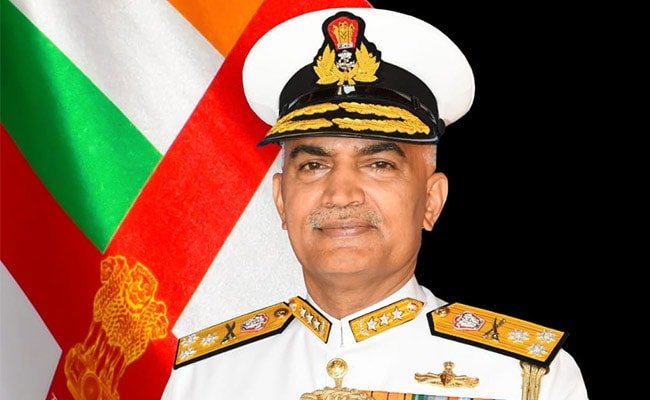
NEW DELHI : Navy chief Admiral Karambir Singh on Tuesday said that a Chinese vessel that had intruded into Indian waters near the Andaman and Nicobar Islands, where it was not supposed to be, in September, was repelled.

The Chinese research vessel, Shi Yan 1, was spotted near Port Blair and was suspected to be carrying out an ocean survey in India’s exclusive economic zone. Every coastal country’s EEZ extends to 200 nautical miles (370 km) from its shores and the country has exclusive rights to all resources in the water, including oil, natural gas and fish.

“Our stand is that if you have to do anything in our EEZ, you have to notify us and take permission,” the navy chief said during a press conference ahead of Navy Day on December 4.

According to marinetraffic.com, a ship tracking and maritime intelligence website, the Shi Yan 1 is 60 metres long, 26 metres wide and has a gross weight of 3,071 tonnes. The website tracked the Chinese-flagged vessel’s current position to South China Sea.

Singh said the navy was closely monitoring China’s growing footprint in the Indian Ocean region, attributing it to the neighbour’s economy and aspirations. Anti-piracy patrols and freedom of navigation are the chief reasons cited by China for its rising presence in the region.

Amid growing sightings of Chinese naval assets in the Indian Ocean region, the navy in 2017 recalibrated its deployment to position mission-ready warships and aircraft along critical sea lanes of communications and choke points.

India will host the next edition of the multi-nation naval drills, called Milan, off the Vizag coast in March 2020. India’s biggest maritime exercise is likely to involve 41 countries but the Chinese navy has not been invited.

Admiral Singh said India had invited only “like-minded” countries to take part in the naval drills.

“We haven’t even done a passage exercise with the Chinese navy. With the other countries, we have better interoperability,” the navy chief explained. The exercise was traditionally staged off Port Blair but has been moved to the eastern seaboard as “it offers better bandwidth,” for bigger drills, he said.

Singh flagged concerns about a steady decline in the navy’s share of the defence budget over the last eight years and how it could hit the service’s plans to deploy a fleet of 200 warships by 2027. The navy may reach a figure of 175 warships over the next seven years, navy vice chief Vice Admiral G Ashok Kumar said.

The navy’s share of the budget has slipped from 18% in 2012-13 to 13.66% in 2019-20. Singh said the navy had projected the requirement of additional money to the government.

HT reported on September 18 that the capital expenditure of ~23,156 crore earmarked for the navy in the defence budget for 2019-20 is not sufficient to meet its requirements and the service plans to demand at least ~20,000 crore more to support its modernisation efforts.

“We hope we can get some money… we are prioritising our requirements so that India’s maritime interests are not compromised,” Singh said. He said instead of sheer numbers, the navy was working on making its platforms more lethal and increasing their capabilities for maximum effect.

Responding to a question on the fund crunch the navy is facing and the swift modernisation of the Chinese navy, the navy chief said, “China is moving at a pace it is capable of and we are moving at a pace we are capable of…Our aim is to get maximum bang for the buck.”

He said the Indian Navy needed to have a fleet of three aircraft carriers to secure the country’s maritime interests. “I am convinced that we need three carriers so that two are operational at all times.”


Capt announces night home drop for women by police

Capt announces night home drop for women by police

HT Correspondent

letterschd@hindustantimes.com

Chandigarh : Amid growing concerns over women safety, Punjab chief minister Captain Amarinder Singh on Tuesday announced free police help to drop women safely home if they are stranded outside between 9 pm and 6 am.

The statewide facility will be available on DIAL 100, 112 and 181, through which the woman caller will be connected immediately to the police control room (PCR).

The chief minister has directed director general of police (DGP) Dinkar Gupta to ensure the implementation of the facility across the state, according to an official release.

The directions have come amid the nationwide public furore over the rape and murder of a Telangana vet, who was abducted, gang-raped and then set afire by the accused.

The pick-up and drop facility will be available to women who do not have access to a safe vehicle, including taxi or 3-wheeler. To give the woman caller a sense of total security, the chief minister has directed that at least one lady police officer should accompany her during the transportation.

Dedicated PCR vehicles will be made available at the commissionerates, as well as Mohali, Patiala and Bathinda, as well as other major towns in the state, for the implementation of the scheme, said the DGP.

DSP/ACP (crime against women) will be the nodal officer to implement the scheme in each district. Their numbers would be available on the Punjab government and Punjab Police websites. ADGP, crime, Punjab, Gurpreet Deo will be the state nodal officer for the facility.


India, Pak must sign treaty on mines: NGO

Our Correspondent

Abohar, December 2

Dr Bal Krishan Kurve, coordinator, Indian Campaign to Ban Landmines, has said India and Pakistan should sign an international treaty to stop use of landmines near borders.

Relatives of persons affected by landmines and coordinators of the Fazilka and Sriganganagar chapters of the NGO were also present on the occasion.

Speaking at a seminar organised by the Indian Institute for Peace Disarmament and Environment Protection in Sriganganagar on Sunday evening, Dr Kurve said 151 countries had responded positively to the call given by the UN-based organisation, but the US, Russia, China, India and Pakistan were still reluctant in inking the treaty.

Signing of the treaty by India and Pakistan would be considered as a major step towards restoring peace in the subcontinent, he observed.

Dr Kurve claimed that the number of casualties due to landmines across the world had come down from 30,000 per annum to 5,000 in past few years. He said Illiterate villagers could not be expected to realise that the objects they had found in the fields were explosive landmines.

“Comprehensive efforts are needed to educate border residents while laying landmines,” he said.


Shivangi navy’s 1st woman pilot

Shivangi navy’s 1st woman pilot
Sub-Lieutenant Shivangi

Sub-Lieutenant Shivangi of the Indian Navy became first naval woman pilot and joined operational duties at Kochi base on Monday

Hailing from Muzzafarpur in Bihar, Shivangi will fly Naval Dornier surveillance aircraft. “It is a very proud feeling for me. It is a different feeling,” she said

She will continue her training at INAS 550, the Dornier squadron at INS Garuda, to become a fully operational pilot on Maritime Reconnaissance (MR) aircraft. pti


Pakistan army prevails by Vivek Katju

Despite the Supreme Court’s reservations, General Bajwa will have his way

Pakistan army prevails
Signs of change? It remains to be seen if the court’s exercise of quasi-judicial independence will be a passing episode or help change the civil-military equation.

Vivek Katju
Ex-secretary, ministry of external affairs

For three days, Pakistan was gripped by the Supreme Court drama regarding army chief Gen Qamar Javed Bajwa’s continuance in office after the expiry of his conventional three-year ‘term’ on November 28. The court initially suspended PM Imran Khan’s decision that Bajwa would serve for an additional three years. However, finally after many quick twists and turns in the case, the court allowed Bajwa to what amounts to a provisional continuance for six months and more later, subject to the enactment of necessary legislation.

While the court gave the government and Bajwa relief, it also caused them deep embarrassment. Pakistan army chiefs are larger-than-life figures who inspire awe and fear in the country’s political class and the public. Now the people saw the judges, at least for a few days, treat the army chief’s post as any other governed by the laws of the country and the directions of the court.

 Imran Khan is not the first Pakistani head of government to extend the tenure of an army chief. PM Yousaf Raza Gillani, who belonged to the Pakistan’s People’s Party led by then President Asif Zardari, gave a three-year extension to then army chief Ashfaq Kayani. Army chief Zia-ul-Haq, who ousted PM Zulfiqar Ali Bhutto in July 1977 in a military coup, became the President of the country, but continued as army chief till his military aircraft exploded in the sky in August 1988. Pervez Musharraf, who was appointed army chief in 1998 by PM Nawaz Sharif, deposed him in October 1999 in a military coup and became President, but he retained the army chief’s position till he appointed Kayani to that post in November 2007.

Neither Zia-ul-Haq nor Musharraf would have allowed the judiciary to examine the validity of their continuing as army chiefs for these long periods. It seems that no one asked the judges to take up the issue of the validity of Kayani’s extension, but even if it was brought before the court, it is doubtful if it would have gone into the issue. This time it did because of the personality of Chief Justice Asif Saeed Khosa who has a well-earned reputation for being a fearless, if a somewhat maverick judge, who looks into the law and the facts of a case and is not swayed by other considerations.

 The current Pakistan constitution mandates that appointments of defence services chiefs, including the army chief, will be made by the President on the advice of the PM. The problem is that neither the constitution nor the laws and the rules governing the army provide for a tenure for the army chief or for his extension or reappointment. All this has been managed till now through the practices followed by the army. When the court asked the government the basis for giving extension to Bajwa it could not do so convincingly. Worse, it began to offer contradictory submissions. The court’s final order noted the government ‘moved from one position to another’.

Ultimately, the judges, despite their scathing observations during the hearing, accepted the fiction that the President had appointed Bajwa as army chief with effect from November 28, 2019, in terms of the constitution. They overlooked the obvious fact that he had served as the army chief for three years. They also accepted the government’s assurance that the practice relating to the tenure, extension and reappointment would be codified in an Act of parliament. They ordered that Bajwa’s current ‘tenure’ would be for six months and would be subject to the conditions of the new legislation. The court also stated that it was exercising judicial restraint because of the army chief’s responsibilities. This was contrary to its earlier position which stressed the role of the army as an institution and not of an individual.

While the government will bring in legislation to fill the lacunae pointed out by the court, the question is: will this exercise of quasi-judicial independence be only a passing episode or will it help in changing the civil-military equation or reduce the aura of the office of the army chief? These questions go to the heart of Pakistan’s polity and this judicial action must be judged through seeking answers to these queries.

All things considered, a serving army chief is the most significant public office-holder in Pakistan. During periods of civilian rule, the army allows the PM to choose the chief from among the eligible generals, but once chosen, he becomes the country’s real power centre. That stated the army generally also wants a chief to retire after his term is over, even if it has gone along with extensions in the past. Thus, after the legislation if extensions for the chief become difficult in the future, the army will not be unhappy.

The army controls Pakistan’s security policies and crucial areas of foreign policy. This judgment does not concern itself with these matters. It will therefore not strengthen the civilian leadership to spread its wings in these domains. If anything, it has profiled the civilian leadership as inept and therefore added to the impression that it cannot be trusted with the security of the country. It will, therefore, not impact on the basics of the civil-military relationship.

This case is unlikely to strengthen the judiciary, for when this matter was ongoing the Islamabad High Court prevented the special court hearing the Musharraf treason case from delivering its verdict. Thus, some judges may show some independence, but the institution will continue to be careful and circumspect in dealing with the army.


Bring back remains of Duleep Singh from UK, demands Partap Bajwa in Rajya Sabha

Bring back remains of Duleep Singh from UK, demands Partap Bajwa in Rajya Sabha
Pratap Singh Bajwa. Tribune file

New Delhi, December 3

A demand to exhume and bring back remains of Maharaja Duleep Singh, the last ruler of the Sikh empire, from his grave in the English countryside was made in Rajya Sabha on Tuesday.

Raising the issue through a Zero Hour mention, Pratap Singh Bajwa of the Congress said the issue is close to entire Punjab and “history should be corrected”.

Duleep Singh was born in Lahore in 1838 to powerful ruler Ranjit Singh. At the age of five the boy prince sat on the throne of the Sikh kingdom, he said, adding that Punjab was annexed to British India after the second Anglo-Sikh war in 1849.

Duleep Singh was removed from the throne and separated from his mother Maharani Jind Kaur, who was imprisoned.

Bajwa said he was taken to England and converted to Christianity at the age of 16 and lived in England under the patronage of Queen Victoria.

After 13 years of separation from his mother, he was reunited with her and upon learning of the history and Sikh identity, he decided to reconvert and gave away British pension.

In 1886, Duleep Singh set sail for India along with his family but fearing mutiny, the British detained him and placed him under hour arrest, he said, adding that his grave is in the English countryside Elveden.

Bajwa demanded that the maharaja’s body be exhumed and brought to Amritsar where his last rites should be performed as per Sikh traditions. PTI



Chief of Defence Staff needs to be empowered, says Navy chief

Chief of Defence Staff needs to be empowered, says Navy chief
Navy Chief Admiral Karambir Singh addresses a press conference. Tribune photo: Mukesh Aggarwal

Ajay Banerjee
Tribune News Service
New Delhi, December 3

Navy chief Admiral Karambir Singh on Tuesday said the upcoming position of Chief of Defence Staff (CDS) should be empowered enough to implement the plans as desired.

He was answering questions at the annual press conference ahead of Navy Day here. He said the issues of the services had been conveyed to the empowered committee which had submitted its report.

On the upcoming massive exercise Milan in March 2020 that will see 41 navies participating, the Admiral said the idea is to collectively meet the challenge in the Indian Ocean region. This exercise will also have a operational part to it.

On being asked why China was not invited, the Admiral said, “We have called people who we think are like-minded.”

Asked if the Navy could conduct an exercise with China, Admiral Singh said, “That’s beyond my pay grade,” an indication that the decision rested with the government.

About the scope of the exercise, the Navy chief said their role is to stabilise and not a militray one.

He dismissed the upcoming China-Pakistan naval exercise as “routine”.

On being asked if the Chinese survey vessel had been turned away from Indian Exclusive Economic Zone (EEZ) off Port Blair, the Admiral said, “Our stand is clear; anything in our EEZ cannot be without our permission.”

China’s presence in the Indian Ocean had started in 2008 and at any given point it has seven to eight ships in the Ocean for various reasons like anti-piracy.

“We have our defence in place,” the Admiral said.


Brig J S Budwar SM Cdr 21 Sub Area Pathankot:: Celebrates Year of NOK 2019

On 02 Dec 2-019   Year of Next of Kin 2019 was celebrated at 21 Sub Area Pathankot.Approx . A total of 250 Veer Nari’s and Widows Participated for first time in the Dist.

More than 200 Male NoK also participated.Extra chairs were also insufficient to accommodate ESM.150 GOG were requested to sit outside the Auditorium to accommodate NoKs.

18× Distressed ESM Families were given Rs 25000 each by Cdr 21 Sub Area Brig JS Budwar, SM–

daf18e9a-b7c3-4942-9e57-129581ae469b
Brig Prahalad Singh , GOG Distt Head addressing the audience

86d9abb7-4fd7-4fd3-bb8c-d4c65c2f3cf6


Implications of Opening of Kartarpur Corridor byCol NN Bhatia [Retired]

The Indo-Pak border created on the basis of the Radcliffe accord runs from the line of control (LoC) that divides J&K region and Pakistan Occupied Kashmir (POK) in north to zero point in south between Indian state of Gujarat and Sindh province of Pakistan, roughly 3323 km in length.

Ever since its artificial logic less creation, there have been wars and conflicts between both the nations and many western journalists term it as the most dangerous and complex border between two nation states. Similarly, the erstwhile border between India and East Pakistan (now Bangladesh) crisscrossed riverine terrain, jungles, hills and marshy swamps dividing villages and tilling lands in each other’s territory adversely affecting families, farming, land records, property, housing and flood management. By and large the middle line of the main channel/river was to constitute actual boundary but most of these water bodies kept changing their course during Mansoons keeping conflicts alive.

Language, population, and religion and contiguity were some other factors-some followed and others grossly misused. Like so many deficiencies, the Radcliffe accord overlooked the significance of Kartarpur Gurudwara to Sikh faith just 4.7 km away from Dera Baba Nanak in Indian Punjab by awarding Shakargarh tehsil to Pakistan located on right bank of the Ravi River, including Kartarpur and  Gurdaspur tehsil on the left bank of Ravi to India. Rightly, it should have been then awarded to India on religious and faith basis only but not.

Likewise, the erstwhile India- East Pakistan border had numerous enclaves that Bangladesh inherited from the East Pakistan along the Indian states of Assam, West Bengal, Tripura, and Meghalaya. Both the governments ratified agreement on 6 June 2015, whereby India received 51 Bangladeshi enclaves (covering 7,110 acres in the Indian mainland, while Bangladesh received 111 Indian enclaves (covering 17,160 acres in the Bangladeshi mainland. The enclave residents were allowed to continue residing at their present location or move to the country of their choice. While India and Bangladesh resolved this complex issue, resolving it with Pakistan would have been rather an impossible proposition with the type of multiplying mistrust existing between both the countries.

Notwithstanding the India-Pakistan trust deficit, China-India dispute over the land border has also been the bane of the British Raj further complexed by the economic competition that has led to strained relations between the two Asian rivals. China has close ties with Pakistan and both support each other over their dispute(s) with India. That is why and how China has always supported Pakistan in its argument(s) over Kashmir with India. The first Sikh Guru Nanak Dev Ji founded Kartarpur in 1504 AD on the right bank of the Ravi River and established the first Sikh dera (????) there. After his demise in 1539 both Hindus and Muslims claimed him as their spiritual Guru/Pir and constructed tombs in his memory with a common wall in between which were eventually washed away with the changing course of the Ravi River and a new abode was constructed at Dera Baba Nanak (DBN) on the left bank of the Ravi River.

In 1947, the Indian sub continent was partitioned into India and Pakistan as two independent countries due to the Muslim leaders’ mistrust over the majority Hindus living in the subcontinent. This division was created on religious lines. Along with the partition was the problem of the amalgamation of 650 princely states that were given the right to opt for either Pakistan or India or with certain reservations, to remain independent.  Because of its location, Jammu & Kashmir (J&K) could choose to join either India or Pakistan. Maharaja Hari Singh, the ruler of J&K was Hindu while the most of its population was Muslim, desired to be neutral with a hope to be an independent country! But his dream to remain independent was shattered as Pakistan to annexe J&K, sent Pashtun Muslim tribesmen duly supported by the Pakistani Army to capture Srinagar. The Maharaja appealed Indian government for military help and signed the Instrument of Accession, ceding Kashmir to India on 26 October 1947.

India approached the United Nations on 1 January1948 and in a resolution dated 13 August 1948 the UN asked Pakistan to completely withdraw its troops, after which India was to follow withdrawing bulk of its forces and holding a free and fair and plebiscite. Pakistan failed to comply with the UN resolution and ceasefire was enforced on 1 January 1949 with 65%   J&K in India and rest under illegal occupation of the Pakistan. Thus, ever since October 1947, both Indian and Pakistani forces have been embroiled in numerous wars over Kashmir. Strained relations and tensions between the two countries kept brewing following the Chinese incursion into Ladakh in 1962 followed by 1965 War between India and Pakistan. A cease-fire was established in September, followed by signing of Tashkent Agreement by both the countries in January 1966 emphasizing to resolve all the issues peacefully. But Fighting again flared up between the two countries in 1971 leading to dismemberment of Pakistan and creation of Bangladesh. Shimla Accord was signed in 1972 emphasizing that henceforth, both the countries would live peacefully and resolve issue bilaterally. It was widely apprehended by some hard core elements on both sides that Pakistani PM Mr Bhutto had tacitly accepted the line of control as the de facto border, although which was  denied by the Pakistani PM. After Bhutto’s execution in 1979, the Kashmir issue once again became the leading cause of conflict between India and Pakistan. During 1980’s the Muslim militant elements trained and supported by Pakistan got disillusioned and intensified insurgency operations in the Kashmir valley. Pakistani psywar for Jihad subverted Kashmiri youth that escalated the situation further.

On his initiative the Indian PM Vajpayee arrived on 19 February 1999 at Wagah by the inaugural bus service between New Delhi and Lahore and was received by the Pakistani PM Nawaz Sharif. Both the PMs signed bilateral agreement ‘The Lahore Declaration’ signifying avoidance of nuclear confrontation and conventional wars BUT Pakistan again stabbed India in the form of Kargil War. In May 1999, Pakistan intensified artillery shelling in the Kargil sector and tactically occupied positions within and west of the Kargil area vacated by Indian forces during winter. Intense fighting ensued between the infiltrators and the Indian Army that lasted more than two months. The Indian Army managed to reclaim most of the area on the India side of the line of control (LoC). The Indian Army lost approximately 500 troops, with almost double that number of Pakistani armed forces in the garb of infiltrators were killed.

The Kargil War was a major blow in stalling the Lahore treaty and the relations between the two countries worsened. General Musharraf is widely believed to be the strategic mastermind and brain behind this avoidable war. After much diplomatic efforts, the Agra summit started between President Musharraf and PM Vajpayee amid high hopes of resolving various disputes between the two countries including the five decades old Kashmir issue. But the talks collapsed due to lack of trust and abundance of mistrust.

Ever since 2014 and 2019 the Bhartiya Janta Party (BJP) has swiped polls both in centre and various states, the party has been advocating Hindutya vigorously much to the suspicion and discomforts of secular forces, minorities and Pakistan. On 14 February 2018, a suicide bomber member of the Pakistani militant separatist group killed 40 members of India’s Central Reserve Police Force (CRPF), the deadliest attack on Indian security forces in the last three decades. India carried out surgical strikes and destroyed militant camps across Balakot on 26 February 2019 when Indian warplanes flew over POK and dropped bombs in Balakot in Khyber Pakhtunkhwa (erstwhile NWFP) province in Pakistan.

Notwithstanding above hostile acts, Pakistan’s dreaded Inter-Services Intelligence (ISI) has been openly sheltering, training and funding Khalistani Sikh militants. Also, Pakistan’s close relationship with China and creation of the China Pakistan Economic Corridor (CPEC) complicated further the   unruly   relationship through the disputed region of Kashmir at a time when a tension is simmering between India and China over land border dispute.

History of Sikhism flourished Inspite of Mughal emperors’ onslaught against Sikhs and Hindus. Many prominent Sikh leaders were killed by Emperor Jahangir for refusing to accept his orders. Out of 10 Sikh Gurus, two Gurus (Guru Arjan Dev and Guru Tegh Bahadur) were tortured and executed and their close kith and kin killed by the Mughal kings. Two sons of 10th Guru Gobind Singh were tortured and killed along with saintly prominent followers like Banda Bahadur, Bhai Mati Das, Bhai Sati Das, and Bhai Dayala for disobeying Mughal rulers.  Maharaja Ranjit Singh fought bravely Mughal Empire and consolidated his kingdom to include J&K, Ladakh and Peshawar under his able military chief Hari Singh Nalwa.

To de-stabilize India, Pakistan has been pumping Indian economy with fake Indian currency notes (FICN), drugs, arms and ammunition and reaching out to anti-national elements (ANEs) and Naxalites and various insurgent groups in the heartland and the Northeast. While Pakistan has violated Shimla Agreement, Lahore Accord, and Agra Summit vehemently, internationalized Kashmir issue against resolving it as bilateral issue, and has repeatedly shown trust deficit; India needs to view opening of Kartarpur corridor with sustained suspicion. We have been bitten by Pakistan not once but endless times and it is unlikely that PM Modi will gamble his new-found power and conciliatory national security advisor (NSA) and army chief by reaching out to Pakistan softly. Some geo-strategic analysts predict his massive poll mandate may even validate India’s harder line to spell a bold new Pakistan policy as Pakistan, India and China have nuclear arsenals.

In view of the above reasons, too much should not be made of the gesture of opening of Kartarpur corridor as exclusively done by Pakistan BUT by both Indian and Pakistani governments. Pakistan is overplaying it on 550th  Parkash Diwas of Guru Nanak Dev Ji to  exploit Sikh sentiments not only within India but internationally to revive dormant pro-Khalistani elements active in UK and Canada joining hands with anti- Indian demonstrations over removal of Article 370 in J&K. How can secular India where Hindus, Muslims, Sikhs, Christians, Buddhists and other sects live in peace and harmony, forget the Mughals kings torturing and killing Sikh Gurus, their kith and kin and devoted followers?

The Akali leaders and certain Sikh political leaders like Navjot Singh Sidhu must get over the initial euphoria of opening of the Kartarpur corridor by turning the pages of history backwards to learn how their Gurus were tortured by the then Muslim rulers. Though opening of corridor will bring some people to people contacts which have little meaning in otherwise government to government frozen relationship. General Bajwa and his  dreaded ISI coterie has larger interest to exploit softness of corridor to open another channel to push terrorists to create unrest, smuggle drugs, FICN, arms, ammunition and explosives and let India bleed through 1000 cuts inflicted by its nefarious psy & proxy wars.  No wonder, while Imran and his generals are turning no stone unturned to internationalize Kashmir and Kartarpur corridor to draw mileage, PM Modi relentlessly keeps exposing Pakistan’s nefarious linkages and support to Muslim fundamentalists and terror outfits to destabilize India militarily and financially at all international forums. Many feel, we can trust snake BUT not Pakistani politicians and it’s behind the scene military dictators whose survival lies on hate India bogey!

Acknowledgement- Photo map of Kartarpur Corridor   courtesy Google/ Wikipedia.


Indian Navy’s first woman pilot takes wingIndian Navy’s first woman pilot takes wing

Sub lieutenant Shivangi at the Kochi naval base on Monday.ani

Rahul Singh

rahul.singh@hindustantimes.com

New Delhi : Sub lieutenant Shivangi on Monday carved out a place for herself in naval aviation history by becoming the first woman pilot in the Indian Navy, a defence ministry spokesperson said. Until now, women officers only served as observers on board aircraft such as the P-8I submarine hunters and Ilushyin-38, also used for anti-submarine warfare.

The 24-year-old, who grew up in Bihar’s Muzaffarpur district chasing dreams of becoming a pilot, is thrilled about being a trailblazer.

“The aircraft doesn’t recognise gender. It doesn’t care whether the pilot is a man or a woman. It’s quite exhilarating that my dream has come true. I have dreamt of flying since I was 10,” Shivangi, who only uses her first name, told Hindustan Times from Kochi.

Southern Naval Command chief Vice-Admiral Anil Chawla awarded her the coveted golden wings in Kochi after she successfully completed a “conversion course” with the Dornier training squadron INAS 550, also known as the Flying Fish.

The development comes two days ahead of the Navy Day on December 4, celebrated to commemorate the attack on the Karachi harbour during the 1971 India-Pakistan war.

Shivangi joined the navy in June 2018 after undergoing training at the Indian Naval Academy at Ezhimala in Kerala.