
The operation that was launched to eliminate violence, in fact, sowed the seeds of an ethno-religious struggle
Ramesh Inder Singh
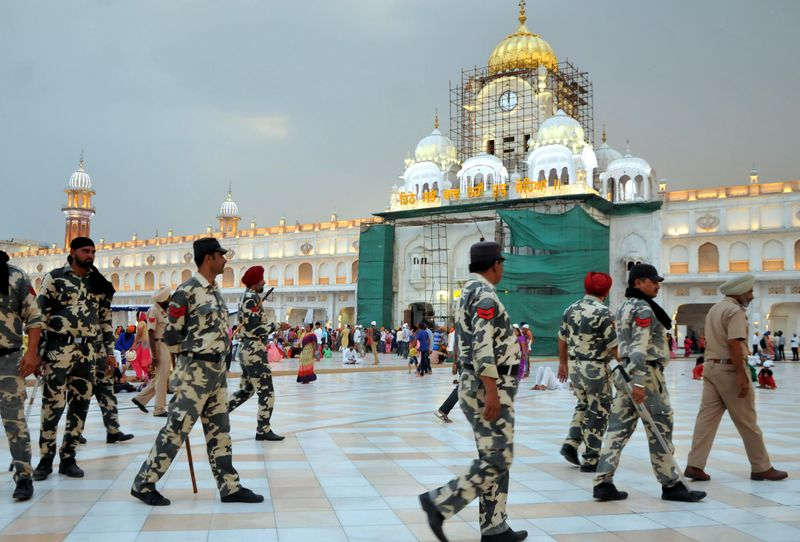
It has been 42 years since the Army marched into the Golden Temple in 1984. What was the objective of the Army action?
The devout view it as a premeditated sacrilegious assault on their holiest of holy shrines while the government of the day described it as an operation to clear the sacred space of the armed radicals who had usurped the temple, laid siege and posed a challenge to the legitimacy of the constitutionally established polity.
But with time and better understanding of the events, there is a near unanimity that the operation was avoidable, ill-planned and terribly executed. It left deep psychological scars, resulted in the destruction of the seat of Miri Piri, Akal Takht, and the death of nearly 1,000 persons, including Army men. And this unanimity of opinion includes a long list of army generals, including two former Army Chiefs, Gen VK Singh and Gen VN Sharma, who have gone public against Operation Bluestar.
The operation that was launched to eliminate violence, in fact, sowed the seeds of an ethno-religious struggle and unleashed unmitigated violence that was far worse than what it had aimed to end. Foreign powers exploited our internal situation. Weapons and drugs seeped in from the highly porous border and confirmation of this has come from a Pakistani scholar. Prof Ilyas Chattha, in his book, ‘ The Punjab Borderland, Mobility, Materiality and Militancy, 1947-1987’, has exposed the role played by his country in fuelling militancy in Punjab.
The ethno-national movement fizzled out long ago, but there are lessons to be learnt. The foremost lesson pertains to how we deal with religious plurality, political divergence, regional aspirations and uprisings. Regional assertions have to mingle with national objectives just as the nation must acknowledge the divergence of identities and aspirations in a country as large as ours.
This requires not a military approach to problems but conflict resolution through dialogue. Bluestar is a classic instance of the failure to parley, even though 26 meetings were held between Dharam Yudh Morcha leaders and the Central government, the last being on May 29, 1984 with four Union ministers in Delhi. They responded positively to the demands, not knowing that the Chief of Army Staff, Gen AS Vaidya, had already been mandated a few days earlier that troops be moved to Amritsar. The result was catastrophic.
The irony is that these very demands of the Morcha were accepted a year later, in July 1985, with the signing of the Rajiv-Longowal accord. But, by then, the moderate Longowal and his ilk had ceased to be relevant. The command of the struggle had passed on to gun-wielding militants. The spirit of shaheedi swept the Panth.
To make it worse, the Central government ducked the accord — the PM who had signed the covenant discarded it. Political imperatives prevailed over the need for conflict resolution. The pending demands continue to agitate the state.
Could militancy re-emerge in the state? It is highly unlikely. However, microscopic remnants of secessionists sitting abroad continue to fund and direct criminal activities, operating through organised criminal gangs. It is a nexus of drugs and weapon smugglers, who often operate under the ideological garb of separatism.
The consequence of this is a deteriorating law and order situation, with cases of extortions, IED or grenade blasts, killings and frequent email threats of bomb scares at public places. Forces from across the border are using drones to drop weapons and drugs to destabilise the region.
However, the recent killings of three policemen in two separate incidents in the border districts are alarming, suggestive of what is called a consternation strategy, which terrorists apply to produce a chilling effect to demoralise the symbols of state authority. They randomly pick up targets with the objective to make the state appear ineffective.
The administrative system runs on vakar — honour and credibility — as distinct from mere electoral legitimacy and terrorists seek to challenge its authority to bring its image down. This strategy was resorted to in Punjab in the 1980s by militants when many policemen, officials and journalists were targeted. A similar strategy was employed by Naxalites in West Bengal in the 1970s.
The ever-lingering religion-related issues, the acrimonious tu-tu-main-main politics, agrarian unrest leading to roadblocks and demonstrations and economic slowdown that pushed up unemployment were the contributing factors that led to decades of violence. These fault lines exist in varying degrees even today.
The beadbi or sacrilege issue is a highly sensitive one and cases have lingered since 2015, keeping the sentiments on a boil. The cases need a logical conclusion. The well-intended 2026 Amendment to the Jaagat Jot Sri Guru Granth Sahib Satkar Act has caused an unintended conflict between religious bodies and the state. The issue needs to be resolved keeping in view the Sikh sentiments, Article 26 (b) that confers the right to manage affairs related to religion by communities and by ascertaining the opinion of all stakeholders.
Efforts should be made to reduce societal and religious conflicts. Emotive issues are exploited by militants, criminals and vested interests. The historical and cultural milieu of a militarised Punjab makes us vulnerable to resorting to violence. Let me recall what Lord Dalhousie said on the annexation of Punjab: “There never will be peace in Punjab, as long as its people are allowed to retain the means and the opportunity of making war.”
Punjabis have never missed an opportunity to challenge state authority, whether it was the Mughal empire or the British or after Independence, our own. Punjab will remain peaceful and people will prosper only so long as the state is effective and the administration is perceived as just, delivering good governance.
The writer was Deputy Commissioner, Amritsar, during Operation Bluestar