
There is import dependence because too many plans, goals and targets have come unstuck
TN Ninan
COTT Bessent, the US Treasury Secretary, laid out three maxims in a recent speech: “The nation that cannot produce what it needs is not truly secure. The nation that depends on its adversaries for critical inputs is not truly sovereign. And the nation that reduces its economics to consumption is not truly prosperous.”
Bessent’s context is a world that his country, more than any other, has worked to create — in which, as Thucydides wrote, the strong do what they can, and the weak suffer what they must. Where alliances can be disregarded, friendships become irrelevant and markets subject to unexpected disruptions.
The phrase that characterises this new world is weaponised interdependence. Such weaponisation comes more easily to those in control of the main nodes of the global economy, giving them coercive power. One could even think of panopticon situations (the usual example being a single guard in a circular prison who can watch all the inmates). Think of the SWIFT interbank communication system. Equally, they could offer choke points for coercive use. Choke points can also be points of vulnerability — think submarine cables which, if cut, could cripple an adversary for a while.
For a middle power like India, such a world is more complex and offers many new challenges, and only imperfect answers or solutions. In the spirit of atmanirbharta, can India hope to ensure its security and sovereignty by producing all that it needs — as Bessent asked? Think of the major weapons platforms and technologies that are currently imported. Or not rely on others for critical inputs — something that even the major powers don’t attempt? Most obviously, what price strategic autonomy when 90 per cent of the country’s oil and half its gas needs are imported? And what price sovereignty in the face of penal tariffs and arbitrary trade sanctions?
It is obvious that the goals in such a world have to be not just economic efficiency and competitiveness but also finding ways to minimise vulnerability — without paying too great a price through higher costs that localisation often imposes. Hence the current attempts at domestic chip manufacture and the setting up of data centres. Yet interdependence is written into the scenario and must be dealt with.
The asymmetric conflicts in Ukraine and Iran pose their own urgent questions for the economy. Hundreds of missiles and drones (offensive and defensive) have been fired in a day, for days on end, in both theatres. Can India hope to develop such a supply capability, given its limited manufacturing base, or (as a more sensible alternative) turn civilian industrial units to military use in short order? And how well is the country positioned in the context of wars that will henceforth be fought in the cyber-physical world?
Sensible policies can always provide answers. India could become an electro-state, for instance, by copying China’s example to reduce oil dependence and multiply storage capacity in order to insulate against supply shocks. China can store more than four months’ oil requirements, whereas India’s strategic reserves are for barely 10 days. When availability can trump price in a critical agricultural input like fertiliser, sensible policy can serve to boost the domestic production of an item that does not after all involve rocket science.
India has always been wary of international dependencies. Especially in defence, space and atomic energy, it has sought from the beginning to build national capabilities and be self-reliant. There are some impressive success stories to show for this in the defence arena: the nuclear-powered submarines, for instance (though Russian help has been critical). And the multi-pronged missile programme. A layered air defence system that showed its mettle during Operation Sindoor. Mobile howitzers for the artillery have been developed by the Armaments R&D Establishment in partnership with Kalyani and Tata. Some aspects of electronic warfare capability constitute another success story.
The risk is that overreach can result in failure, or unaffordable delays (which, in defence, is the same thing). Overreach explains why many attempts at self-reliance in defence have failed, such that the country is the world’s second largest importer of armaments (after Ukraine). Major weapons platforms that the country needs are still being imported — those on the current list being Rafales, submarines and long-endurance drones. And imported weapons tend to be far more expensive than indigenous substitutes, when these are developed.
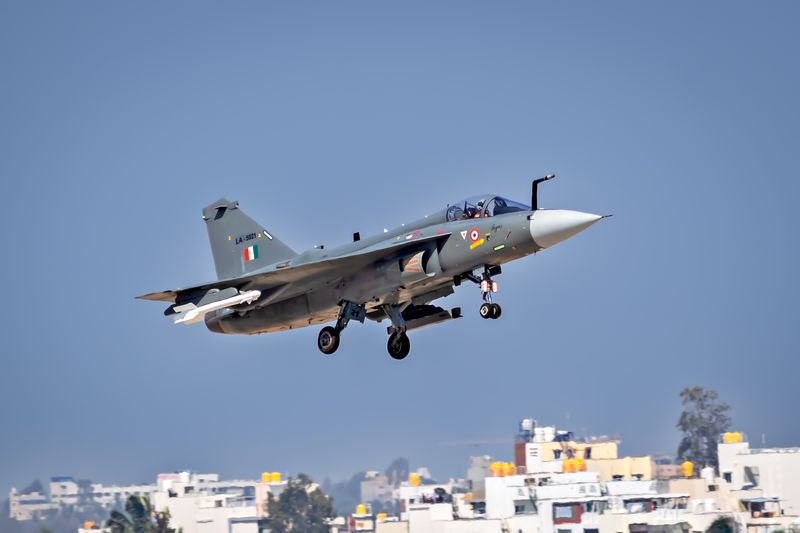
Moreover, the world sends periodic reminders about supply vulnerabilities. The gas turbine engines that have powered the Navy’s main fighting ships have traditionally come from Ukraine, now consumed by war; fortunately, Bharat Heavy Electricals has been producing gas turbines for the frontline warships. But the supply of the S-400 air defence systems has been interrupted by Russian preoccupations. And Hindustan Aeronautics Limited can’t turn out the 180 Tejas fighters that the Air Force desperately needs because (among other things) the engines have to come from General Electric, which has delayed production because (again, inter alia) a South Korean supplier of components has gone out of business.
Ambition is as ambition does. The import dependence is because too many plans, goals and targets have come unstuck. The dependence on General Electric engines for Tejas is because the domestically developed Kaveri engine didn’t measure up. The Army’s demanding specifications for an infantry rifle (such as interchangeable barrels that use bullets with different sizes!) proved too complicated to deliver, resulting in large-scale imports.
The NavIC (Navigation with Indian Constellation) satellite-based system that was to be a regional substitute for the US GPS (Global Positioning System) is non-functional because of a shortage of operational satellites and the failure of an atomic clock. This has underlined the need for an indigenous system, more than a quarter century after Kargil 1999.
The critical need is for realism on what the country can sensibly do on its own (and deliver at cost and within deadline), while being a part of international consortia where it can’t. As an example of the latter, would India have been better placed if it had stayed as a partner in Russia’s Su-57 stealth fighter programme, especially now that China has developed its own stealth fighter, the J-20?
This is the first of a 2-part series