
Part 1, The Soldier at the Door : Why India’s military deserves a framework of its own
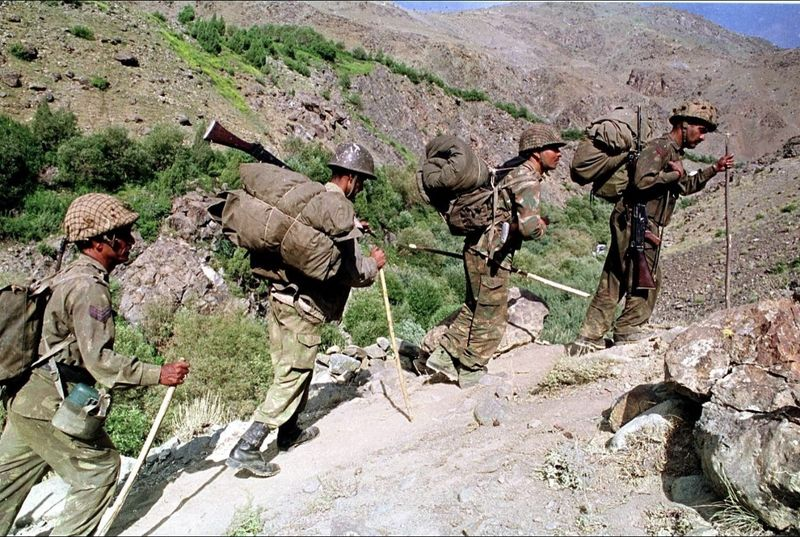
Generations : From 1948, 1971, Kargil to Op Sindoor, the Indian soldier has been victorious. File photo
Lt Gen S.S. Mehta Retd
“When you go home, tell them of us and say, for your tomorrow, we gave our today.”
It is not a slogan. It is a statement of fact.
Many recall the Indian soldier’s contribution in the First and Second World Wars, fought across three continents. Few remember that the Second World War was also fought on Indian soil. The Battle of Kohima, once described as the “Forgotten War”, is today recognised by military historians across the world as among the finest military campaigns of that war.
In 1944, on a ridge that became synonymous with the Battle of Kohima, soldiers fought at such proximity that the tennis court between opposing trenches became part of the battlefield. Years later, that inscription came to mark not victory alone, but something deeper: the nature of military service itself.
It did not create something new. It recognised something ancient. The civilisational legacy of the Indian soldier.
Historically, he has always been a volunteer for the ultimate sacrifice. That distinction matters. It matters more today than it ever has.
Unlike others, the soldier cannot quit on a whim, cannot unionise, cannot litigate against a transfer and cannot refuse an order that may lead to his death. This is not a lifestyle choice. It is a legal surrender of rights every other citizen retains.
It is the only profession in the Republic where the Constitution is not something you merely live under, but something you may be ordered to die for.
To subject that covenant to the same framework as defined liability service is not merely administratively untidy. It is a category error.
But the soldier’s liability does not end with the body. It extends to the self.
He sets aside everything that marks him in civilian life. Language, caste, religion, region, political preference and personal ambition all remain part of him as a human being, but none may override the larger compact he has entered. The transformation is not ceremonial. It is operational. Trust in combat cannot wait for sociological negotiation. Cohesion under fire cannot pause for identity management.
The regiment functions because the uniform has replaced the self with something larger. Identity is subordinated because survival, command and trust require it.
That is why the soldier eventually becomes, in the fullest sense, everyone’s soldier.
When he arrives at the citizen’s door in flood, in fire, in the aftermath of violence, the citizen does not ask his caste. The soldier does not offer it. Everything that fractures Indian public life dissolves at that threshold.
He surrendered those fragments long before he arrived there. At the SSB (Services Selection Board). At the passing-out parade. At the first moment he wore the uniform and understood what it demanded of him.
That surrender is not incidental to service. It is the deepest form of it.
The soldier who stands at that door has not merely shown up. He has arrived as the nation. Undivided. Unreserved. Unconditional.
At that door, the Republic is not debated. It is delivered.
The military in India is one of the very few institutions where unity in diversity is not aspirational rhetoric but operational necessity.
That achievement is among the Republic’s greatest institutional successes.
Generation Z understands this instinctively, and perhaps more clearly than the debate itself yet does.
This generation does not romanticise institutions. It joins, when it does, after conscious calculation about how to spend the one life it has. It has grown up in an identity-saturated world where every platform asks it to perform, market and continuously explain itself.
The self has become performance. And the performance is exhausting.
Then they encounter the uniform.
The uniform says: here, none of that matters.
For many of them, that is not sacrifice. It is relief.
The military offers what no startup, no salary package and no influencer economy can provide: a purpose that absorbs the self completely and returns something larger in its place.
The soldier at the citizen’s door is not diminished by having no caste in that moment. He is elevated by it. He is perhaps the only person in that doorway who has genuinely transcended the fractures others are still negotiating.
This generation is not running from self-erasure. It is searching for a place where the self can finally rest.
The uniform is that place.
The young volunteer who steps forward today is not an accident of recruitment statistics or nostalgia for another era. Generation Z is shaped not only by its own choices, but by the values it inherits from family, peers and the moral climate around it. Somewhere within that continuum, the legacy of the soldier still survives in the bloodstream of the Republic.
That is why the calling endures.
Each generation, in its own language and under its own pressures, chooses the covenant again.
From 1948, 1971, Kargil to Operation Sindoor, generation after generation has answered that covenant without renegotiation. In mountains, deserts, jungles, counter-insurgency grids and humanitarian crises, the Indian soldier has repeatedly demonstrated something increasingly rare in the modern world: disciplined force under constitutional restraint.
At a time when conflict elsewhere often struggles even to define its own exit, India’s military tradition has remained tied not merely to victory, but to proportion, control and return.
The covenant, however, must run both ways.
The Republic often measures military service only in moments of visible sacrifice. But the deeper cost is quieter, slower and cumulative.
The officer who retires early has given the nation the very decades other professions use to consolidate careers, wealth, networks and security.
He does not merely risk his life.
He surrenders his earning arc.
That sacrifice is not incidental to military service. It is embedded into its design. The nation requires youth in combat leadership. It requires a force capable of movement, endurance and decision under pressure. The compressed military career is therefore not an administrative flaw. It is part of the operational logic of the institution itself.
And when a young person understands that clearly, steps forward with open eyes and accepts that covenant anyway, the Republic owes that person an answer written not merely in ceremony, but in structure. In policy. In design.
The author led a tank squadron to Dhaka during the Liberation War in 1971 Tomorrow: The covenant complete