
From Chanakya to Clausewitz, strategy was never about endless conflict. It was about purpose, application & termination
Lt Gen SS Mehta Retd
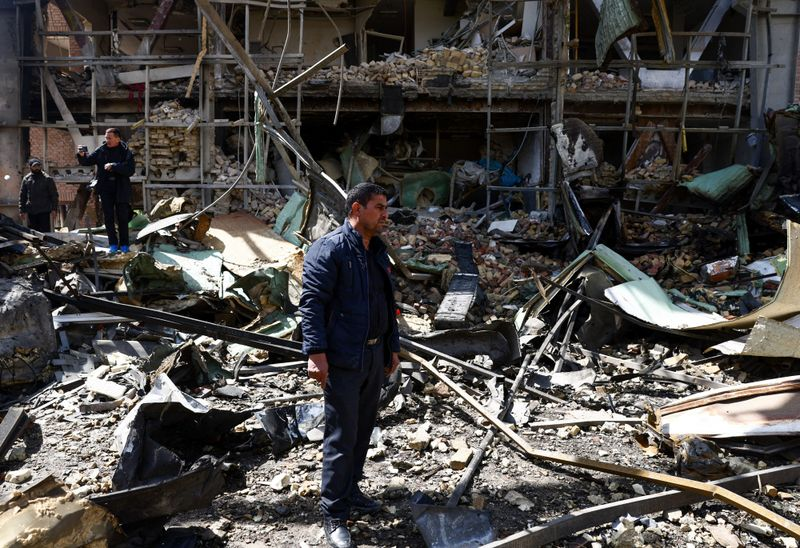
WARS today do not end. They linger, mutate and justify themselves. That is not strategy. That is failure by design.
I have seen wars end. And I have seen them refuse to.
In the military, we are trained for the start. We study the opening gambit, the kinetic surge, the breach and the suppression of the enemy’s will. We understand escalation. But there is a quieter discipline that once defined strategy and is now fading. The art of the stop.
Conflicts that ended well had a simple anatomy. Not total annihilation, but clarity of objective. Someone had the spine to decide the mission was over. Not because the enemy vanished, but because the job was done. Force applied. Threshold reached. Then came the hardest command. Stop. Go home.
Today, that spine is missing. No one decides. Conflicts drift.
A war without an end state is not a campaign. It is drift with casualties.
The Indian gold standard
We do not have to search for a benchmark. In 1971, India executed one of the most decisive campaigns in modern history. It was not just victory. It was the restraint that followed. We did not linger. We did not convert success into occupation. We knew what done looked like.
In the Maldives in 1988, we intervened, restored order and withdrew. No residue. No secondary agenda. Maximum impact, minimum footprint.
Even in Sri Lanka, complex as it was, we exercised the discipline to disengage when returns diminished.
India’s restraint lay not only in what it did, but in what it chose not to strike. Infrastructure was not treated as a target. It carries the life of a society. To destroy it is to punish the very people in whose name wars are often justified.
That discipline preserved legitimacy.
Consider Operation Sindoor. Precision. Bounded. Purposeful. Held. Done. Gone.
In each case, ends defined means. Today, means risk becoming ends in themselves.
Drift dressed as doctrine
We call it hybrid war. We call it grey zone. We call it calibrated ambiguity. From the field, it looks simpler. Drift, dressed as doctrine.
In West Asia, objectives shift while operations continue. One day promises decisive victory. The next speaks of a longer campaign. Negotiations, pauses and escalation overlap until words lose meaning.
In Europe, conflict has stretched into years. Objectives have accumulated layers of geopolitics until clarity dissolves. Fighting continues not because the end state is defined, but because no one will define it.
The conflict sustains itself.
The tea stall reality
Strategy forgets who pays for drift. The strategist speaks of theatre. The citizen pays for duration.
The man at the tea stall does not read doctrine. He feels rising prices from broken supply chains that never stabilise because wars never settle. He sees families trapped in conflict zones with no exit. He lives with uncertainty that seeps into the national psyche.
When a war has a horizon, society mobilises and recovers. When it has none, the economy and spirit bend around it.
If success is never defined, it is never achieved. Failure becomes the quiet default.
The paradox of capability
We have never had more tools to end conflict, yet we are worse at finishing them. Drones, cyber operations and precision strikes allow pressure below declared war. We can sustain a condition of neither peace nor war indefinitely.
That is the trap. Capability has replaced decision.
To stop requires accountability. It requires stating what was gained and what was lost. It demands ownership. It is easier to say the situation is evolving than to declare an outcome.
The measure of force
Force must be applied with clarity and purpose. But its legitimacy lies in discrimination.
If a slap is enough, why the cane? If the objective is correction, why punish the class for the fault of one.
Infrastructure is not a battlefield. It is society’s bloodstream. Strike it, and you are no longer shaping the conflict. You are punishing the future.
Every use of force leaves a residue, not just on the target, but on the initiator. Excess shapes memory, perception and resistance. What is gained in immediacy is often lost in legitimacy.
A calibrated response corrects behaviour. An indiscriminate one scars generations. Those scars return.
Humanity as the global common
Covid-19, climate and conflict have revealed a simple truth. No crisis remains local.
A war in one region disturbs food, fuel, trade and trust across continents.
Humanity is now the ultimate global common. It survives not on declarations, but on restraint in action. If it fractures, there is no rear area left.
Win the war before the war. And if that is not possible, design for termination.
The laws we never updated
War has never been lawless. It has always carried limits.
The Geneva Conventions established the baseline. Protect the wounded. Protect prisoners of war. Protect civilians. Distinguish between combatant and non-combatant.
The Additional Protocol-I recognised that war was changing. Civilians would no longer remain distant. Distinction and proportionality became central to legitimacy.
Civilian objects shall not be attacked. Systems indispensable to survival such as food, water and essential infrastructure are protected.
But the battlefield has moved faster than the law.
Today, power grids collapse cities. Data networks carry economies. Supply chains sustain nations. These are not secondary systems. They are society itself.
And yet, they are increasingly treated as targets.
We do not need new principles. We need the discipline to apply the existing ones to the wars we are actually fighting.
The minimum we owe
Across centuries, from Sun Tzu through Chanakya, Machiavelli and Clausewitz, strategy was never about endless conflict. It was about purpose, application and termination.
Restraint is not weakness. It is control.
Wars may begin in strategy. They must end in discipline.
If we cannot design how wars end, we will inherit conflicts that never do.