
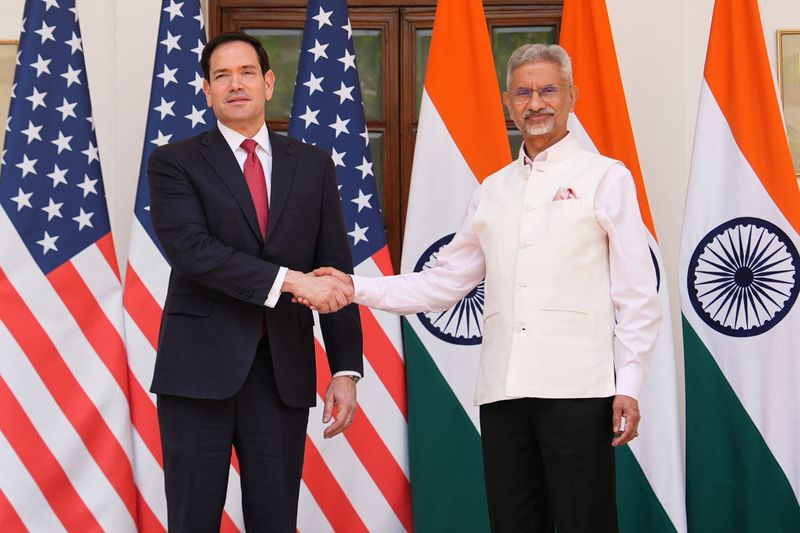
The lawless acts and events of the Trump 2.0 era have become a testbed of strategic autonomy.
Maj Gen Ashok K Mehta (retd)
DURING his recent tour of Europe, PM Narendra Modi upgraded bilateral relations to strategic partnerships with the Netherlands as the Dutch produce a critical component of chips; with Norway as Oslo is a source of green oil and gas; and with Italy for its innovation and high-tech. India is an observer state of the Arctic Council since 2013. Earlier this month, Modi said India would not bow to anyone, recalling the nuclear tests in defiance of US sanctions in 1998, signifying the birth of India’s strategic autonomy. A galaxy of diplomats gathered this month in New Delhi to celebrate what many describe as India’s crown jewel: strategic autonomy, whose fragility the Trump 2.0 era has exposed.
‘Strategic’ is the most overused adjective in diplomatic lexicon. It is attached to restraint, patience, sovereignty and national interest. The word ‘partnership’ is variable, dynamic and transactional. But strategic autonomy – hedging or balancing relationships by making sovereign choices — has prospered. The concept originates in India’s policy of non-alignment, adopted after Independence when New Delhi punched above its weight. As adversarial relations with US increased, India was pulled towards the Soviet Union. Even as it confronted triple threats from Pakistan, China and US in 1971, it was forced to sign the first formal Treaty of Peace and Friendship with USSR. The then PM, Indira Gandhi, insisted that “India is a non-aligned country’ be inserted in the treaty, which was de facto an alliance. It enabled India to build conditions for the creation of Bangladesh from East Pakistan.
India has graduated from non-alignment to multi-alignment and multi-engagement to multi-polarity, culminating in strategic autonomy, whose utility has been diminishing in a disrupted world order. Since national security policy and strategy documents have not been produced, strategic autonomy is an immaculate conception, though six draft policy documents have been gathering dust.
With India’s oldest ally Russia, the partnership is special, privileged and strategic. The partnership with the US has transformed from ‘estranged democracy’ to ‘comprehensive, global and strategic’. Relations with China have fluctuated from ‘developmental’ and ‘civilisational’ to ‘strategic and cooperative’, and from ‘peace and prosperity’ to ‘stable, but abnormal’ after Doklam and Galwan. India and France are ‘strategic and reliable’ partners, both coveting their autonomy. The EU is a recent entrant to the strategic club, though it is more in the category of trade and commerce. A China adversary, Vietnam was elevated to ‘enhanced comprehensive strategic partnership’ during the visit of its President To Lam to India earlier this month.
At a recent seminar, Foreign Minister S Jaishankar outlined the neighbourhood first policy, with India positioning itself as the ‘go-to option’ for regional infrastructure support of neighbouring countries. He added that the purpose of India’s policy (strategic autonomy) “is not to solve problems but manage relationships to national advantage”, including neighbours “respecting India’s red lines.” The ground reality in the neighbourhood, though, is different despite India calling itself “the first responder and net security provider” as the recent sinking of an Iranian ship returning from Indian Fleet Review 2026 by a US submarine in the IOR proved. The lawless acts and events of the Trump 2.0 era have become a testbed of strategic autonomy. These have baffled the international community, especially the UN and affiliated organisations. India’s less-than-successful record in protecting its international image results from a lack of strategic leverage and independent capacities; due to excessive external dependencies.
The special and privileged strategic partnership with Russia, civilisational relationship with Iran and membership of BRICS have all been targeted by the US. India’s lead role in the Quad, three-decade old multi-layered defence ties with the US and pivotal position in countering China have been undermined by the US’ dramatic policy shifts towards China — with whom it seeks respectful relations — “as reflected in Trump’s recent visit to China. The astonishingly blunt statement of US Deputy Secretary of State Christopher Landau at the Raisina Dialogue: “US will not make the same mistake as it made with China and Japan, with India” was merely a warning.
India is one of the most US-sanctioned countries: on Russian and Iranian oil, having been pressured to switch to Venezuelan oil; on Chabahar Port and Russian military platforms, though waivers were provided. In addition, the US has imposed penal tariffs on transactions with Russia. India has yielded mainly to US sanctions, except the S400 AD system whose fourth battery arrived this month. Had India not complied with sanctions on Chabahar port, it would have been able to construct infrastructure, leading to the development of the International North South Transport Corridor through Iran’s Bandar Abbas Port and reduced dependencies through the double-blockaded Strait of Hormuz. Further, it would have enhanced its image among the Global South and credibility of strategic autonomy.
Where token appeasement and diplomatic finesse would have helped is in recognising Trump’s claim in facilitating the ceasefire during Operation Sindoor, which is a reality. This would not have undermined strategic autonomy, but New Delhi’s persistent contradiction of Trump’s claims led to avoidable diplomatic friction. Pakistan played its cards well, transforming its image from a state sponsor of terrorism to a responsible mediator in conflict resolution and as the go-between during the negotiations between the US and Iran, in which Israel is conspicuously missing. Pakistan’s international profile has risen and instead of re-hyphenation with India, it is now in a different class. At the Delhi seminar, Ambassador Jawed Ashraf said: “Silence is not strategic autonomy”, hinting at India’s maun vrat (strategic silence) over illegitimate actions of the US and Israel against Iran and others. Elsewhere, former NSA Shivshankar Menon, former FS Nirupama Rao have said India has lost its voice, maintaining strategic silence; also its credibility among Global South and neighbourhood. The disrupted world order requires pro-active strategic autonomy.