
IAF’s requirement is for a non-invasive urination device designed for females which is wearable inside the aircrew equipment assembly and is compatible with the cockpit systems
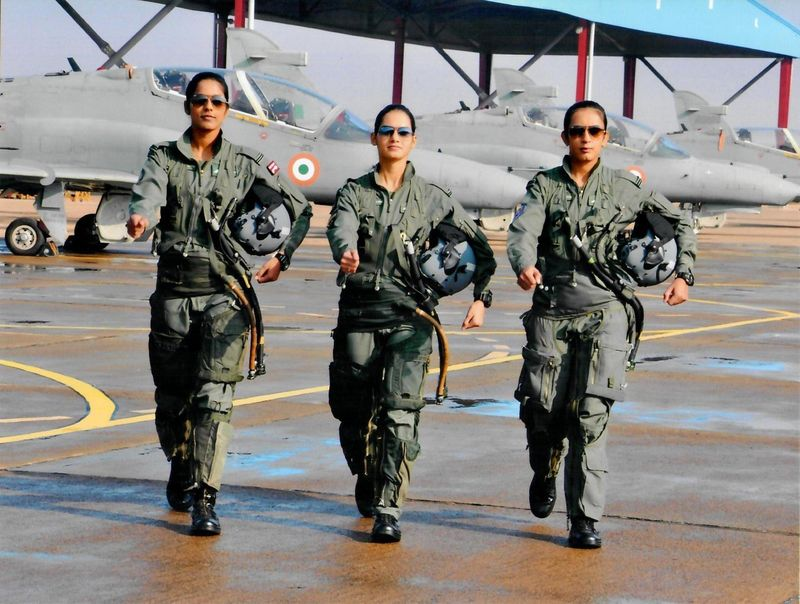
With women fighter pilots becoming an integral part of the Indian Armed Forces since 2016, the IAF is enabling them to undertake long distance flying, an activity currently restricted to male pilots as the cramped confines of the cockpits do not cater to the requirements of the female anatomy.
With the induction of in-flight refuelling capability, fighter aircraft can stay airborne for several hours, during which pilots may need to relieve oneself. While a system for relieving exists for male pilots, there is no provision so far for female pilots.
“Multirole fighter aircraft worldwide are capable of long duration flying. In-flight urination is a critical combat requirement during such missions. Due to anatomical differences in gender, it is crucial to develop an in-flight urination device for female fighter pilots,” a problem statement listed for the Innovations in Defence Excellence (iDEX) scheme states. Bids were invited from the industry till July 15.
IAF fighters have been flying non-stop for several hours at a stretch for carrying out combat air patrols and also for ferry missions overseas for joint training exercises. In fact, many of the new Rafale aircraft flew non-stop from France to India after delivery, involving a distance of approximately 7,000 kms and a flight time of 8-9 hours.
Female fighter pilots are now an integral part of the IAF’s as well as the Indian Navy’s fighter fleet, flying different types of combat aircraft including the SU-30 MiG-29 and Rafale.
“Due to the physiological restriction of relieving oneself during long duration sorties or long stretches of duty in harsh climatic conditions, the role of fighter pilots in these fleets are restricted,” the iDEX document states.
An initiative of the Ministry of Defence, iDEX aims to foster innovation and technology development in defence and aerospace by engaging innovators and entrepreneurs through financial assistance and grants.
During long duration flying, male fighter pilots wear condom catheters for in-flight urination, but a device for females is not available.
AirForce
Off the shelf products are not compatible with the cockpit systems and ejection seats of aircraft in IAF inventory. In the absence of an effective in-flight urination device, the IAF says that female fighter pilots are unable to exploit the full potential of these multirole aircraft.
The IAF’s requirement is for a non-invasive urination device designed for females which is wearable inside the aircrew equipment assembly and is compatible with the cockpit systems, harness and ejection seat of all fighters in IAF inventory.
The technology involved includes advanced materials to channelise urine flow, suction pumps, battery packs and urobags to collect and solidify the excreted urine.
As an offshoot, the technology may help bedridden female patients, minimising long-term catheterisation and associated infections, and future developments can explore its use for human space missions.