
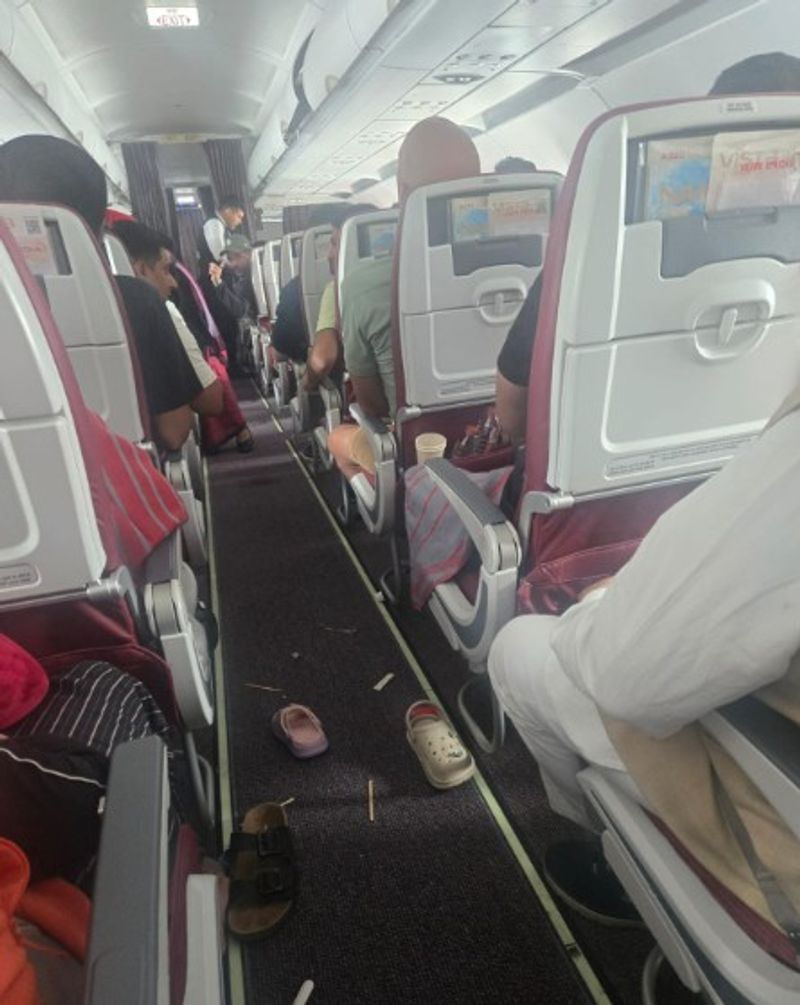
A drug screening of the pilot-in-command of an Air India Phuket-Delhi flight that suddenly lost around 300 feet in altitude during cruise on August 4 has returned a result requiring confirmatory testing, with the sample sent to a designated laboratory even as the DGCA has taken both pilots off roster pending the outcome.
The Ministry of Civil Aviation said on Sunday that the screening was conducted as part of the prescribed procedure after the incident involving Air India’s A320 aircraft VT-EXO, operating flight AI2379 from Phuket to Delhi. The aircraft, carrying 137 passengers, including three infants, and eight crew members — two pilots and six cabin crew — subsequently stabilised and landed safely in Delhi.
The development comes amid reports that the pilot had failed a post-flight drug test. However, the Ministry said the initial screening of the Pilot-in-Command (PIC) had produced a result requiring confirmatory testing and that the final report was awaited.
Air India, too, said it had not received the test results and was, therefore, not in a position to comment on any findings.
“We are aware that a post-flight screening test was conducted on the pilots in accordance with applicable protocols. However, the results of the test have not been shared with Air India, and we are, therefore, not in a position to comment on any findings,” an airline spokesperson said.
The Ministry said samples had been sent to the designated laboratory for confirmatory analysis.
Pending completion of the prescribed process, both flight crew members have been taken off roster by the DGCA, while further action will depend on the outcome of the investigation and the confirmatory test results.
The incident has also been formally classified as a Serious Incident and is under investigation by the Aircraft Accident Investigation Bureau (AAIB).
The Federation of Indian Pilots said the final report should be awaited before drawing any conclusion. FIP president Captain CS Randhawa said that if the pilot is eventually found to have tested positive, cancellation of his flying licence could be among the consequences, apart from penalties and other regulatory action.
“If the test seems positive, then the licence cancellation of the pilot can also take place because of this,” Randhawa said, adding that other consequences could also affect the pilot’s future.
He, however, stressed that the pilots’ body would wait for the official report before commenting on the reported result.
“We have to wait for the report about the doping test, and then only we can comment on it,” he said.
The Air India flight encountered the sudden loss of altitude at around 9.30 am on August 4 during cruise. The aircraft lost approximately 300 feet before stabilising and continuing its flight to Delhi.
Several passengers and crew members were injured during the turbulence. A passenger later filed a complaint with the Directorate General of Civil Aviation through the AirSewa portal, alleging that the sudden plunge threw passengers against the cabin ceiling.
The complaint said a family of six was travelling on the flight when the aircraft suddenly dropped. Renu Raniwala, 62, suffered a rib injury and suspected spinal injury, while Mukul Raniwala, 64, sustained bruises.
Visuals from the Delhi airport terminal showed ambulances and emergency responders attending to passengers, with several being assisted in wheelchairs and some seen with head bandages before being taken for medical evaluation.
Civil Aviation Minister Ram Mohan Naidu Kinjarapu said on Saturday that 24 passengers had experienced some form of medical discomfort and were taken to hospital for thorough medical checks.
“Most of the passengers were discharged from the hospital in the first few hours only,” Naidu said.
Air India said it conducts regular drug testing of crew members in compliance with civil aviation regulations, independent of any particular flight or operational incident.
The Ministry said the Civil Aviation Ministry and the DGCA remained committed to maintaining the highest standards of aviation safety and ensuring that such occurrences were thoroughly investigated and appropriate action taken in accordance with prescribed regulations and procedures.