
Fiddling with a tried-and-tested recruitment system comes at a price
Admiral Arun Prakash retd
Four years after its launch, the Agnipath scheme has met its first real test, and the government has quietly altered course. On November 4, the Union Cabinet approved a two-year service extension for Agniveers. Those not falling within the first 25 per cent on merit, after the completion of the four-year contract, will get another chance to join as regular soldiers.
If this is indeed the start of a rollback, it is welcome. But a rollback after four years demands the question that was never properly answered in 2022: why was a tried, tested and well-established working system replaced so peremptorily in the first place?
The Press Information Bureau’s note of June 14, 2022, said the scheme would “enable a youthful profile of the Armed Forces,” bring “a fresh lease of Josh and Jazba” and produce a “more tech-savvy” force. Among its dividends, the note listed patriotism, teamwork, physical fitness and loyalty to the country.
None of this justifies demolishing an established system of recruitment, basic training and phased induction of military recruits and replacing it with an untried and essentially unsound scheme. Anyone who has witnessed or heard about recruitment rallies knows that the youth of this country do not lack Josh and Jazba (zeal and enthusiasm); they turn up to join in thousands. Patriotism, teamwork and physical fitness have never been in question in our regiments, warships and squadrons; nor is inculcating “loyalty to the country” a good enough reason to initiate a measure that will — in the long run — impact the basic structure of the armed forces.
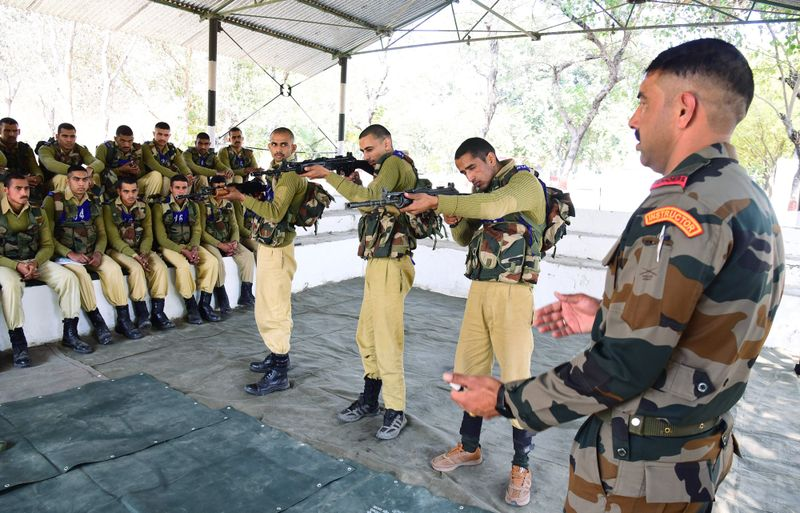
Lowering the average age may sound a laudable aim, but age does not equate to combat effectiveness. Skills do, and acquiring them takes time. Basic training of four to six months is grossly inadequate for recruits who come mostly from rural areas and are products of our flawed educational system. It requires to be followed by two to three years of hands-on and on-the-job training before a soldier, sailor or airman can be trusted with complex, expensive systems or in live-fire situations.
A “smart” fresh recruit may be adept at handling a smartphone, but he will need months of training to understand the working of a radar, fire-control system, drone, missile, aero-engine or even a simple diesel generator, and to qualify as an “operator”.
Behind the operators are the “maintainers”, who service and fix defects in these systems and take longer still to train. Above all of them are the “ustads” or instructors who, after decades of experience, teach everyone, including officers. For every recruit who joins at 17½ years, the services require experienced and combat-hardened Subedar Majors, Master Chief Petty Officers and Master Warrant Officers who will retire at 54-56 years. Fiddle with the system and a price will have to be paid somewhere, as the Navy is finding out after losing, in 2022, its Artificer cadre, which supplied all its weapon, sensor and machinery maintainers.
Under Agnipath, once basic training, annual leave and the pre-release period are deducted from the four-year engagement, the recruit’s net availability is just about three years. That raises uncomfortable questions: will the service invest in teaching technical skills to someone who may leave soon? Will the Agniveer be interested in acquiring them if his retention is uncertain? The incentives point the wrong way for both.
Whether the idea originated in the service headquarters or was imposed by the Ministry of Defence (MoD), a change of this magnitude should have been made the subject of a pilot project — to be tried out in one or more military units, or better still in the Territorial Army — and the results analysed. Instead, the entire armed forces have been abruptly subjected to this hazardous experiment.
While the government has consistently denied an underlying financial motive, the scheme is almost certainly driven by the need to control the MoD’s rising personnel costs, which squeeze funds for capital procurement. And yet, trading defence capability against pension savings is a bad bargain. If savings were never the underlying objective, the scheme loses its most tangible justification, and if they were, the logic is selective.
Ex-servicemen are not the only beneficiaries of the Central government’s pension system. The civil bureaucracy’s pension bill is also growing at the same rate, yet nobody proposes to fix it by cutting tenures or suspending biannual dearness allowance or shelving the 8th Pay Commission.
In his 1999 book Defending India, the late Jaswant Singh, a former BJP minister and retired cavalry major, had written that “national security is acknowledged as the first charge on the treasury”. He warned that the pension bill was growing at three times the rate of pay and allowances, a problem the country would one day have to face. Twenty-three years later, Agnipath was introduced as the panacea — a fiscal solution fobbed off as a military reform.
Lately, there have been far too many instances where the armed forces were forced to comply with political diktats or judicial orders that compromised their ethos and combat readiness. The military leadership must stand firm and deliver an unambiguous message: any proposed reform/change must pass one non-negotiable test — does it enhance or diminish combat efficiency? The Agnipath scheme fails this test: it truncates essential training, fractures unit cohesion by creating multi-tiered classes of soldiers and erodes the morale of those asked to risk their lives under terms their peers do not share.
The two-year extension may provide breathing space by postponing a difficult decision, but it creates more problems than it solves and leaves the military with a foot on two stools. If the government now accepts that retaining trained personnel matters for operational reasons, it should restore a recruitment model based on adequate training, define an optimal spell of Colour Service and rigorously evaluate any future military reform on the sole criterion of combat capability. Agnipath should not be patch-repaired. It deserves to be aborted.
The writer is former Chief of Naval Sta