
Maj Gen Harvijay Singh, SM)
World War II – After the capture of Keren and Asmara by mid-1941, Indian Divisions drove the Italians out of Eritrea freeing the Red Sea from any threat …. they were then reverted to North Africa where the situation had changed for the worst.
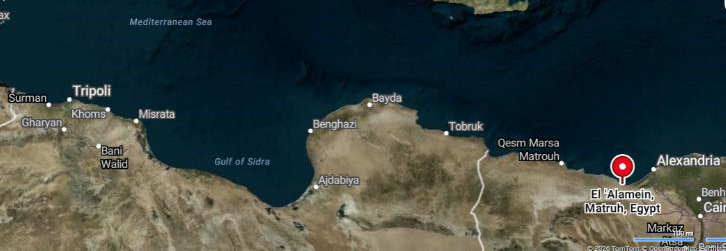
German General Erwin Rommel landed at Tripoli in March 1941 with the legendary Afrika Korps. By April 1941, Desert Fox as Rommel was known was in Egypt and started pushing the allies back eastwards.
Tobruk fell on 21 June 1941 – a major victory for Rommel.
The Afrika Korps was checkmated at El Alamein between 1-27 Jul 1942 and shattered on 4 Nov 1942 …. driven 2,000 km west across Libya, and finally surrendered in Tunisia in May 1943, ending the North African Campaign.
Two years of sterling performance of Indian Divisions:
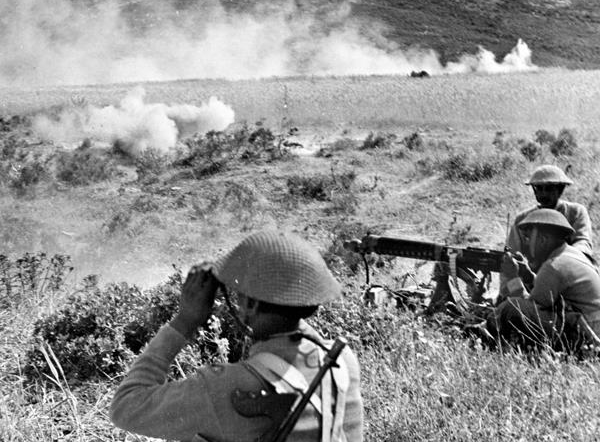
4th Indian Division (5, 7, 11 Infantry Brigades) fought in every major phase of the North African Campaign, Central India Horse (Light Tanks).
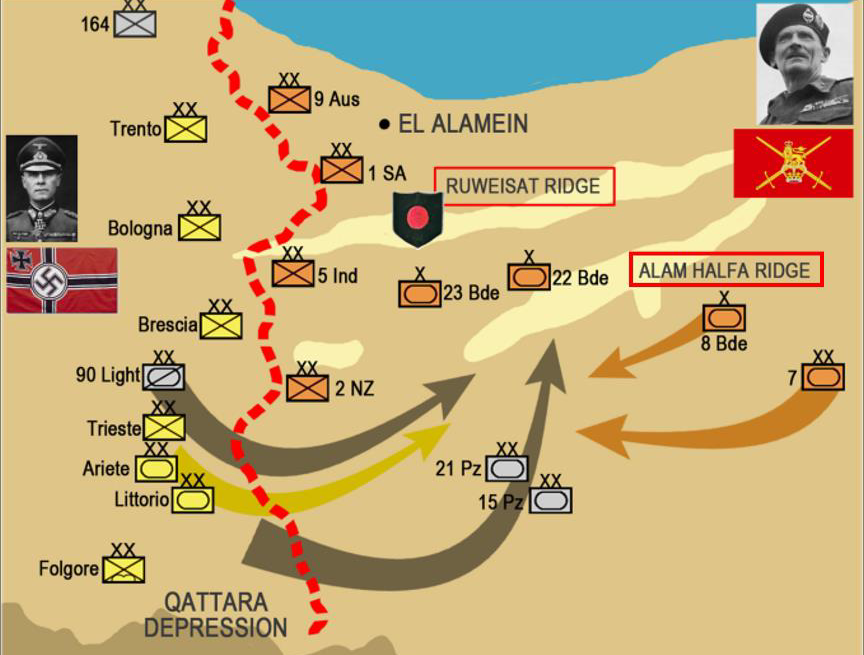
5th Indian Division (9, 10, 29 Infantry Brigades), executed a disciplined fighting withdrawal, held Alam Halfa Ridge where Rommel’s last major offensive in Egypt was defeated.
3rd Indian Motor Brigade. Fought aggressively suffering heavy casualties (equipped with Fordson trucks, limited radios, and very light anti-tank capability). Delayed Rommel long enough for the Alamein line to stabilize.
Later joined by, and 10th Indian Division (20, 25 Indian Infantry Brigades). Used for the final encirclement.
Lest we Forget – the fighting skills and bravery of the Indian Divisions need to be celebrated with great pride.
El Alamein covered an area of 80 Sq Kms between the sea and an impassable depression in the desert 100 Km west of Alexandria and 240 Km northwest of Cairo. Rommel aimed to seize Alexandria and threaten the Suez Canal.
After a series of defeats, 8th British Army commanded by General Claude Auchenlek took defence at El Alamein: laid miles of mines and dug tank traps. By now the Allies were close to their supply bases in Egypt … Rommel had stretched himself.
Rommel had superiority in armour. Auchinleck had superiority in artillery, and his forces were well dug in.
5th Indian Division (Ball of Fire) was deployed around the Ruweisat ridge. On 14 July 1942 the Germans attacked in force but were beaten back after a fierce fight.
Although the Allies stopped the offensive, it was viewed as a failure since Auchinleck failed to decisively destroy the enemy despite possessing a far larger force.
- His counterattacks were piecemeal, lacking armour–infantry coordination.
- The 8th Army remained reactive, not dominant – there were many missed opportunities.
Auchinleck was replaced and General Bernard Montgomery took command on 13 Aug 1942.
With his supply lines overextended, Rommel could have withdrawn. However, he and Hitler were obsessed with taking Alexandria and Afrika Korps remained in El Alamein.
Both sides were exhausted and there was a lull in the fighting. 5th Indian Division was relieved by 4th Indian Division and left for Iraq to recoup.
By end Aug Rommel planned to strike a decisive blow north of Alam el Halfa Ridge – a wide southern hook to outflank El Alamein and strike Montgomery’s rear ….. fuel starvation, air attacks, minefields, and 4th Indian Division’s defence however turned it into a final failed offensive.
Montgomery counterattacked but broke when the Germans were pushed back to their starting positions. Both sides again rested to build up their strength.
The strategic turning point of the North African Campaign was the 1st Battle of El Alamein (July 1942) and Alam el Halfa (30 Aug – 5 Sep 1942) – a turning point is about initiative, not the final victory.
By early 1943, 4th Indian Division had fought in more battles than any other Allied division in the North Africa. It was repeatedly thrown into the toughest sectors:
- Benghazi – After the collapse of the Italian 10th Army in early 1941, it pushed rapidly through Cyrenaica, entering Benghazi as part of the 8th Army’s advance.
- Tobruk – Early 1941: part of the forces that captured the port from the Italians. Later 1941- 42 part of the defence of Tobruk against the Afrika Corps.
- Wadi Akarit (6 April 1943) – One of the finest actions against the withdrawing Germans: an assault on the Fatnassa Heights creating a breach that forced a 240-km Axis retreat toward Enfidaville.
- Enfidaville – Spirited battles in the tough mountainous Tunisian terrain.
- Tunis – Final push to end the North African campaign.
During the North African campaign, if you walked into the bar of Shepheard’s hotel in Cairo, the barman always asked – which division? If you answered 4th Indian Division, drinks were on the house. The story might be apocryphal, but it glorifies 4th Indian Division – regarded as one of the “greatest fighting formations in military history”.
4th Indian
5th Indian Division
When the Division came under my command in South-East Asia towards the end of 1943, it had already had three years’ hard fighting in Africa. In 1941 it had played a leading part in the defeat of the Italian Army in the Sudan, Eritrea, and Abyssinia; in the summer of 1942 it had been very heavily engaged with the Germans and Italians in the crucial battle of the Knightsbridge ‘Cauldron,’ and in the fighting withdrawal across North Africa to the defence of the Alamein line…when I first met the men of this Division, soon after the formation of the South-East Asia Command—indeed it was the first Division that I visited—its reputation was already high…the Division was heavily engaged in the first land battle to be fought since the Command had been set up…and a large share of the credit must go to the Fifth Indian Division for the first decisive victory against the Japanese since they had invaded two years previously…(the) land victory at Kohima and Imphal, in which the Division played an important part, proved to be the turning-point of the Burma Campaign…The Division continued to fight and to advance throughout the rest of the war, except for one period of rest and reorganization…Its record was second to none and I was proud to have such a fine formation under my command. Louis Mountbatten in his memoirs paying
tribute to the 5th Infantry Division
