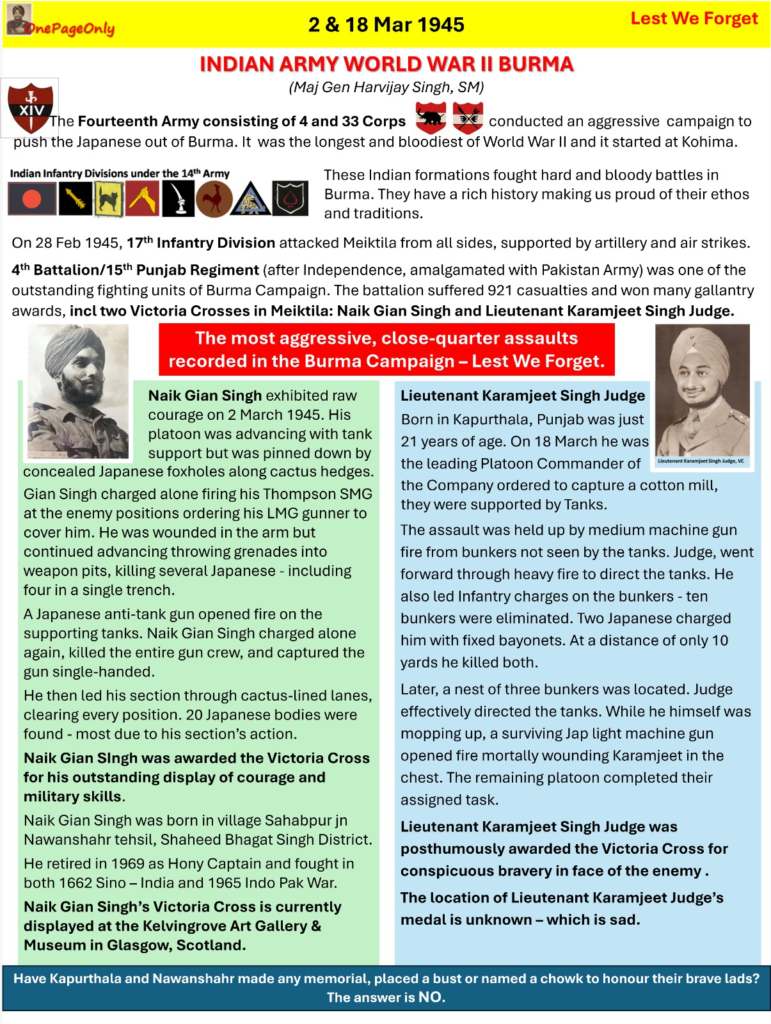
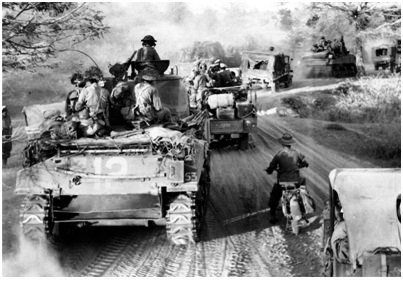
In the sweltering heat of March 1945, the fate of Southeast Asia hung in the balance. The British Fourteenth Army, often called the ‘Forgotten Army’, was locked in the longest and bloodiest campaign of World War II. At the heart of this struggle were the Indian Infantry Divisions, whose ethos and traditions were forged in the crucible of places like Kohima, Imphal, and the Irrawaddy crossing.
While the world’s eyes were often fixed on the Western Front, a specialized and brutal brand of warfare was unfolding in the jungles of Burma. It was here that the 17th Infantry Division spearheaded the capture of Meiktila, a decisive operational center. Among their ranks, the 4th Battalion of the 15th Punjab Regiment stood as a titan of combat, suffering 921 casualties and earning two Victoria Crosses in a single month.
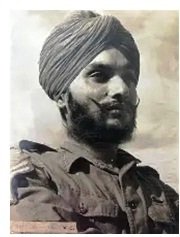
The Lone Charge of Naik Gian Singh
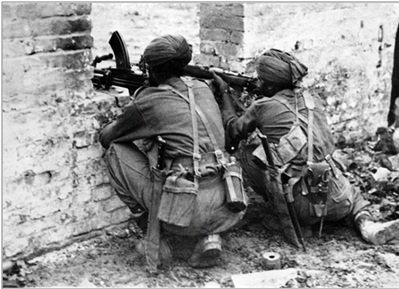
On March 2, 1945, the 17th Division’s assault on Meiktila was stalled. Hidden Japanese foxholes, concealed behind dense cactus hedges, had pinned down the advancing platoon.
Naik Gian Singh, seeing his comrades trapped, did not wait for orders. Armed with a Thompson sub-machine gun, he charged the enemy positions alone. Despite being wounded in the arm, he continued his momentum, lobbing grenades into weapon pits and clearing trenches with lethal efficiency.
When a Japanese anti-tank gun opened fire on the supporting tanks, Singh charged again. He neutralized the entire crew and captured the gun single-handedly. By the time his section cleared the cactus-lined lanes, twenty Japanese bodies lay in their wake. For this ‘outstanding display of courage,’ Gian Singh was awarded the Victoria Cross. He survived the war, later fighting in both 1962 and 1965 for independent India, retiring as an Honorary Captain.
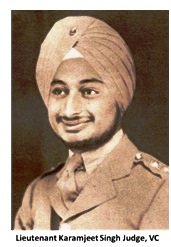
The Final Sacrifice of Lieutenant Karamjeet Singh Judge
Two weeks later, on March 18, the struggle for Meiktila continued near a vital cotton mill. Lieutenant Karamjeet Singh Judge, a 21-year-old platoon commander from Kapurthala, was leading the charge.
The assault was halted by heavy machine-gun fire from bunkers invisible to the supporting tanks. In an act of cold, calculated bravery, Judge repeatedly walked through heavy fire to direct the tanks toward their targets. He personally led the infantry charges that eliminated ten bunkers. At one point, he was charged by two Japanese soldiers with fixed bayonets; he killed both at a distance of a mere ten yards.
As he was mopping up the final nest of bunkers, a light machine gun opened fire, mortally wounding him in the chest. Lieutenant Judge was posthumously awarded the Victoria Cross.
A Legacy in Peril
The history of these two men represents the pinnacle of Indian military valor, yet their legacies are drifting into the shadows of time.
| Soldier | Award | Current Location of Medal |
| Naik Gian Singh | Victoria Cross | Kelvingrove Art Gallery, Scotland |
| Lt. Karamjeet Singh Judge | Victoria Cross | Unknown |
Today, Naik Gian Singh’s medal is preserved in Glasgow, while the whereabouts of Lieutenant Judge’s Victoria Cross remain a mystery. More poignant is the silence in their homelands. In Kapurthala and Nawanshahr, there are no busts, no memorials, and no squares named after these men who stood at the center of the 20th century’s greatest conflict.
To value our future, we must first value our past. The courage of the 15th Punjab Regiment in March 1945 is not just a chapter in a history book; it is the very foundation of the modern soldier’s spirit.