
Fearless Tales: Chief Artificer Megh Nath Sangal fired two styx missiles, which sunk cruise destroyer PNS Khyber with 222 sailors on board
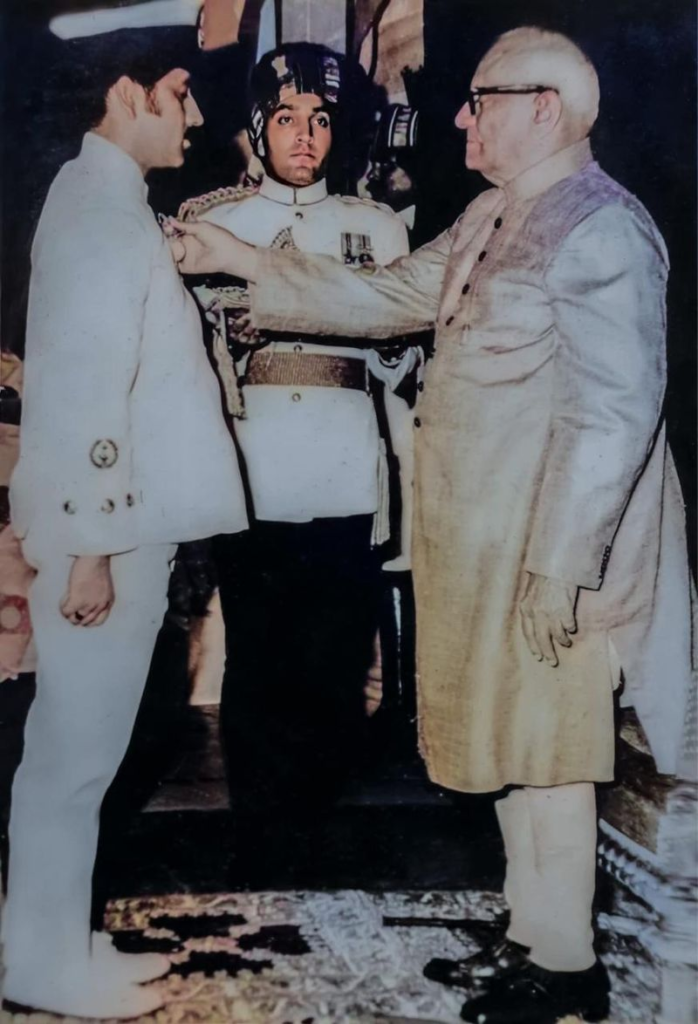
During the 1971 India-Pakistan War on the western front, Megh Nath Sangal, Master Chief Electrical Artificer (Power) II, was deployed on INS Nirghat. His operational responsibility entailed preparation and operation of the missile control systems.
INS Nirghat was the first missile boat of the task force that sank Pakistan Navy’s cruise destroyer PNS Khyber north-west of Karachi Harbour with 222 sailors on board by firing two styx missiles. All three missile boats that destroyed targets with precision were launched and controlled by Sangal. While INS Nirghat sank PNS Khyber, INS Nipat targeted PNS Shah Jahan and INS Veer sank PNS minesweeper Muhafiz with 33 sailors on board.
After setting Karachi harbour ablaze and destroying some formidable warships of the adversary, the Indian Navy flotilla returned to the Indian shores before first light on December 5, 1971.
A number of naval warriors were honoured with gallantry awards. One of the gallantry award winner was Sangal, who hailed from Hamirpur district of Himachal Pradesh. For performing his task fearlessly and with great devotion to duty, Sangal was awarded the “Vir Chakra”.
The battle account on his bravery, reads: “During the 1971 India-Pakistan War on the western front, the Indian Navy formulated a plan for attack and destruction of Pakistan’s Karachi harbour and the flotilla guarding it. The operation codenamed ‘Trident’, involved execution of the plan by Indian Navy’s 25th Killer Squadron composed of INS Veer, INS Nipat and INS Nirghat. Master Chief Electrical Artificer (MCEA) Megh Nath Sangal was onboard INS Nirghat for the operation.”
“The operation was launched on the night of December 4. The task of Sangal was to prepare the missiles and fire at the designated sea targets. Despite tremendous pressure due to the speed of operations and threat of enemy sub-marine attacks, Sangal kept his cool and performed his best, which resulted in accurate launching of the missiles. After putting Karachi harbour on fire and sinking two enemy destroyers, the Killer Squadron was back to the naval base before first light of December 5.”
It further states: “For the successful marine assault, the contribution of Sangal was very vital and crucial. For his tenacity of purpose and utmost devotion to duty under trying conditions, Sangal has been awarded the Vir Chakra.”
Megh Nath Sangal was born on October 24, 1943, at Jhareri village in Hamirpur district of then undivided Punjab. After passing matriculation from Government Higher Secondary School, Kangoo, and first year at the DAV College, Hoshiarpur, he joined the Indian Navy on February 8, 1960, as an Artificer Apprentice.
After undergoing training for a year at INS Shivaji, Lonavala, and three years of advance training at INS Varuna, Jamnagar, Sangal joined INS Talwar, the lead ship of the Talwar-Class Frigate of the Indian Navy.
After putting in almost four decades of active service, Sangal retired from Navy on October 23, 1999, as Lieutenant Commander. Post retirement Lt Cdr Sangal, VrC, served as Deputy Director Rajya Sainik Board.
Battling cancer, Sangal breathed his last on February 4, 2024. He is survived by his wife Shakuntala Devi to whom he got married on October 19, 1970. A man of strong values, dedication and an untiring spirit, he led by example and instilled the same principles in his family. His three sons have carried forward his legacy of hard work and perseverance, each achieving success in their respective fields.
The eldest son is employed with a reputed company in Dubai. The middle son is a successful businessman, heading a 1,400 million-dollar enterprise with 29 offices across the globe. The youngest son serves as a captain in the Merchant Navy and is based in Mumbai.
Remembering their father, his sons often speak of his deep love for nature. His farmhouse in Panvel stands as a reflection of his ideals and his connection with the nature.