
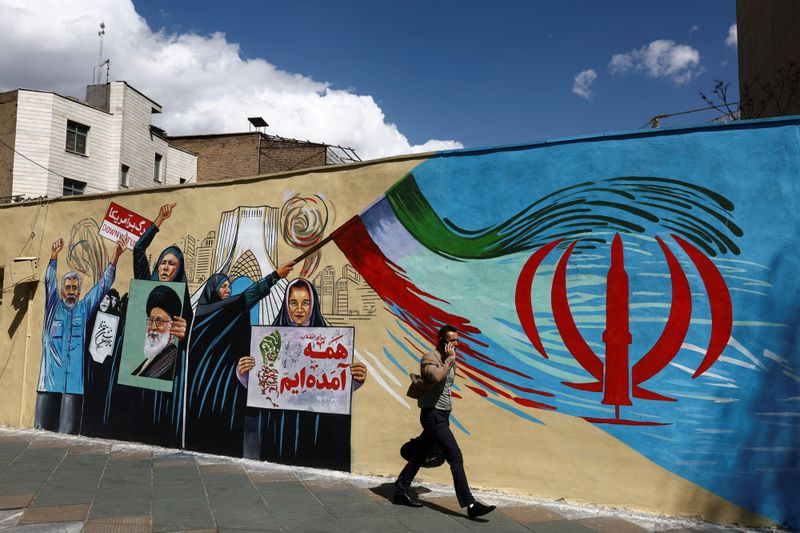
Diplomatic win for Tehran as US President accepts its 10 points as the basis of talks
A few hours before he was set to unleash “hell” on Iran, US President Donald Trump posted on Truth Social that he had agreed to “suspend the bombing and attack of Iran for a period of two weeks”. In response, Iran’s Foreign Minister Abbas Araghchi said on behalf of the country’s Supreme National Security Council (SNSC), “If attacks against Iran are halted, our Powerful Armed Forces will cease their defensive operations”.
Israel grudgingly decided to follow the American lead. Prime Minister Benjamin Netanyahu said, “Israel supports President Trump’s decision to suspend strikes against Iran for two weeks…” Thanks to this breakthrough, a ceasefire has begun. Both Trump and Iran have declared victory, while the world has heaved more than a sigh of relief.
There are crucial gaps in the protagonists’ statements on the truce. The US and Israel have made the ceasefire contingent on the reopening of the Strait of Hormuz. Trump wrote that his decision was subject to its “complete, immediate and safe” opening, but he did not prescribe a modality.
Iran has given a nuanced response. It has referred to its negotiating stand on the Strait; Tehran is keen to control the “passage through the Strait in coordination with Iran’s armed forces, which confers a unique economic and geopolitical position on Iran”. It remains to be seen how the Strait will function. Without its complete reopening, the ceasefire will not work.
Netanyahu has announced that the ceasefire does not include the fighting in Lebanon. Iran’s statement, though equivocal — and Iranian diplomacy specialises in frustrating equivocation — indicates that it does. Will Iran continue with the ceasefire if Israel persists with its attacks on Lebanon? Will Trump rein in Netanyahu on Lebanon?
The next 48 hours are critical to the continuation of the ceasefire, but there is too much at stake for Trump and the Iranians for it to fail. If Netanyahu plays spoilsport, Trump can bring him to heel.
Meanwhile, Iran can claim diplomatic success in Trump’s acceptance of its 10 points as the basis of negotiations. He wrote, “It is a workable basis on which to negotiate”. He has set aside his own 15 points. But Iran would know that its document is an opening gambit. It has mentioned its requirements — UN Security Council guarantees for non-aggression, reparation, security of its proxies, removal of sanctions, unfreezing of assets and no US bases in the Gulf — but it’s difficult to assume that most of these would be acceptable to the US.
On nuclear enrichment, an indispensable US requirement, the SNSC statement mentions “acceptance of enrichment”, but does not dwell on this point. Iran would have to make concessions on the nuclear issue.
The scene will shift to Islamabad for diplomatic action if the US confirms that talks will be held there on April 10. Iran has done so. Pakistan, which it must be admitted is the current toast of a large part of the world, has “invited” both sides, but not Israel. It is likely that at least one round of negotiations will be held in Pakistan. After Foreign Minister Ishaq Dar’s China visit, Pakistan’s mediation seemed to have flagged, but the US and Iran decided to continue relying on it.
Even as Trump has tried to put a gloss on the Iran war, he has failed in his objective of removing the Vilayat-e-Faqih system. What he, and even more Israel, wanted was to crush it, and for Iran to sue for peace, if not surrender. The decapitation strike led to regime change, but the new regime will continue to operate within the clerical system. In Iran, it will be much of a muchness.
Iran globalised the impact of the war by taking it to the Arab Gulf states and even more by effectively choking the Strait. In doing so, it removed 20% of the world’s hydrocarbons.
All wars after World War II impacted, at most, some regions. The Vietnam and Afghanistan wars of the 20th century and the ongoing wars in Ukraine and Gaza fall in this category. The Iran war is the first since 1945 that has had global implications. It has threatened the world because it has impacted global energy security and therefore, the global economy.
Indeed, the Iranian strategy of regionalising and globalising the war has been audacious but effective. Faced with an existential crisis, the Iranian system has responded successfully to save itself.
Did the US with all its war-gaming capacity not anticipate Iran’s strategy and the commitment to shahadat (martyrdom)? Trump’s chest-thumping and the use of expletives, and the bombing of Iran, cannot hide that he has not succeeded in his basic objectives. And, all this happened because the US does not care to understand the cultures of other peoples; that a people while being pragmatic can also draw on their cultural and spiritual heritage to offer resistance.
Did India, like the US and Israel, anticipate that Iran will fold up soon? If it did, as it seems so, it betrayed an inadequate understanding of Shia Islam. That would not be surprising because the Indian establishment’s knowledge of Islamic traditions is limited. That leads it to ignore or form half-baked ideas about them. It should have known that the Shia tradition of shahadat would lend resilience to Iran. Hence, the Indian articulation could have been different, even if the preponderance of its interests lay in the Arab Gulf states.
Above all, did the government realise, as the war clouds gathered, that Iran would close the Strait? Some Indian analysts believe that in the situation that confronted India, it could not but take sides and it made the right choice. In making choices, subtlety should never be lost.
In this case, India took recourse to the mantra of diplomacy and dialogue, but the perception that it had leaned towards the US and Israel remained. This was compounded by the timing of Prime Minister Narendra Modi’s visit to Israel a couple of days before the attack on Iran.
The Ministry of External Affairs’ statement welcoming the ceasefire will not be a balm for the Sangh Parivar or the PM’s supporters who may smart at the international encomiums heaped on Pakistan. Maturity demands that our neighbour should be allowed its moment in the sun. This cannot last because its domestic dynamics will, as always, be its undoing.