
KC Singh
Iran’s insistence on continued civil nuclear enrichment is a key point of contention
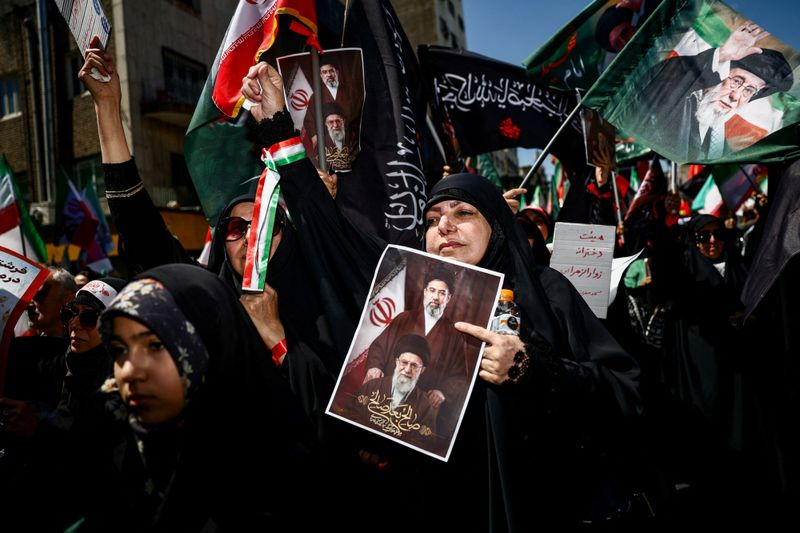
ON the night of April 7-8, as US President Donald Trump’s deadline for annihilating the Iranian “civilisation” approached, a two-week ceasefire was announced. In India, the development evoked both relief and concern. It was a welcome sign that an impending economic and humanitarian crisis had been averted. However, the fact that Pakistan seized centre stage sparked fears that it could misuse its enhanced diplomatic stature to rally support on bilateral disputes like Kashmir or the sharing of river waters.
Immediately, differences emerged over the ceasefire’s scope. Israel continued pounding Lebanon, especially Beirut, with missiles, claiming exemption from the truce. Reports that Trump had accepted Iran’s 10-point plan as the basis of negotiations were also refuted.
The Speaker of the Iranian Parliament, Mohammad-Bagher Ghalibaf, wrote on X that with three conditions in the 10-point proposal violated, the Gulf of Hormuz’s opening was on hold. He referred to the ceasefire not covering Lebanon, drones entering Iran’s airspace and the denial of Tehran’s right to nuclear enrichment. He regretted that this had happened even before the start of negotiations in Islamabad (Pakistan). Reportedly, a petrochemical facility on Iran’s Lavan island and some coastal areas were targeted by airstrikes.
If the Islamabad talks are held, as scheduled, on April 10, these hiccups may pass. But their postponement can complicate matters. Collating the demands of both sides shows areas of possible agreement or serious divergence. The Iranian demand for lifting sanctions has been conceded by the US in principle, though the timeline remains unknown. The demand for reparations to compensate for the damage caused by US-Israeli air attacks has been overtaken by Iran’s plan to raise revenue by levying tariffs on ships transiting the Strait. Although the Americans want the Strait’s immediate opening, President Trump has even suggested revenue-sharing.
The areas of dissonance are: Iran insisting on continued civil nuclear enrichment, albeit under the supervision of the International Atomic Energy Agency (IAEA); seeking the US military’s exit from the region and closure of military bases; and finally, Iran’s delinking from its regional allies, like the Houthis, Hezbollah and Hamas. The US has been insisting on the complete dismantling of Iranian nuclear enrichment facilities. America reverted to this approach after seeking Iranian regime change at the war’s start. Iran’s nuclear weapon-making capability is the principal target.
Differences are surfacing between the US and Israel. The New York Times revealed how the decision was taken to attack Iran. In June 2025, the two countries had attacked Iranian nuclear facilities at Natanz, Isfahan and Fordow. On February 11 this year, Israeli Prime Minister Benjamin Netanyahu visited the White House with his national security team. He made a presentation to President Trump, arguing that a four-stage military operation could achieve regime change in Iran. First, the assassination of the Supreme Leader Ayatollah Ali Khamenei and then the destruction of Iranian offensive and defensive capabilities. This would cause a popular uprising, catalysed by Mossad-activated armed Kurdish fighters infiltrating from Iraq. Finally, a secular government would emerge. A list of possible future leaders was also shared.
The US team’s reaction was divided, with CIA Director John Ratcliffe describing the expectation of an uprising as “farcical”. Gen Dan Caine, the chairman of the Joint Chiefs of Staff, dilly-dallied, unlike the commanders during President Trump’s first term. Vice President JD Vance expressed “strong scepticism” about the prospect of regime change. Reportedly, he recently chided Netanyahu on the phone for misleading the US with unrealistic expectations.
Right from the beginning of the war, I have argued in newspaper articles and television debates that the Iranian regime would not collapse under military coercion.
It is still unclear why Prime Minister Narendra Modi suddenly visited Israel on February 25-26, two days before the war started. Israel announced his visit only on February 22. Did someone share Netanyahu’s arguments about Iranian regime change with him, encouraging the Indian government to ignore the appearance of partiality towards the US-Israel camp? Since 1991, when India established diplomatic relations with Israel, closer engagement with Tel Aviv has always been seen as beneficial for India-US ties.
Six weeks into the Iran war, the regional security architecture in the Gulf and West Asia faces restructuring. Pakistan’s diplomatic ascendancy through mediation and China’s behind-the-scenes role in militarily and economically supporting Iran have implications for South Asia. If the interim ceasefire leads to a more permanent solution, a new regional order could emerge. The six Gulf Cooperation Council (GCC) nations are now divided. Qatar has cut a deal with Iran and is seeking the removal of the US military base. The differences between Saudi Arabia and the UAE have worsened.
External Affairs Minister S Jaishankar is rushing to the UAE as the Saudis now seem fully aligned with Pakistan. The BJP-led government’s decade-old policy of wooing the Gulf’s ruling families to isolate Pakistan now appears defunct. Turkiye and Egypt are also with the Saudi-Pakistan axis, backed by the US. Saudi Crown Prince Mohammed bin Salman has always been keen to draw investments away from Dubai. Prosperity and investments may not fully return to Dubai and the UAE, so long as Iran is run by a regime with new faces but the same ideology. Additionally, the Iranian morale has been boosted by the successful defiance of the US and Israel.
The US entered the Gulf region in 1971 following the British withdrawal from the Trucial States, which preceded the UAE. The Shah of Iran and the Al Saud family of Saudi Arabia became their twin pillars of regional security. The 1973 Arab-Israel war and the resulting fuel crisis made the Gulf critical to the US economy. The 1979 Iranian Revolution upended this structure. Iraq’s Saddam Hussein became the bulwark against Iran; he got US support during the Iran-Iraq war (1980-88). Hussein’s occupation of Kuwait and subsequent ejection and the 2003 US occupation of Iraq gave periodic shocks to the region without undermining the regional order.
The Abraham Accords of 2020, crafted during President Trump’s first term, were to create a new Iran-containment structure consisting of Israel and Arab nations willing to normalise relations with it, ignoring the Palestinian issue. The October 7, 2023, attacks on Israel undid all that.
The current war is based on failed ideas of the past to harness Iran. However, the US ended up snapping the existing paradigm, based on the Iran-GCC coexistence or calibrated cooperation despite religious and political schisms.
The regional chaos may slowly settle with recalibrated bilateral relations or regress into controlled violence. However, until a more sensible leadership emerges in Israel and the US, permanent solutions are impossible. Disputes like the Palestinian issue cannot simply be discarded. Iran, too, must abandon old slogans wishing death to the UK, the US and Israel.