
Over 300 km of border roads in the Jaisalmer region are being widened and strengthened
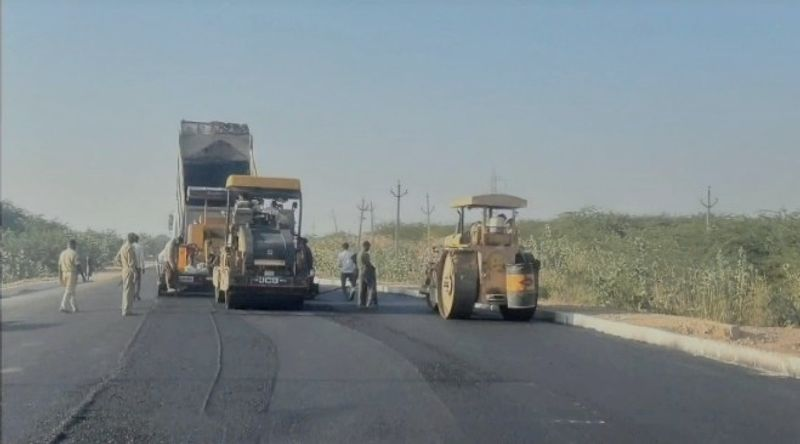
Beyond its heavy focus on development of critical road infrastructure in the mountains along the country’s northern frontiers, the Border Roads Organisation (BRO) is upgrading some roads in the deserts of Rajasthan that would enhance connectivity along the western borders.
Over 300 km of border roads in the Jaisalmer region are being widened and strengthened. These include the 70-km long Ramdevra-Nachna stretch, the Lundet-Pithewals Mor (PTM) road, which is 125 km long and the Ramgarh-Asutar road that runs for about 110 km.
“Aligned with the operational requirements of the Indian Army, Project Chetak @BROindia is strengthening critical border infrastructure across the Thar Desert. Upgradation of key routes — Ramdevra-Nachna, Lundet-PTM and Ramgarh-Asutar — is boosting last-mile connectivity, operational mobility and regional development,” BRO has posted on its X handle.
These roads were Class 9 standard and are being brought up to National Highway Single Lane and National Highway Double Lane standards, BRO officials said. A Class 9 road is a narrow road having a carriageway about four meters wide and are designed for light traffic, serving as link roads and feeder routes for local access in the hinterland.
Besides accommodating heavier traffic and providing flexibility and convenience in the movement of military traffic, better roads would also benefit the local populace and provide greater access to tourists. Ramgarh, for example, is the site for Ramgarh Structure, a 160-million-year old 3.5 km diameter crater formed by a meteorite impact, which has been declared as India’s first national geo-heritage site.
The ongoing works in Rajasthan are being executed by BRO’s Project Chetak headquartered at Bikaner. Geographically, it is the largest among BRO’s 18 projects, stretching across the states of Punjab, Rajasthan and Gujarat and maintains over 3,200 km of roads in the operation jurisdiction of the Army’s Western, South Western and Southern Commands.
This project is also responsible for the construction and maintenance of ditch-cum-bunds (DCBs) that form an important part of the defences along the India – Pakistan border in the Panjab and northern Rajasthan sectors. DCBs are structures comprising a shallow canal with a high earthen embankment embedded with bunkers running along its rear bank that act as an obstacle for enemy vehicles and troops.
Functioning fully under the Ministry of Defence, BRO has built over 64,100 km of roads, 1,179 bridges, 22 airfields and seven tunnels across India’s border areas in 11 states and three Union territories besides friendly neighbouring countries, including Bhutan, Myanmar, Afghanistan and Tajikistan since its inception in 1960.
In the 2024-25 financial year, BRO recorded the highest-ever annual expenditure of Rs 16,690 crore, with a target of Rs 17,900 crore for the current 2025–26 fiscal. In the two-year period from 2024 to 2025, BRO commissioned 356 infrastructure projects, marking a major milestone in strategic border development. Under BRO’s perspective plan, 470 roads covering about 27,300 km are planned in border areas.