
For all intents, we were in the bag — but luck had not deserted us.
Lt Gen Baljit Singh Retd
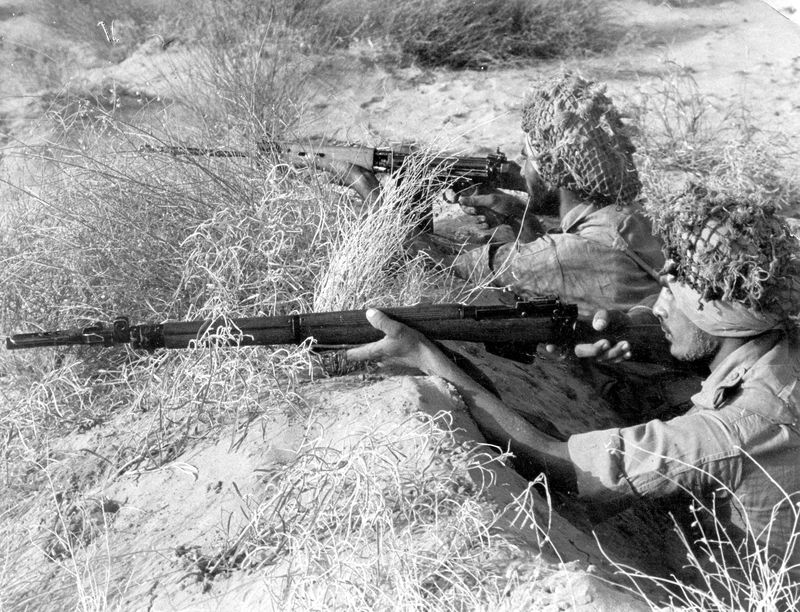
At the stroke of 2000 hours on December 17, 1971, during the Indo-Pak war in the western theatre, the sudden and profound near-total quiet which had descended all across the Chhamb battle zone after 15 days of almost continuous lethal combat engagements, was to me reminiscent of the all-pervasive surreal silence in the Universe before God created life on planet Earth. But did we dance in euphoria, having brought the war to a closure? Speaking for myself, I was simply bewildered to make any sense of it all, like the two teenaged grandchildren who in all innocence had asked poet laureate Robert Southey about the “Battle of Blenheim“:
Looking back, this little patch of the Indian subcontinent had been a strategic obsession of the Pakistan military planners as a springboard for dominance of the southern Pir Panjal region and a potential threat to Jammu during all the three Indo-Pak wars, albeit without success. Mindful of these tendencies, the 10 Infantry Division of WW II fame was resurrected, both to bolster the defence posture in the Chhamb-Jaurian sector and to recapture the territory lost to Pakistan in the Chhamb sector in the 1965 war. But kudos to our Pakistani foes who outwitted us with an audacious pre-emptive, executed spiritedly without let, beginning at sundown on December 3, 1971.
Their intent left little doubt when some 180 artillery guns of various calibres firing in unison lit up the horizon in an orange-pink wash, followed by the distant thunder of massed guns firing in rapid succession, gradually building into a never-ending roll of drumbeats. But in the next blink of an eye, even that mighty sound got downgraded by the greater, deafening lethal shell bursts all around us.
And the serenity of the beautifully starlit horizon of five minutes earlier was completely obliterated by the mushrooming clouds of smoke and debris, turning beauty into something beastly.
By nightfall on December 5, Pakistan had well-nigh neutralised most constituents of the 191 Infantry Brigade group holding defences west of the Tawi rivulet (TR), except 12 Field Regiment (Artillery), and the GOC signalled his commanders to withdraw on December 6. It appeared that our Command Radio frequency had been compromised because come 0200 hours that night, endless waves of artillery fire assaults heaped up the existing carnage of blood and gore.
Around 1700 hours on December 6, 191 Brigade commenced phased withdrawal under covering fire by 12 Field Regiment. And, by 1945 hours, noticing the now totally isolated 12 Field, our foe seized the opportunity to create a horseshoe resting on TR, trapping us gunners in its constricted centre! For all intents, we were in the bag —but luck had not deserted us, as our archetypal breeching of the siege was best summed up by Lt Gen KP Candeth, the GOC-in-C Western Command thus: “Guns of this Battery (Sic. 12 Field Regiment, Q Battery) were the last organized body of troops to withdraw across the Munawar Tawi bridge with great élan and in a copy book sequence, each 25 Pounder gun leap-frogged in a retrograde action, firing at point blank range till the pursuing enemy infantry were exhausted to stand still, before it (bridge) was blown by us as a part of our defensive plan” by 101 Engineer Field Company at 2345 hours on December 6, 1971.
Even under intense combat, there are moments of comic relief. On December 7, our lookout sentries apprehend a suspect trespasser in our gun area. But fancy meeting the lanky, 6-ft Major in armoured corps overalls, after our last term together at the IMA, Dehradun, in 1956! Recognition dawned upon both of us simultaneously; friend Grover had been asleep in a trench when his tank troop acted on orders to “move at once”, leaving their troop commander to recoup his sleep!
And lastly, two legacy memories. Just when it seemed that we had wrested the initiative, enemy sprang another surprise with multiple shallow intrusions across the east bank, sending alarm bells ringing loud and we received orders to withdraw yet further back.
Subedar Major Sant Ram Sahib bickered with tear-filled eyes: “Saab, aenaa pichhe hut-hut ke, ghar wapas ja ke apna moonh kime dakhawan ge!” I was struggling for an answer when, fortunately, that order was countermanded, eliciting a prompt happy response from Sant Ram Sahib, “Aah taan Rab ne fauj de izzat bucha ditti, Saab ji!“
For the first time, on December 14 morning, there was a perceptible drop in demands on fire support. Around midday, every eye turned towards sentries escorting at the point of bayonet two turbaned Sikh peasants in colourful, loose-flowing Punjabi “kurtas” and billowing “tehmats” of Bhangra performing artistes to where I stood. In a flicker, they lifted me up in a tight bear hug, uttering: “Oh! Balle-balle-balle!” and the entire gun position burst in merry guffaw.
A somewhat bewildered and embarrassed havildar clerk, Nirmal Singh, emerged from the Regimental Command Post dugout to formally introduce his maternal uncles!
After a lengthy narration of how they hitched rides from Gurdaspur onwards, and gave the slip to every Military Police check post en route, they stated “Asaan socheya aeni ghamasan jung lagi hai, te assan apne bhaanje nu zarur mil aaiye!” We entertained them to a right royal lunch, downed with stiff rum punch before escorting them back to Akhnoor.
Subedar major Sant Ram Sahib and havildar Nirmal Singh and their kind are the epitome of those who are attracted to the Indian armed forces. As Philip Mason surmised: “Because it is a matter of honour!” No less, no mor