
This is a moment in history where we have put Pakistan on the backfoot. India now needs to shift its centre of gravity to Pakistan’s troubled western borders and keep it engaged there in fire-fighting even as the ground lost in Kashmir is regained
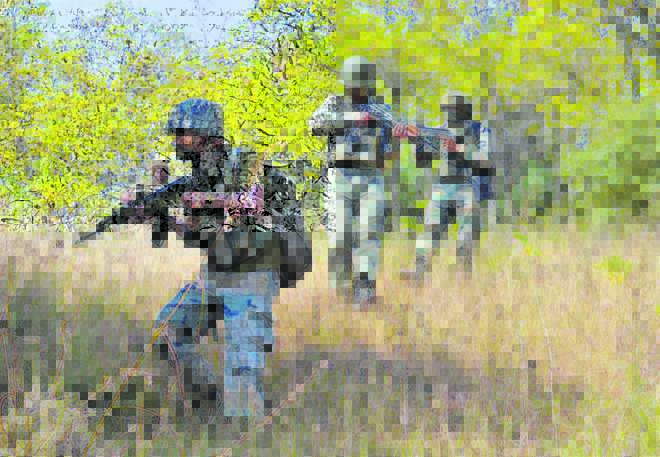
India quietly demonstrated that it can access ambiguous space under the “nuclear fence” as the Army protected the idea of India. PTI
SET the gushing words aside and you suddenly realise that not so much has happened that merits such euphoric recall. There have been similar operations in the past whose impact was felt but hardly spoken about. Yet — and this is key — enough has been done this time around to compel Pakistan to pause to re-strategise and recalibrate its future conduct of proxy war. Enough has been done to induce serious paralysis of the Pakistani decision-making (read Army) apparatus as they struggle with the reality that an India they presumed incapable has actually called their bluff. Posturing fuelled by the Chagai nuclear tests worked for them to limit the Kargil War. Yet again, in 2001 India mobilised post the terrorist attack on the Indian Parliament under Op Parakram but then failed to walk its talk. This time around, the standard, brazen, implied “we-will-go-nuclear” threat has fallen flat. This, for Pakistan, is worrisome. More significantly, Pakistan, used to calling the shots, has been suddenly caught unprepared in a maze of uncertainty. It does not know how to handle the fallout of the Indian riposte in order to bolster its image domestically as well as internationally. This is evident in its current “did-not-happen” strategy with indignant bluff, not incontrovertible proof, as its main platform. The Northern Command’s surgical strikes negated Pakistan’s huge strategic advantage by taking out several trans-LoC terror launch pads astride Haji Pir in both 15 and 16 Corps zones. This had not happened before at this scale. Another major difference was the joint military and diplomatic declaration of the strikes. The Indian DGMO spoke in open-ended military syntax and the MEA spokesman used diplomatic finesse of a rare kind. Keeping the Pakistani DGMO informed (and announcing that too publicly) was another well- thought-through coup de main which Pakistan must have found galling. This happened because Pakistan had failed to upgrade Guevara 1.0 of 1987 and Guevara 2.0 of Kargil 1999. Pakistan’s proxy war of a 1000 cuts suddenly became irrelevant on the night of 28/29 September 2016. Complacence made Pakistan in Uri made Guevara dated and in need for ditching or serious review and Pakistan isn’t prepared to make the transition. The details are irrelevant. What is clear is the shallow insertions were not helicopter driven. The weapons do not matter either. What matters is that the mission was carried out by skilled, professionally tasked troops. What matters is that the targets had been assiduously studied over time; attacking troops had access to comparative photo cover. What mattered was what was delivered by troops sworn to win.Gains and areas of concernFirstly, India quietly demonstrated that it can also access ambiguous space under the “nuclear fence.” as skillfully as Pakistan. A subtle spin-off message is that PoK is Indian territory and entering it to impart “lessons” to terror-promoters is perfectly legitimate. Secondly, India has upgraded its response strategy to publicly owned retribution. Thirdly, Army’s professionalism has been subtly highlighted. Fourthly, the Indian Army has proved that the forces are programmed for unlimited liability to preserve and protect the “Idea of India”. Death has no place in this equation at all. It is just a hazard that the forces face with equanimity and calm acceptance. The implication is as blunt as the messaging. A time has come to put the grim war time Chief Gen Ved Malik’s signalling: “We will fight and win with what we have” to rest. Soldiers need weapons and unqualified support in pay, allowances, societal respect and attendant prestige to uphold India’s sovereignty against external threats, regardless of who the enemy is.
Afterword
The subcontinent’s immediate future does not look bright. Pakistan has to take a call on what it must do next. The easier decision here will be to conduct strikes to reclaim its lost “moral” ascendancy over India. The harder part will be to cope with the equally certain Indian response; this time of a higher order. This is a moment in history where, we have nevertheless put Pakistan on the back foot. India now needs to shift its centre of gravity to Pakistan’s troubled western borders and keep it engaged there in fire-fighting even as the lost ground in Kashmir is regained, Burhan Wani and his legacy must be put to rest by seriously addressing the problems of young that Kashmir is facing. This is a call Prime Minister Narendra Modi needs to take: Do a Vajpayee in Kashmir while Pakistan is kept sweating on its western borders. That is the Idea of India that people across party affiliation will unhesitatingly accept and the military cheerfully die defending — with unlimited liability.The writer commanded an LoC Division in North Kashmir