With China already 30-50 years ahead of India, experts at the 10th edition of the Military Literature Festival in Chandigarh on November 14 called for an urgent review and strengthening of the country’s national security architecture to meet emerging geopolitical and technological challenges.
Deliberating on India’s position in the global order, they said the rapidly changing geopolitical environment called for regular assessment of the country’s national security needs and aspirations.
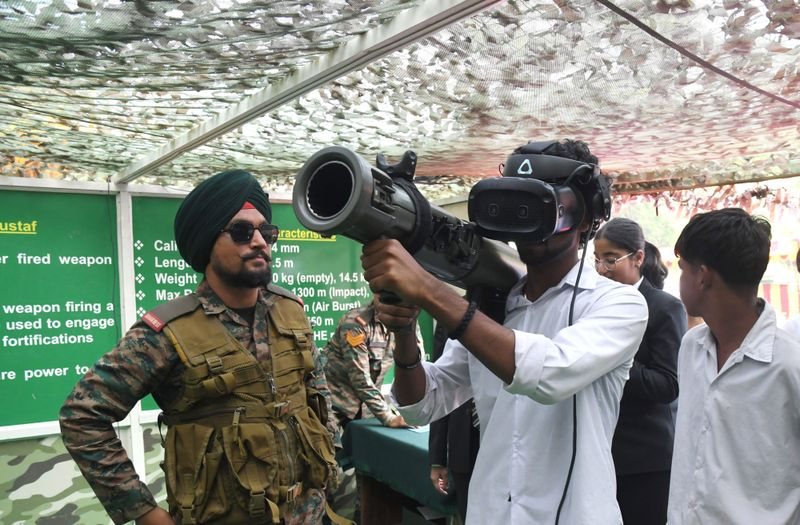
With China far ahead, even vis-à-vis the US, the world order was witnessing growing instability, with major powers deploying military resources to pursue territorial gains, secure oil reserves and bring about regime change. The experts stressed the need for India to strengthen its security architecture through innovations in space, cyber and artificial intelligence.
Sushant Sareen of the Observer Research Foundation said there was no such thing as “strategic dependence” and that the term was merely a euphemism. Even the US depended on several countries to meet its needs and aspirations.
“No nation can be fully dependent upon any one country. We need to outgrow this perception as each country today prioritises its own needs,” he said.
Referring to the Russia-Ukraine and US-Iran conflicts and their impact on traditional partnerships, Sareen said European middle powers might resist, but this was unlikely to result in any major new alliance.
Ambassador Gurjit Singh said the changing nature of asymmetrical warfare called for an integrated approach involving space technology, cyber architecture and drones to tackle emerging threats. He added that conflicts in Africa showed that starting wars and inflicting damage was no longer the preserve of superpowers.
“The world order needs stability which can only come from a position of strength for a particular nation,” he said.
On India-Pakistan relations, Ambassador Yashvardhan K Sinha said warfare had changed dramatically, with the US-Iran conflict demonstrating how supply and choke points could be weaponised to inflict collateral damage.
“Though we must keep preparing for conventional warfare, the need to ramp up our technology in space and cyber domains is critical,” he stressed.