
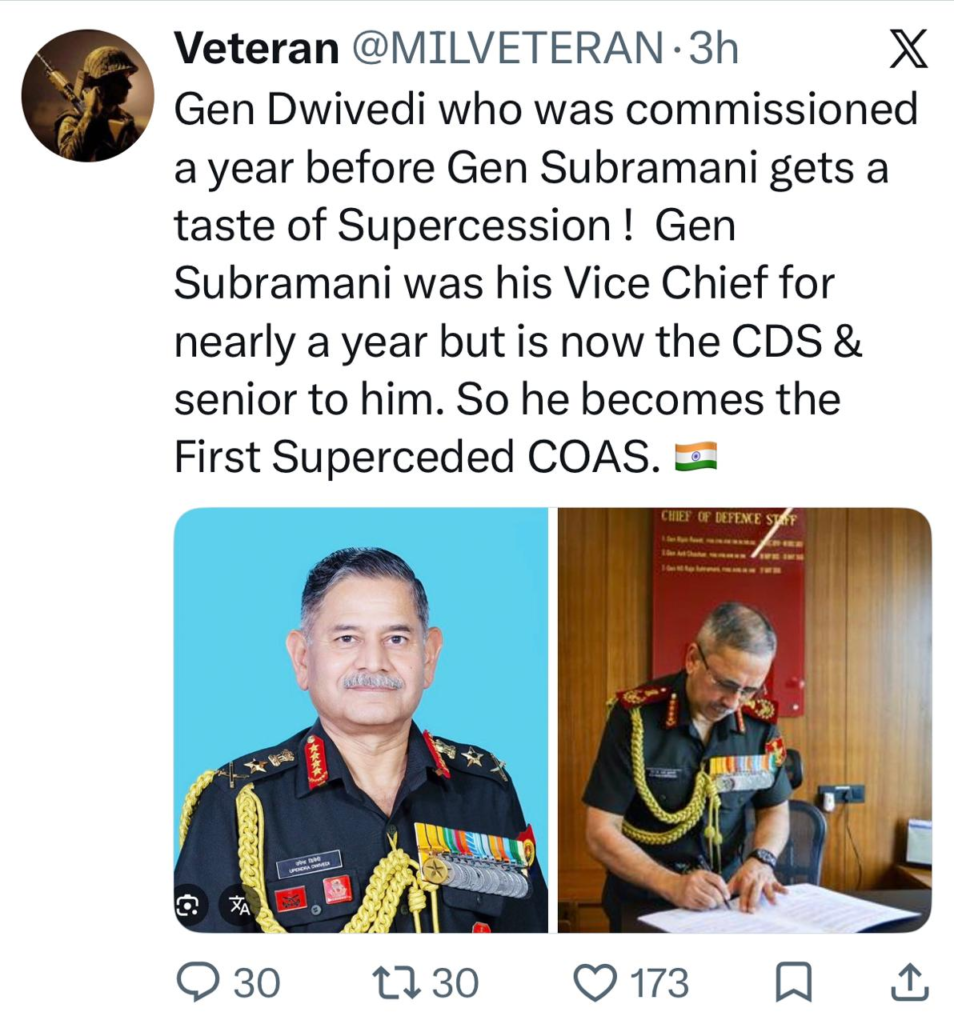
The Chief of Defence Staff (CDS) is a four-star officer of equal rank to the Chief of Army Staff (COAS). While the CDS acts as the “first among equals” and the principal military advisor to the Defence Minister, the COAS retains operational command over the Indian Army and is not subordinate to the CDS. [1, 2, 3, 4, 5]
However, in terms of commissioning seniority and official protocol, the COAS can be junior to the CDS. [1]
Key Differences and Dynamics
- Rank & Status: Both the CDS and the COAS hold the rank of full General (4-star rank), sitting 12th in the Indian Order of Precedence. [1, 2, 3, 4]
- Command vs. Integration: The COAS has direct command of the Army. The CDS does not exercise military command over the Service Chiefs, but rather promotes tri-service synergy, oversees the Department of Military Affairs (DMA), and drives military theaterization. [1, 2, 3, 4]
- Protocol & Precedence: In defense protocol, the CDS serves as the Permanent Chairman of the Chiefs of Staff Committee (COSC), giving the office ceremonial and functional seniority over the Service Chiefs in official meetings and state functions. [1, 2]
- Recent Precedents: Seniority in these appointments is not strictly based on years of service. For instance, following his appointment as the 3rd Chief of Defence Staff, General N.S. Raja Subramani became senior in protocol to the serving Army Chief, General Upendra Dwivedi, despite having served under General Dwivedi as the Vice Chief of the Army Staff previous