
Global flow and the cascading cost of disruption across systems and lives
Lt Gen SS Mehta Retd
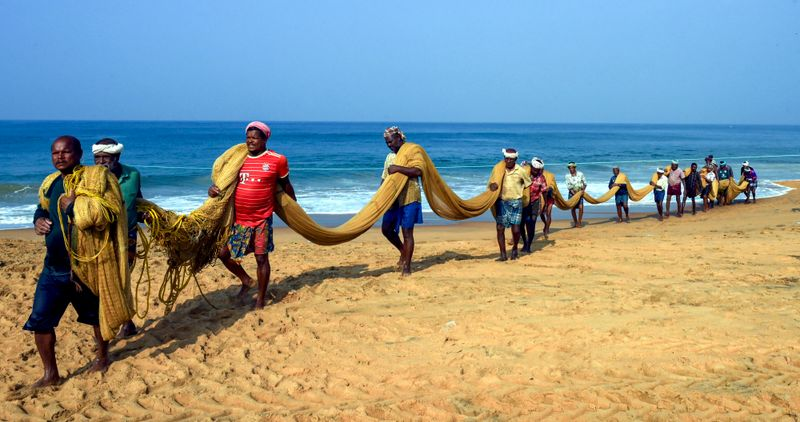
WHEN global flow breaks, disruption does not remain where it begins. It travels. From oil to food to livelihoods, the cost is borne far from the point of decision. What must move cannot be negotiated each time. It must be secured by design, not restored by exception.
When the Law of Flow was first articulated in The Tribune, it did not arrive as doctrine. It arrived as recognition, unorthodox yet intuitive, because the fisherman exists everywhere, across every geography that depends on flow. Stability followed continuity where it was preserved. Where it was choked, systems strained.
When flow fails, the powerful debate. The vulnerable absorb. The fisherman pays.
Then, in the Strait of Hormuz, the world did what it had refused to design. Disruption returned, and with it the immediate language of consequence. Markets tightened. Insurers hesitated. Supply chains faltered. Within days, nations gathered, not by treaty, not by alliance, but by dependence. A UK-France-led effort began to take shape, not as a war coalition, but as a defensive arrangement to keep shipping moving. Escorts were discussed. Assets were offered. The objective was simple: ensure that what must move, continues to move. No doctrine was invoked. No law was written. Yet the response was unmistakable. Flow, when disrupted, compels its own restoration.
The Hormuz coalition is not an alliance. It is an admission. The Law of Flow is not a replacement for SLOCs (Sea Lines of Communication). It is their necessary completion. In a fractured world, what must move cannot be negotiated each time it is threatened. It must be secured as default.
But something else happened that day. A meeting had already taken place in Islamabad. Two sides came to the table. Positions were stated. Lines were drawn. But no pathway emerged. The world saw engagement. It did not see architecture. The opportunity to convert presence into precedent passed unnoticed.
This is not about being right. It is about what being right reveals, and what it obligates. When the apple fell, Isaac Newton did not declare victory. He described a law. That is the obligation of this moment.
What followed was not design. It was improvisation under pressure. France and Britain convened fifty-one nations not because a doctrine summoned them, but because the cost of inaction became immediate and impossible to ignore. They became custodians not by appointment, but by necessity. The distinction matters.
The Law of Flow was vindicated in direction. But the gap between doctrine and architecture remains dangerously open.
The man who pays the price
Before we return to straits and summits, consider who bears the cost when flow breaks.
Not the strategist. Not the minister. Not the trader hedging oil futures from a climate-controlled room. It is the fisherman in Kerala whose diesel has doubled. The farmer in the Sahel whose fertiliser did not arrive. The factory worker in Vietnam whose export order vanished when shipping routes shifted. The family in Cairo paying more for bread because wheat did not move.
This is not abstraction. It is recurring reality in a world built on flow, without the architecture to protect it.
Covid-19 did not ask for a passport. It moved through the same arteries that carry goods, capital and people. When flow stopped, those with the least buffer paid first and most. The daily-wage earner. The migrant worker. They did not create the disruption. They absorbed it.
Climate does not negotiate. It disrupts harvests where resilience is weakest, floods coastlines that did not emit, dries rivers entire communities depend upon. The carbon was produced elsewhere. The cost is paid locally.
Conflict no longer stays where it starts. It pulses through supply chains. A war in one region empties granaries in another. A strike in one port raises costs across oceans. Conflict today is disruption by design.
Chokepoints do not announce themselves with equity. Strait of Hormuz closed, and within weeks, a hundred-dollar barrel reached every pump, every transport line, every price of every good that moves, which is nearly everything. The fisherman in Kerala did not vote for this. He is paying for it nonetheless.
Covid. Climate. Conflict. Chokepoints. Different in origin, identical in effect. They begin in decisions made by a few and distribute consequences across the many. Each begins as a headline and ends as a household cost. Each starts in strategy rooms and arrives in kitchens, fields and workshops.
The common man does not live in the Strait of Hormuz. He lives downstream of it, downstream of decisions taken in rooms he was never invited into, about systems he depends upon but cannot control.
This is why the Law of Flow cannot remain a strategic insight. It must become a social compact. When flow breaks, the first to suffer are always those least equipped to absorb the shock.
Hormuz is visible. Oil has a price. Tankers can be tracked. Disruption announces itself.
The next crisis may not. A severed data cable carries no ticker. A semiconductor shortage builds silently. A food corridor closes gradually until it does not reopen at all.
Fifty-one nations gathered in time for Hormuz. Next time, the chokepoint may not wait.
When flow fails again
Beneath doctrine and disruption lies a simpler truth. Every system we have built, the United Nations, the Law of the Sea, climate accords, trade frameworks, rests on a shared premise: that humanity has a common stake in continuity.
We have given this premise many names. Multilateralism. Rules-based order. International cooperation. Its oldest and most honest name is simply this: the global common.
Yet we behave as if these systems can be secured in fragments. We negotiate in compartments while disruption moves across them seamlessly. The language of sovereignty remains bounded. The reality of survival no longer is.
Covid showed us that a pathogen recognises no passport. Climate reminds us that an atmosphere has no walls. Conflict demonstrates that instability travels. Hormuz reminds us that a strait we may never see determines the price of bread we must still buy.
The Law of Flow is not a doctrine of power. It is a recognition of interdependence.
Custodians of continuity are not guardians of power. They are servants of the common.
As Britain and France convene the world to secure Hormuz, the shift is unmistakable. The language of deterrence is giving way to the necessity of continuity. What was once managed through power is now being compelled by dependence. Yet even as others assemble coalitions in crisis, our geography and civilisational instinct point to a larger role, not merely as a participant in episodic responses, but as a potential author of a more enduring principle. One where the uninterrupted flow of trade is treated not as a privilege of stability, but as its foundation. We sit between straits, not as geography alone, but as responsibility. In a world that still reacts to disruption, we are uniquely placed to shape the idea that flow itself must be secured by design, not restored by exception.
What must flow must not fail. For a time, it did not. Now it has.
And next time, it will not be the strait that warns us first. It will be the silence where the fisherman once cast his net.
Because when flow must be negotiated each time, it is already failing.