
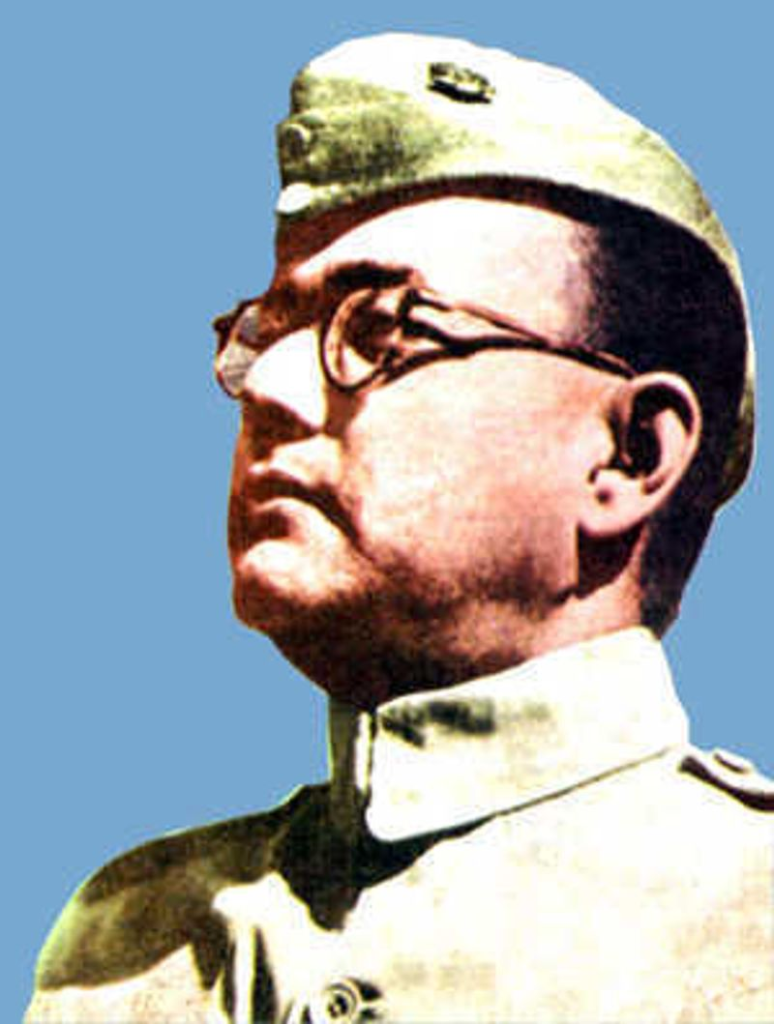
Subhas Chandra Bose’s ashes are kept at the Renkō-ji Temple in Suginami, Tokyo
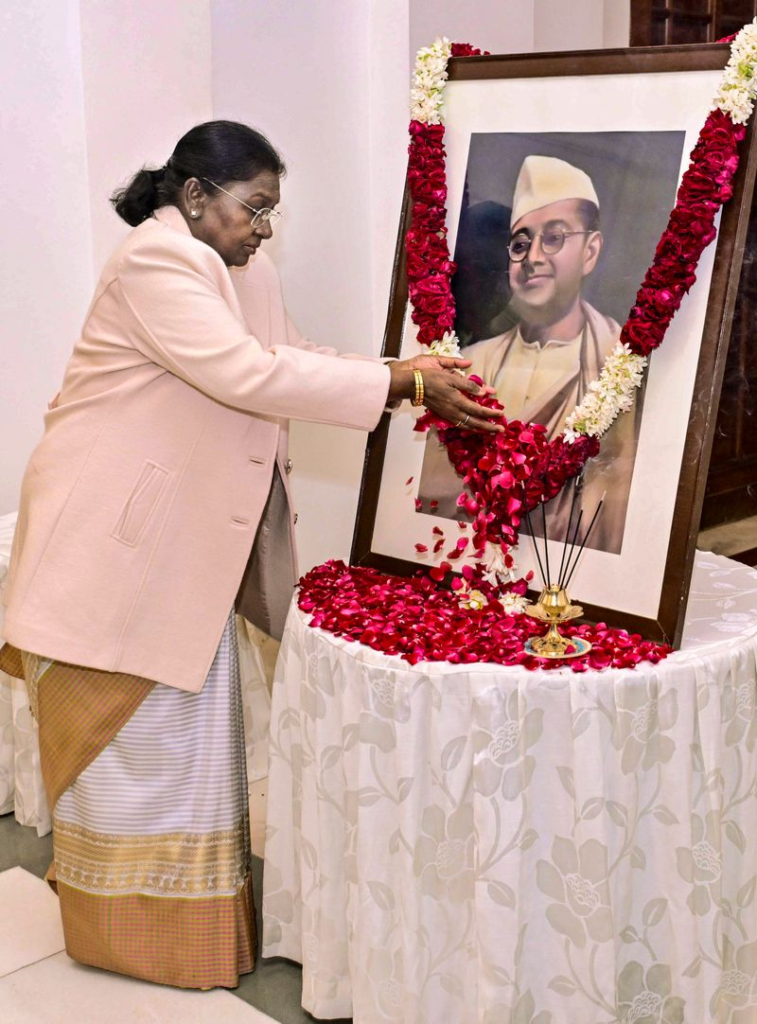
The government on Friday organised ‘Parakram Diwas–2026’ to commemorate the 129th birth anniversary of Netaji Subhas Chandra Bose, even as his daughter Anita Bose Pfaff renewed the push for bringing back the mortal remains of the freedom fighter from Japan to India.
In a statement, she said Netaji, who spent much of his life in forced exile while fighting for India’s freedom, would have been deeply distressed that his remains are still kept outside his motherland more than 80 years after his death and 78 years after India became free.
“As Netaji’s daughter, I invite the Indians of today who still revere him to support his posthumous return from exile; to support the transfer of his mortal remains to India for a final and fitting disposal,” she stated.
Meanwhile, the Ministry of Culture is organising ‘Parakram Diwas–2026’ from January 23 to 25 at the Andaman and Nicobar Islands along with celebrations at 13 other iconic locations across the country associated with the life and legacy of India’s most revered freedom fighter.
“The event marks the 129th birth anniversary of Netaji Subhas Chandra Bose and aims to honour his unparalleled contribution to India’s freedom struggle and his enduring legacy of courage, sacrifice and patriotism,” it said in a press release.
The celebrations will feature a grand cultural programme, including a spectacular drone show and performances by eminent artistes such as Ustad Amjad Ali Khan, Papon, Amaan Ali Bangash, Ayaan Ali Bangash, Raghu Dixit, among others.
Recalling Netaji’s life and struggle, Pfaff noted in her message that he had devoted decades to the freedom movement, and later took the dramatic step of leaving India to continue the freedom struggle when imprisonment made his work impossible.
Pfaff recounted that following Japan’s surrender in August 1945, Netaji set out from Singapore for Tokyo but met with a fatal air crash in Taipei on August 18, 1945. Though he survived the initial crash with severe burns, he succumbed to his injuries later that day. He was cremated in Taipei, and his ashes were later taken to Tokyo.
Netaji’s ashes were then kept in safe custody by the chief priest of the Renkoji Temple in Japan, where they lie even today.
Senior Congress leader Jairam Ramesh also took potshots at the Narendra Modi government for “suppressing” the contribution of Netaji in resolving the controversy surrounding the later verses of Bande Mataram in 1937.
In a series of posts on X, he said, “Today on January 23, 2026, the nation celebrates the 129th birth anniversary of Netaji Subhas Chandra Bose, who had played a key role in resolving the controversy surrounding the later verses of Bande Mataram in 1937 which the PM deliberately suppressed.
“Further, Sugata Bose, the eminent historian and his grand-nephew, has written that Netaji had inaugurated the Free India Centre in Berlin on November 2, 1942, and chosen Jana Gana Mana as the national anthem… it was on October 2, 1943, in Singapore that Netaji chose Jai Hind as the rallying cry of the Azad Hind Govt — a cry that is never given voice to by the PM and his party.
“And of course it was Netaji who, in a radio broadcast from Singapore on July 6, 1944, first called Mahatma Gandhi as the Father of the Nation — whose memory and legacy the PM is systematically demolishing, with the latest instance being the repeal of MGNREGA,” he said.
Ramesh added, “The PM is India’s greatest distorian. That is what entire political science is all about.”