
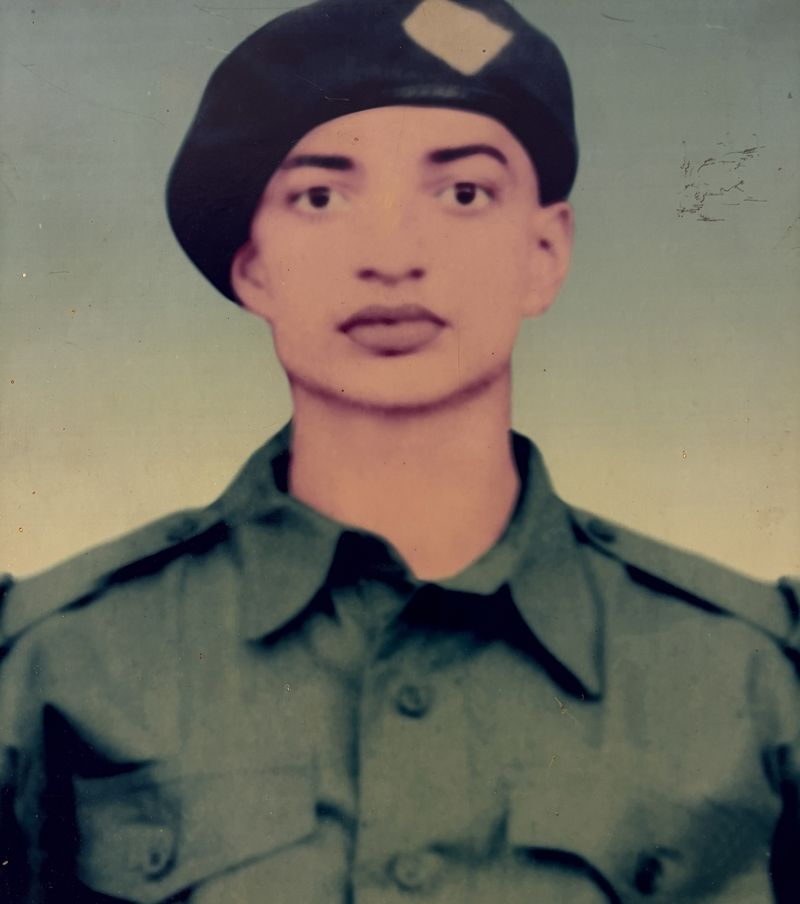
A recorded account of the 1971 India-Pak War captures the extraordinary bravery of Lance Naik Megh Raj, who played a pivotal role in the fierce battle for Shyamganj on the intervening night of December 15 and 16.
As the LMG detachment commander of ‘C’ Company of the 1st JAK Rifles, Megh Raj was positioned on the left flank, leading the battalion’s assault under the cover of darkness. By dawn, the battalion had successfully captured a heavily fortified enemy position.
However, as the unit was reorganising its defences at daybreak, the enemy launched a determined daylight counterattack. From his vantage position, Megh Raj unleashed a devastating LMG fire, shredding the advancing troops and breaking the momentum of the assault. His accuracy and fearlessness were so effective that he virtually foiled two successive counter-attacks singlehandedly.
But the intensity of his fire made his location conspicuous. During the third and more aggressive enemy counter-thrust, the enemy brought down concentrated machine gun fire on his position. Even as he sustained fatal wounds, Megh Raj continued firing until the attack collapsed, ensuring that Shyamganj remained firmly in India’s control.
For displaying unmatched courage, supreme devotion to duty and the highest traditions of soldiering, Lance Naik Megh Raj was posthumously awarded the Vir Chakra — a lasting testament to a hero who fought till his last breath.
The quiet village of Amlela near Nagrota Surian in Jawali subdivision of Kangra district holds close the memory of one of its most valiant sons — Lance Naik Megh Raj, Vir Chakra, whose bravery in the 1971 India-Pakistan War is etched in the nation’s military history.
Born on January 28, 1948, to farmer parents Banta Ram and Sahbo Devi, Megh Raj had a humble upbringing. With no school in or around his village, he could study only up to Class V. Yet, those who knew young Megh Raj fondly recall a lively boy — full of enthusiasm, passionate about singing and dancing, and gifted with remarkable athletic talent. His excellence in sports ultimately paved the way for his recruitment into the 1st Jammu & Kashmir Rifles (1 JAK Rif) on January 28, 1966.
The transformation from a spirited village boy to a gallant soldier was swift. The courage he displayed on the battlefield during the 1971 war remains immortal. For his exceptional valour in action, Megh Raj was posthumously awarded the Vir Chakra on August 15, 1972, earning him a place among India’s revered war heroes.
His sacrifice, however, came at a deep personal cost to his family. Megh Raj had been married for five years when he laid down his life for the nation. His two children — Gurcharan Singh, then just two-and-a-half-years old, and Ramesh Kumari, six-months old — grew up hearing stories about their father from villagers, who still speak of him with pride. Today, Gurcharan serves as an ASI in the SSB, posted in the Eastern Sector, while Ramesh Kumari is settled with her family. Their mother, Suriya Devi, passed away in 2016.
In honour of this brave son of the soil, a railway station of the Kangra Valley Railway —Meghrajpura — stands as a lasting tribute. Every passing train echoes the courage of the young soldier from Amlela, who gave his tomorrow for the