
Pre-poll alliances are now the norm in Nepal — precisely the instability Gen Z sought to undo
Maj Gen Ashok K Mehta (retd)
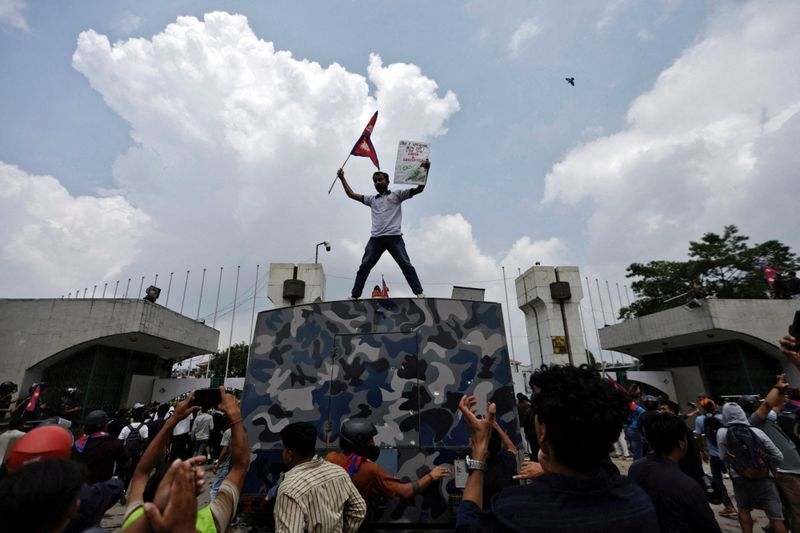
The outcome of Nepal’s fifth revolution (Jan Andolan) in September was the announcement of elections on March 5, 2026. Cadres of the ousted KP Oli-CPN (UML) government had clashed with Genji (Z) revolutionaries. The vandalism during the protests cost $5 billion (the government’s estimate puts the figure at $572 million). On September 9, all state institutions had collapsed, forcing Oli to resign; in the vacuum that ensued, the army was unable to protect government property. In its response to an inquiry, the army said it had to make a choice between protecting people (leaders and officials) and property. The Genji protests were ‘not all that spontaneous’. There is evidence that the US had stirred the pot. Further, doubt lingers over whether elections will be held; or, held on time.
The Genji protests were ostensibly against the Internet ban, which escalated after police firing killed 17 protesters. That figure shot up to 77 martyrs. The people’s uprising that piggybacked Genji protests expanded the latter’s demands — from good governance, elimination of corruption and job creation to constitutional amendments restoring political stability and voting from abroad. About 2,000 youth leave the country every day for employment. Genji is a collective of 49 disparate groups, whose leader is Sudan Gurung, a musician-turned-head of a humanitarian organisation. He signed at least three agreements with Karki, most notably the 10-point agreement in December. It includes amendments, which, according to advocate Radhesham Adhikari, will be difficult to implement and become a hurdle to timely elections.
Though the Nepali Congress and CPN (UML) have filed petitions for the restoration of Parliament, they will fight the elections. Some Genji members are joining the Bibeksheel, Ujyaalo Nepal and Rastriya Swatantra parties. The RSP president, Rabi Lamichhane, jailed for fraud cases, has been released. Ujyaalo Nepal was lit by the dynamic Kulman Ghising, who rid Kathmandu of load-shedding. The Mayor of Kathmandu, Balen Shah, struck a no-surprise deal as the PM face of the RSP, with Ghising also merging Ujyaalo with the RSP to become its vice-president. Genji leaders Gurung and Purushottam Yadav are backing the RSP, making it formidable. Pre-poll alliance is the new normal. Even the NC and UML are considering it after the boost of the RSP — precisely the virus of political instability that Genji wants to remove.
Despite being ousted from the government, four-time PM Oli won a landslide third-term chairmanship of the UML. Add to this, his party’s strong grassroots organisation and most government officials being his appointees, Oli may spring a surprise. While five-time PM NC leader Deuba will step down as party president, he will fight elections for an unprecedented eighth time. The party is factionalised into three groups, led by India-backed Shekhar Koirala, US-supported Gagan Thapa and with motley-backers Bimalendra Nidhi/KP Sitaula. Four-time PM Prachanda, minus the Maoist tag, is a survivor and coordinator of the reminted Nepal Communist Party, consisting of 10 Left parties. The new crop of political parties will not make much dent on grassroots parties, which are likely to come back but with smaller vote share and seats. The Left’s majority in Parliament is expected to reduce to less than 50 per cent.
The elections will be held in March, but could go into phases. 2026 promises some surprise and plenty of uncertainty for Nepal.