
Year ender: Drone sightings, blackout drills and waterlogging left Jalandhar residents coping with daily challenges
The year 2025 will be remembered as a time when the distant idea of war abruptly entered everyday conversations, homes and classrooms. For residents of Jalandhar district, tension between India and Pakistan, transformed routine life into days and nights marked by fear and uncertainty. The residents spent sleepless nights listening to loud explosions, suspected drone attacks and emergency alerts echoing across the city.
For two to three consecutive nights, panic gripped Jalandhar as residents reported hearing booming sounds overhead. Children, who had never experienced such an atmosphere, were visibly frightened, while adults struggled to reassure their families amid rapidly changing developments.
As anxiety spread, its impact became visible on the streets and inside markets. Supermarkets and grocery stores witnessed panic buying, with long queues forming as early as opening hours. People stood with loaded carts, waiting to stock up on essentials. Wheat flour, rice, pulses, cooking oil and other daily-use items were purchased in bulk, as families prepared to survive for weeks indoors if the situation escalated further. Store owners reported an unusual surge in demand. The fear was not limited to supplies. Migrant workers and families living away from their native places began leaving the city, hoping to find safety in their hometowns.
The Jalandhar Commissionerate Police had also rolled out strict security measures to prevent any untoward incident. Police Commissioner issued a series of directives aimed at tightening surveillance across the city. Hotels, motels, guest houses and inns were instructed not to accommodate any individual without verified identity documents. “All guests must submit a self-attested copy of a valid government-issued photo ID, and their mobile numbers must be verified by the establishment,” the Commissioner said, underlining the need for vigilance during the tense period.
The announcement of a one-hour mock drill involving a complete blackout further told about the gravity of the situation. When the drill was conducted for the first time, near-total compliance was observed, especially in Jalandhar Cantonment, where lights went out promptly. Streets fell silent, windows were darkened and residents followed instructions with discipline, aware that preparedness could save lives in a real emergency.
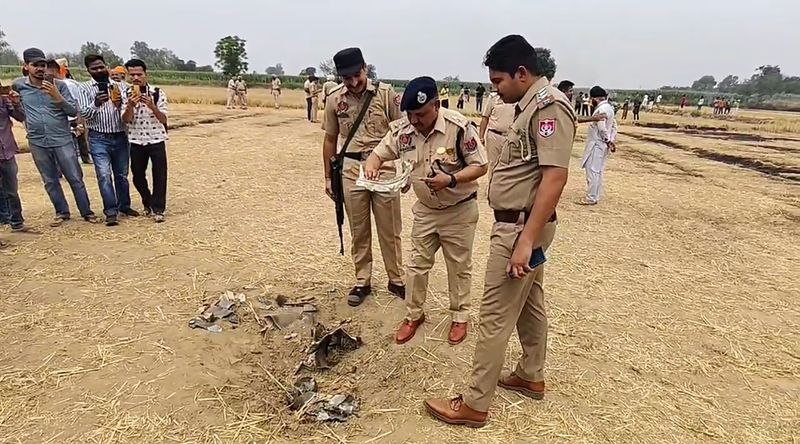
The most alarming episode unfolded on the night of May 9–10, when multiple drone sightings and missile-related incidents were reported. Intermittent explosions were heard across parts of Jalandhar, intensifying panic. In Kangniwal village near Adampur, residents were jolted awake around 1.30 am by a loud blast. Villagers who stepped outside later discovered missile debris scattered nearby.
Soon after, the district administration imposed an immediate blackout at 1.30 am, which remained in force until 6 am. Officials urged residents to stay indoors and avoid spreading rumours. Missile debris was also reported from Mand Maur village near Kartarpur and Rampur Khalian village near Phagwara.
Issuing an official statement, the Deputy Commissioner confirmed that Jalandhar was on red alert, adding that “many objects were seen and were neutralised by the armed forces.” Citizens were repeatedly advised to remain calm and limit outdoor movement. In response to the evolving situation, the Punjab government ordered the closure of all educational institutions for three days, prioritising student safety amid the escalating border tensions.
As calm gradually returned, 2025 left behind more than just memories of fear. For Jalandhar, Operation Sindoor was not just a military operation, it was a moment when war felt uncomfortably close to home.
In 2025, the city also witnessed continuous rainfall lasting for several days, bringing normal life to a standstill across Jalandhar. The persistent downpour flooded major roads, submerged key intersections, and caused severe traffic disruptions, leaving commuters struggling to navigate waterlogged streets. Several residential areas were also affected as rainwater entered homes and low-lying localities.
According to a preliminary assessment conducted by the district administration, more than 300 houses in Jalandhar district suffered full or partial damage due to the heavy rainfall. In view of the worsening situation, the Punjab state government had also announced an eight-day closure of schools across the city due to flooding and safety concerns. The rains also resulted as a setback to students’ academic schedules.
Owing to the incessant rains and forecasts of more downpours, Deputy Commissioner Jalandhar, Dr Himanshu Aggarwal, also ordered that all private and government, elementary and secondary schools in the district remain closed. He said the decision was taken as students and teachers were facing significant difficulties in commuting amid flooded roads and adverse weather conditions.