
Through their sacrifice, the Sahibzadas fulfilled proclamation about their father: Sawa lakh se ek ladaun, tabe Gobind Singh naam kahaun
The household of Guru Gobind Singh was graced by four radiant souls, the elder two revered as Vadde Sahibzade —Sahibzada Ajit Singh and Sahibzada Jujhar Singh. Nurtured amidst the fragrance of spiritual wisdom mingled with clanging of steel, they were far more than princes; they were embodiment of the Sant-Sipahi spirit, where devotion and courage flowed together.
The defining moment in their lives arrived during the Battle of Chamkaur in 1704. Surrounded by a sea of Mughal and Hill Chiefs’ forces, Guru Gobind Singh stood with mere forty devoted warriors in the mud-walled fortress, or kachi garhi, of Chamkaur. Sikhs stepped out in small groups, confronting the enemy and attained martyrdom in service of righteousness.
When eighteen-year-old Sahibzada Ajit Singh sought permission from his father for battlefield, the air within the fortress grew heavy. The Sikhs pleaded, “Guruji, we cannot bear the loss of the Sahibzada. Allow us to fight in his place.” But Guru Gobind Singh, his heart as vast as the ocean, replied, “All of you are my Sahibzadas.”
With his own hands, the Guru adorned his son with shastars, preparing him for final destiny as if he were dressing him for his wedding. Leading a small band of Sikhs, Sahibzada Ajit Singh charged into the battlefield like a roaring lion, raining arrows upon enemy. He fought with unparalleled ferocity, cutting through enemy ranks before attaining martyrdom. Through his sacrifice, the Sahibzada fulfilled proclamation about his father: Sawa lakh se ek ladaun, tabe Gobind Singh naam kahaun — I shall make one fight against one and a quarter lakh; only then shall I be called Gobind Singh.
From the fort walls, the father proudly watched his firstborn’s transition from life to immortal legend.
Witnessing the elder’s bravery, fourteen-year-old Sahibzada Jujhar Singh yearned for the same exaltation. He requested his father, “Guruji, grant me the honour to follow the path my brother has paved”.
Imagine the silence in the fortress. Sensing the impending loss, Sikhs knelt and begged the Guru to spare one remaining blossom. But the Guru visualised a higher horizon — that foundation of sovereignty could not be built on compromise, but on the purest blood.
As the Sahibzada marched out, there was no tearful adieu; instead, the Guru bestowed the final Fateh, sending him forth not toward death, but to a triumphant rising that would echo through the corridors of eternity. His courage beyond his age was not born of impulse but of disciplined faith and absolute commitment to the cause. Sahibzada Jujhar Singh fought with relentless determination and embraced martyrdom with the composure of a seasoned warrior.
Soora so pahichaneai ju larai deen ke het
Purja purja kat marai kabhoo na chhadai khet
Meaning: He alone is know as a spiritual fighter, who fights in defence of those in need. He may be cut apart, piece by piece, but he never leaves the battlefield.
Beholding his sons crowned with eternal glory, Guru Gobind Singh, instead of grieving, stood unshaken and raised a thunderous Jaikara — Bole So Nihal, Sat Sri Akal — thanking the Almighty that his sons upheld faith and honour.
In the annals of world history, there is no parallel to a father who sends his sons to a battlefield from which there is no return, despite having the power to save them.
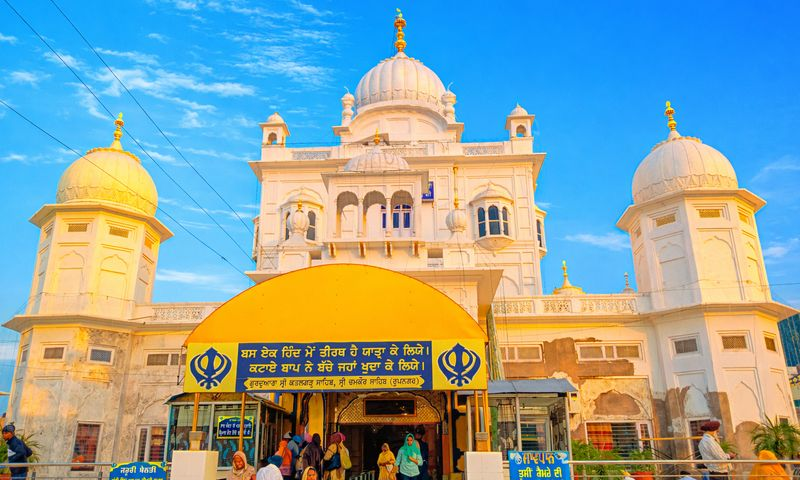
Poet Allah Yaar Khan Jogi wrote: Bas ek Hind mein teerath hai yatra ke liye, katae baap ne bache jahan khuda ke liye — In Hind, there is but one true place of pilgrimage: where a father allowed his sons to be sacrificed for the sake of God.
The martyrdom of the Sahibzadas stands as a timeless testament: Even the fear of death bows its head before true faith. Sahibzadas laid down their lives so that dignity would never fade and no soul would ever have to live beneath the shadows of tyranny again.