
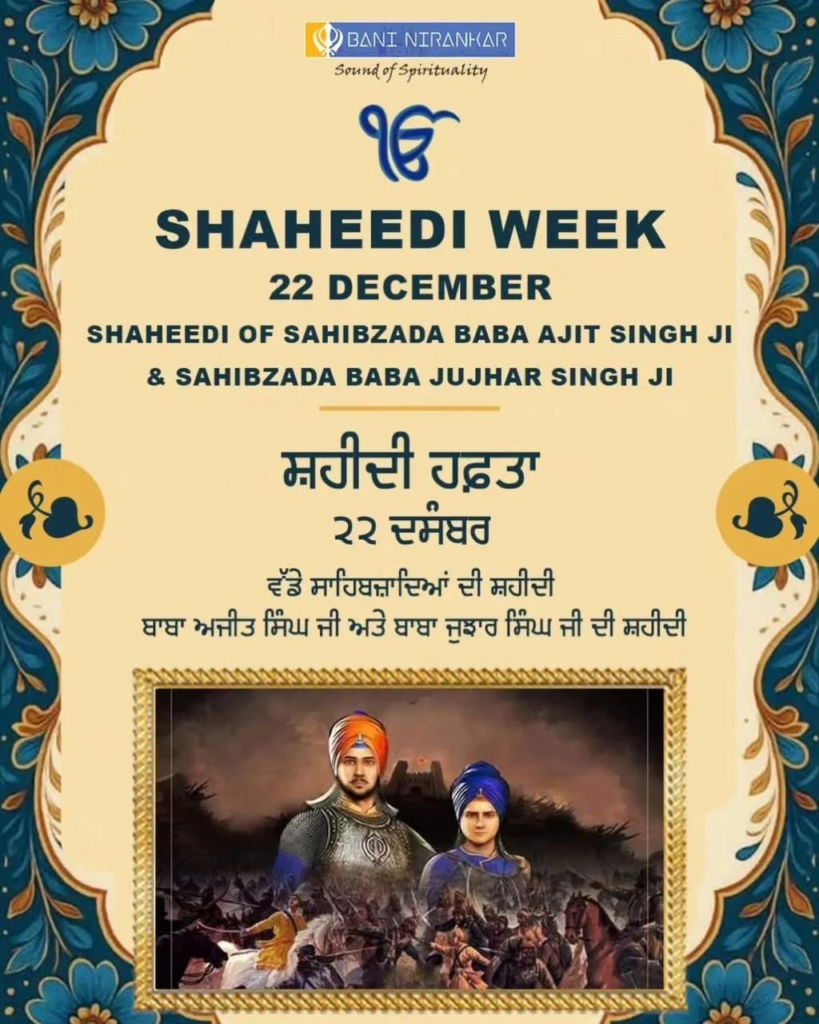
Major General Garuv Khusal writes: If you truly understood what happened on December 22, 1704… 🤯
You would NEVER look at Baba Ajit Singh Ji and Baba Jujhar Singh Ji the same way again.
Because at Chamkaur Sahib, they weren’t just children.
They were Khalsa warriors, stepping into their destiny with their eyes open, fully aware of what awaited them. 🦁⚔️
Baba Ajit Singh Ji was 17.
Baba Jujhar Singh Ji was 13.
But in Sikhi, age NEVER defines courage.
8 Poh: ( 22 December)The Battle of Chamkaur began.
It was ,
Everyone knew this would be a battlefield of Shaheedi. 🏹
And still… the Vadde Sahibzaade chose Sikhi over life.
THE MOMENT THAT CHANGED HISTORY:
As the Sikhs attained Shaheedi, Baba Ajit Singh Ji asked Guru Gobind Singh Ji:
“Pita Ji… give me permission to go.” 🙏…
[05:41, 12/22/2025] Major General Garuv Khusal : dear Sir’s, Jai Hind
Am sure you are aware.
Yet I shared, lest we forget-
why they Sacrificed Themselves
Who the Evil Was
&
To Fight the Evil- 40 are not Always Adequate
Sat Shri akal (SSA)–jai Hind
After Guru Gobind Singh left Anandpur Sahib on the night of 5 and 6 December 1704,[1] or 1705[14] he crossed the Sarsa River with his disciples. While they were crossing, the Mughals and hill kings attacked. Guru Gobind Singh and his followers asked permission of the city chief for shelter to rest for the night in their garhi or haveli. He refused, but his younger brother allowed the Sikhs to stay in the haveli.[3]
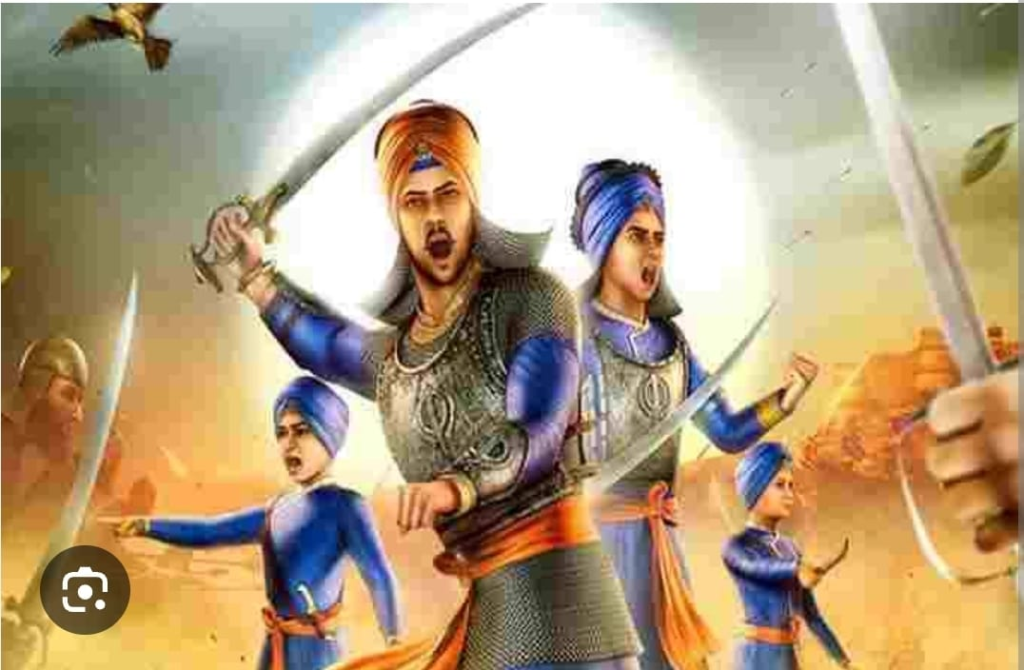
At the Battle of Chamkaur in December 1704, Guru Gobind Singh’s two elder sons, Sahibzada Ajit Singh (around 18) and Sahibzada Jujhar Singh (around 13), fought valiantly against a massive Mughal army and attained martyrdom after leading charges from the mud fortress, demonstrating immense courage and commitment to their faith, inspiring all Sikhs. They chose to die as warriors defending their father and the Sikh cause rather than surrender, following the path of selfless sacrifice.
Despite giving assurance of safe conduct, the Mughal soldiers were looking for Guru Gobind Singh, to take his head as a trophy. After learning that the party of Sikhs had taken shelter in the haveli, they laid siege upon it. The actual battle is said to have taken place outside the haveli where Guru Gobind Singh was resting.[3] A council of Panj Piare was convened during the battle, whom ordered Guru Gobind Singh to leave the battlefield to preserve his life and continue leading the Sikhs, a request which the Guru obeyed.[15] Negotiations broke down and the Sikh soldiers chose to engage the overwhelming Mughal forces, thus allowing their Guru to escape. Another Sikh who resembled the Guru, Sangat Singh, donned the Guru’s clothes and remained with the soldiers. The next morning the remaining Sikhs were killed by Mughal forces.[16]
he Guru emphasised how he was proud that his sons had died fighting in battle, and that he had ‘thousands of sons – the Singhs‘. He also said that he would never trust Aurangzeb again due to the broken vow he took on the Quran.[17]