Sanjha Morcha

What’s New

Click the heading to open detailed news

Current Events :

web counter

Print Media Reproduced Defence Related News

Navy Day celebrated

Navy Day celebrated

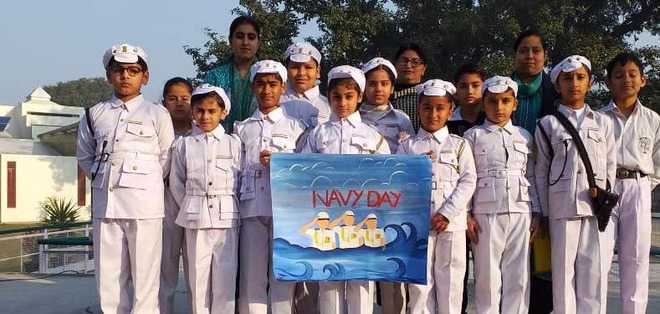
The Navy Day celebrations underway at DPS, Nagbani. Tribune Photo

Jammu, December 4

A special programme to mark the Navy Day celebrations was organised at Delhi Public School, Nagbani, on Tuesday.

The day started with a speech by senior students, who also sung patriotic songs to celebrate the greatness, glory and role of the Navy to the country.

Navy Day in India is observed on December 4 every year to celebrate the magnificence, achievements and role of the naval force to the country.

School coordinator Aarti Gupta acknowledged the efforts of the students by saying that the Indian Navy plays a crucial role of exercising joint operations with neighbouring countries, providing support to people living on edges and helping them to set up their lives in such difficult regions. — TNS


An Imran yorker that Punjab must dig out by Vivek Katju

The corridor, if not handled properly, can cause friction instead of promoting goodwill. At the same time, does it indicate Pakistan’s fresh thinking towards India, brought forth by its realisation that its economic woes and stability cannot be addressed without normalisation of ties with India?
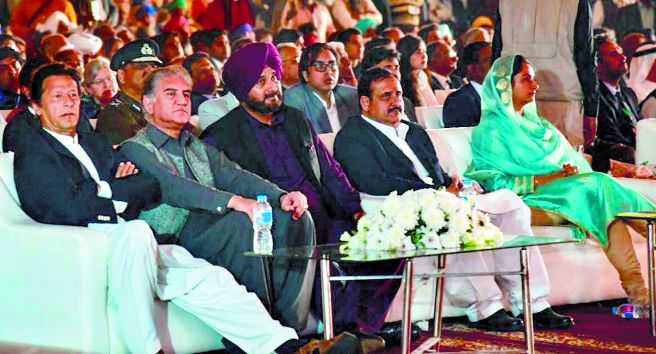
An Imran yorker that Punjab must dig out

Navjot JUST A CONDUIT: Countries decide not on the basis of personal friendships, but a careful evaluation of their interests.

Vivek Katju
Ex-secretary, Ministry of External Affairs

IF Pakistan’s object was to take the corridor to Kartarpur Sahib to the destination of peace and engage a reluctant India in full dialogue, the comments and actions of Prime Minister Imran Khan and army chief Qamar Bajwa on November 28, the day it organised the ground-breaking ceremony, and later, the injudicious remarks of Foreign Minister Shah Mehmood Qureshi were counterproductive.

Khan’s initial intention may have been to use the occasion to point to his desire for the normalisation of India-Pakistan relations. But if that was the case, he should have realised that a reference to the Kashmir issue would vitiate the atmosphere. General Bajwa’s presence was useful, for it indicated the army’s support for the corridor. But his exchange of greetings with a known Khalistan supporter raised legitimate questions of that all-powerful institution’s motivations. And, Qureshi’s exultation that Khan had bowled a ‘googly’ which had compelled India to send ministers to the ground-breaking ceremony was plain stupidity, raising doubts about Pakistan’s objectives.

India too travelled away from the Kartarpur Sahib corridor’s possibility of positively impacting the bilateral relationship. On Gurpurab, Prime Minister Narendra Modi, seeking the blessings of Guru Nanak Dev, implicitly held out the vision of a changed India-Pakistan relationship. However, in External Affairs Minister Sushma Swaraj declining the invitation to attend the ceremony and instead sending two Sikh ministers, India signalled that it was honouring Sikh sentiment more than anything else. That indication was confirmed when, on the ground-breaking day itself and when its ministers were to be in Pakistan, Swaraj reiterated India’s position that full bilateral engagement could only be undertaken once Pakistan had abandoned terror.

Swaraj cannot be faulted for drawing attention to the inappropriateness of Qureshi’s ‘googly’ boast. It is noteworthy that while the Pakistan Foreign Ministry was underlining that the Kartarpur initiative was “solely in deference to the long-standing wishes of our Sikh brethren”, the minister himself was using the cricketing metaphor — and in that context ‘yorker’ would have been better — to show how Khan, the fast bowler, had slipped one past India. In doing so, he only succeeded in eroding the effort of his diplomats. Khan’s endeavour at damage control by asserting that “it was not a googly or a double game but a straightforward decision” will hardly help.

The choice of the word “brethren” in the statement reveals Pakistan’s long-held desire to build enduring bridges with Sikhs all over the world, and especially in India. For decades, Pakistani official propaganda targets India’s minorities, including Sikhs, and seeks to create schisms between the majority community and the minorities. It projects the minorities to be under majority yoke. The fact that it will never succeed in its vain attempt at diluting the patriotism of India’s Sikhs does not and will not deter Pakistan from making attempts to do so.

The role of Navjot Singh Sidhu is merely a distraction to the larger issues surrounding the Kartarpur Sahib corridor. Countries take decisions on issues such as the corridor, which had remained stuck — but not always in focus — for decades, not on the basis of personal friendships but a careful evaluation of their interests. Individuals can become conduits for messages or hasten or retard processes, but by themselves, they can never solely deliver. Mutual praise between Khan and Sidhu may have made for catchy TV shows but is meaningless in achieving results in difficult bilateral ties as between India and Pakistan. Sidhu’s comments and actions added passing grist to the domestic political mill but even here they are hardly of enduring relevance.

Apart from the physical construction of the corridor, which Pakistan wants to complete in time for the 550th Gurpurab, the two countries will have to work out the procedures for its use by the pilgrims. The Pakistan Foreign Ministry’s statement noted, “We also look forward to working out necessary details and modalities with the Indian side concerning passage through the corridor.”

In addition, India will have to seek guarantees that Pakistan does not inflict Khalistani propaganda on the pilgrims. This is especially important as Pakistan routinely does so on Indian Sikh jathas during their visits on important festivals. India may have to insist that its officials are allowed daily access to the Pakistani side of the corridor to look after the welfare of the pilgrims. If the corridor is not handled properly, it may become a source of constant bilateral friction instead of promoting goodwill.

Pakistan plans accommodation and facilities around the Kartarpur gurdwara to fully utilise the potential of religious tourism. These will obviously not be within the corridor but in close vicinity of the gurdwara. It obviously hopes that these will attract Sikh pilgrims from the world over. Some visas to Indian Sikhs may be forthcoming for this purpose too. Does such a project and indeed the corridor itself indicate fresh thinking towards India brought forth by its current economic difficulties as well as a realisation that without the normalisation of ties with India, Pakistan will not be able to become really stable let alone prosperous? Unfortunately, there is no evidence to indicate so, especially in the army.

The fact is that Pakistan will have to radically change course so that a full dialogue with India can take place. For that, Pakistan will have to redefine its approach to the use of terrorist groups against India. Pakistan is hardly going down that path, for it is keeping Khalistani elements within its territory and also supporting them outside. The assessment that Indian security agencies cannot be complacent on the Khalistani front is valid. The Kartarpur Sahib corridor, while a good and welcome development for Sikh pilgrims, may add to the concerns of Indian security managers.




JeM’s Masood Azhar Releases A Threat Video To India On The Construction Of Ram Mandir In Ayodhya

http://


  • Babri Masjid should be brought back, said the terrorist Masood Azhar in his video threatening India over Ayodhya
  • In the video released by the Jaish-e-Mohammad Chief, he named and threatened PM Modi and Uddhav Thackeray
  • He issued a call to arms, invoking religious fervour over the matter

Vocalising hate against India, terrorist Masood Azhar has released a tape issuing threats over building the Ram Mandir in Ayodhya. Adhering to his fundamentalism, the Pakistani terrorist has attempted to hatemonger over the Babri Masjid – Ram Mandir dispute.

“That Babri Masjid that was taken away from us because of our cowardice and our sins. A Mandir was created in that place. These days non-Muslims are assembled over there for the issue. They are demanding to build Ram Mandir. They have swords and spears in their hand, while the Muslims are scared. The call for Babri Masjid is a test for the Muslims, it’s a dangerous time, we are ready to sacrifice our lives. I pray to you, to give us back the Babri Masjid, give us back the honour of the Muslim Community. Forgive us, as we have sinned,” he said.

The UN-designated terrorist Masood Azhar and Chief of Jaish-e-Mohammad who runs terror pockets from Pakistan-Occupied Kashmir has warned India against constructing the Ram Mandir.

He said, “Just stop the construction of Ram Mandir, and show your warriors a path. They are desperate to show you their love and loyalty. The slogans crying ‘Allahu Akhbar’ will be raised on the dome of Babri Masjid.”

“The bloodshed, injuries, the bodies imbibed with the perfume of love, the parts of the body. The victory of religion, oh lord not just one or two, thousands of men are ready in your service, they are emotional, trembling that the Babri Masjid should be brought back. We have to protect our mothers’ dignity. We won’t let an idol be built in the place where we prostrate,” he added.

The Pakistan-based terrorist has threatened India of terror and directly targeted Uddhav Thackeray and PM Modi.

“Oh Lord who enlightens the darkness, just show us a path, if Allah wills this yellow terror will turn into a red storm. Then Thackeray will be on his knees, Modi will crumble like a cobweb. Those who are too fond of being a Muslim Leader, they should be responsible enough and tell India that Ram Mandir instead of Babri Masjid will not be tolerated,” Azhar said.

On December 24, 1999, an Indian plane IC-814 flying from Kathmandu to Delhi was hijacked by Harkat Ul Mujahideen terrorists demanding the release of Masood Azhar and two other terrorists from the Indian custody. The three terrorists were handed over to Taliban for the safe return of the plane’s passengers. Masood Azhar continued his terror-mongering and almost two decades later, masterminded the Uri Army base attack. Although Pakistan authorities claimed they had taken him into custody after the Pathankot attack in India, he was seen wandering freely in April 2016.



400 paramilitary men die in 3 yrs

New Delhi, November 21

With border guarding force BSF facing the maximum brunt, in the last three nearly 400 paramilitary personnel lost their lives in operations in the country, including firing from across the Indo-Pak border and terrorist and insurgency-related incidences.

A senior Ministry of Home Affairs (MHA) official said as per the latest data available, of the total nearly 400 casualties in the line of duty, the maximum (167 personnel) from the BSF were killed between 2015 and 2017. A majority of them lost their lives while guarding the highly sensitive borders in Jammu and Kashmir.

The Central Reserve Police Force (CRPF) has lost 103 personnel, mostly while fighting Naxals and militancy in J&K, the MHA official said.

While the BSF lost 62 men in action in 2015, 58 in 2016 and 47 in 2017, the CRPF lost nine personnel in action in 2015, 42 in 2016 and 52 in 2017. As many as 48 personnel of the Sashastra Seema Bal (SSB) were killed in action, the official added.

The SSB guards the Indo-Bhutan and Indo-Nepal border. The troops of the force are also deployed in internal security duties. Sixteen were killed in 2015, 15 in 2016 and 17 in 2017. — TNS


Buying the Rafale fighter jets will not fix IAF’s problems by Mohan Guruswamy

Rafale fighter jet 

Rafale fighter jet

Rafale is somewhat closer to the Su-30MKI in class but almost four times more expensive than what is arguably the most capable and versatile of the world’s 4+ Gen fighters.

Airpower is the most capital-intensive means of war. A modern fighter jet now could cost several hundred crores of rupees and the prices India’s first seem to be rising exponentially. The 36 Rafale deal is now estimated to be $9 billion or over 65,000 crores or about 1,500 crore each. While the Dassault Rafale will undoubtedly give us a formidable leading edge, it is its trail we must worry about. Besides, why do we want to buy the Rafale? It is somewhat closer to the Su-30MKI in class but almost four times more expensive than what is arguably the most capable and versatile of the world’s 4+ Gen fighters. It is eight times more expensive than Tejas.


The first lot of MIG-21s in 1961 cost us less than 20 lakh each. A brand new and latest MIG-21 variant will cost about one hundred times more. A SU30MKI costs about 360 crore each.

Aircraft delivered ordnance is also very expensive. For instance an air launched Brahmos supersonic missile costs over 15 crore each. The cost of the new smart weapons can be best understood from the following extract from a US government study after the second Gulf War: “While the vast majority of the expended ordnance was unguided—92.4%—the inverse was true for cost. About 84% of the cost was accounted for by the 7.6 % of ordnance that was guided. If the 332 cruise missiles are excluded—with their extremely high unit costs—unguided ordnance still represented about 92.6 percent of the total number expended, but the percentage of cost for ordnance that was guided decreases to 75.9%.”

The cost intensiveness of modern fighter aircraft requires they stay in service for decades and also be capable of maintaining air superiority and lethality in an environment where technological advancements are rapid

The cost intensiveness of modern fighter aircraft requires they stay in service for decades and also be capable of maintaining air superiority and lethality in an environment where technological advancements are rapid. This means that the aircraft we buy today must be capable of taking two or more upgrades. Thus, the later the design and development the greater are the upgrade options. Take, for example, the MIG-21, still the mainstay of the IAF.

The latest upgraded MIG-21 has all the latest avionics and the powerful Tumansky R-25 300 engine that enables it to attain a better than 1:1 thrust-to-weight ratio for a dogfight and out climb the American frontline fighter, the F-16.

The next major consideration is cost. There are ways to compute these, but there are pitfalls when you compare apples and oranges. In fact a sound equation correlating costs, age, lethality, performance, state of art, replacement and maintenance costs, political risk and other factors is well nigh impossible. But you must start with basic unit cost.

Since modern fighter aircrafts are not only extremely expensive but also technologically very advanced machinery constructed out of the latest materials and electronics, it goes without saying that full indigenisation will never be possible. A good percentage of the parts will always be imported, either from the original aircraft manufacturer or from original equipment manufacturers (OEM) in other countries. In times of conflict the wear and tear is greater and munitions stores run down very rapidly. The new generation missiles and bombs, most of which at all times will be imported, also do not have very long shelf lives. This means that supply lines must be always open.

The MRCAs are essentially supposed to be replacements for the older MIG-21, 23 and 27 series, and the indigenous Tejas LCA whose service entry service is now about fifteen years overdue

A multirole combat aircraft is an aircraft that can be used as both a fighter and a ground attack aircraft. A multirole fighter is differentiated from a strike fighter in that the multirole fighter was designed to equally perform both aerial combat and ground attack, while the strike fighter is typically a fighter aircraft that can also employ air-to-ground munitions.

The MRCAs are essentially supposed to be replacements for the older MIG-21, 23 and 27 series, and the indigenous Tejas LCA whose service entry service is now about fifteen years overdue. Of these the MIG-27 was a dedicated strike aircraft and the IAF still operates as many as 80 of them. The IAF also has 245 MIG-21bis fighters. We are talking about several hundred fighters. How does buying 36 Rafales be a solution? Clearly, the IAF needs a permanent solution, not another high cost fix like the Rafale.


The Tejas program commenced in 1983 and it is yet to enter full production. The reasons for this are many, but the IAF cannot shirk responsibility either as it has a track record of constantly delaying decisions and shifting goal posts. The IAF needs to be persuaded to shed its reluctance and urgently induct the Tejas light combat aircraft and push for newer and more powerful versions.


At about ₹200 crore each and but with a substantial local value addition component, the Tejas offers a huge cost-benefit advantage over Dassault Rafale multi-role fighter aircraft, as well as a huge economic multiplier. A few hundred Tejas jets of varying configurations can not only handle what the enemy can throw at us, but also contribute hugely to the national economy. After all, isn’t this is the underlying notion behind “Make in India?”


My Journey To Join Officers Training Academy Chennai

Dear Team, This is my journey from being an Army Officer’s son who has always wanted to be in the same boots as his father, to getting recommended for OTA, the same place where my father passed out from.  First of all, it’s an amazing feeling of having successfully achieved something which brings you so much closer to your dream profession. Being from a thoroughbred fauji family, where most of my family members are and were army officers, my life has mostly been in and around the Army.
Recommended SSB Interview Books

This being said, I appeared for the CDS exams thrice. The first time was just self-study and a little bit of guidance from the internet, which I couldn’t pass. I then decided to attend a coaching class for preparations of written exam.  The second time I appeared, which was after my coaching, I was a 100% confident that I’d make the cut but unfortunately, I couldn’t. Yes, I was disappointed but that gave me a stronger motivation to prepare even harder.

The third time I appeared for the exam, it was the CDS (1) 2018. It didn’t go as expected but when the results came out, I was able to make the cut.  Thereafter when my SSB dates came, I chose the earliest date which was 12th October. How I prepared for SSB was mostly time practice for the psych tests.

Made PPTs with time according to the various tests and practiced them. This gave me an idea of what my writing speed is and also helped me improve it. My recommendation is to apply this to all the various tests. Time practice your Lecturette topics in front of your mirror or any friend, keep yourself fit for the GTO individual tasks and be updated with the latest GK. This was my first SSB attempt hence I was a fresher and had not taken any sort of coaching whatsoever for SSB.

The screening went well and I was confident that I’ll be getting screened in. What I did in the screening was what most people would tell you i.e. write a positive story. I did that but also since I’ve always been around Army, most of my stories in screening as well as the psych tests were about soldiers, their bravery, courage and all the good things about a soldier. And yes, be advised that the hero in the story that you’re writing about is actually you, so your stories reflect who you are.OTA Chennai SSB

During the course of the assessment, my interview went well and smooth.  I’m also a professional Scuba Diver so mostly questions revolved around that. Yes, there were a few questions which I couldn’t answer but I assured the IO (Interviewing Officer) that I’ll make sure to go and check the answers right after the interview is over and I did just that.

GTO was the part which was most stressful of all for me.  The 1st day of GTO, which comprised of Lecturette, group discussion, GPE (Group planning exercise), Progressive group task, Half group task. My recommendation here to all the aspirants during the GPE and GD is to be subtle. Not too loud and not quite as well. You need to speak and let others speak as well. Always move back and forth i.e. speak, then listen to everyone, speak and then listen to everyone and so on. Don’t try to be a leader in the very first step. Be a good contributor, a good listener and then strive to lead.

After that, the whole evening went over dreading about the outcomes of what I had done in the GTO. 2nd day of GTO went pretty well and was fun. The assessor asked me some basic questions to which my replies were confident and firm.

Breaking The Code of SSB Psychological Tests
Buy Now

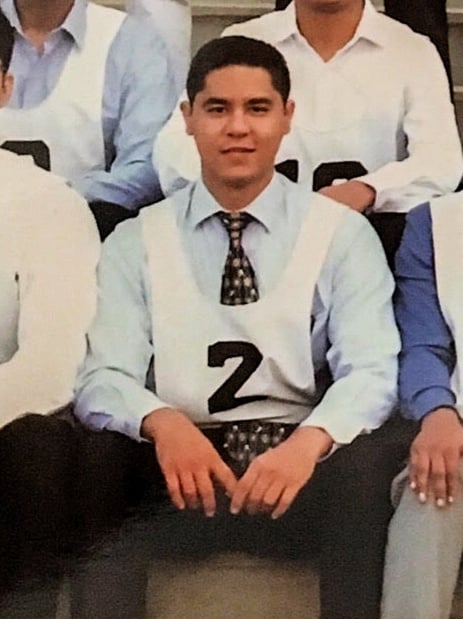
On the day of the conference, everyone was nervous and excited at the same time. We were going to the conference room one by one. I was chest number 2 so I was 2nd. I entered the room, wished the President and I was asked to sit. My IO asked me the same question which he asked me in the interview, “What are the things you think you need to improve in yourself. And as you’ve spent these 5 days in SSB with other candidates, what do you think about yourself that you need to improve in?”

To which my reply was similar to what I had said during the interview and added one more point to it.  My tip here is that one should be truthful and honest in the interview and the conference but not disclose so much about oneself that it enables the assessor to go into the nitty-gritty of your personal life.  One should mention their weakness but not so much so that rather than acting in your favour, acts against you. All in all this was my experience in SSB as a fresher and I’m not sure if the repeaters are subjected to same situations and questions but all I’d like to advise the aspirants and future warriors of our nation is that, while going through this assessment process think about the institution you’re going in, think about its essence and why this institution is the way it is, relate to it.

It’s not always about fighting and being loud and having an amazing personality.  The army isn’t looking for brilliant people, who perhaps would be more suited to a profile of a scientist. The army is looking for people who would follow orders and execute them with perfection, like a normal person.  SSB isn’t testing your knowledge, it’s testing your personality, the way you speak, walk and treat others.

The three tests, Interview, Psychology test, and GTO are testing the same things using different tools. With this, I’d like to wish all the aspirants all the very best for their future endeavors of becoming an officer.

Jai Hind

ssb interview book
5 Days SSB Interview

IMPORTANT – Download eBooks for SSB Interview Preparations

Free eBooks


A soldier at heart, Brig Chandpuri worked tirelessly for people

As nominated councillor, he was instrumental in framing pet dog bylaws, promoted sports & made efforts for the construction of Martyrs’ Pillar

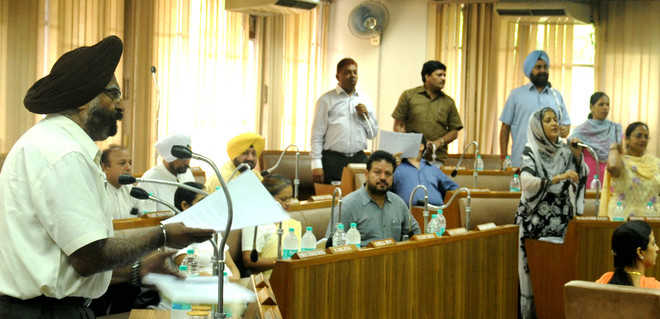
In this 2011 picture, Brig Kuldip Singh Chandpuri (retd) is seen raising a point as a nominated councillor during a meeting of the Municipal Corporation in Chandigarh. File Photo

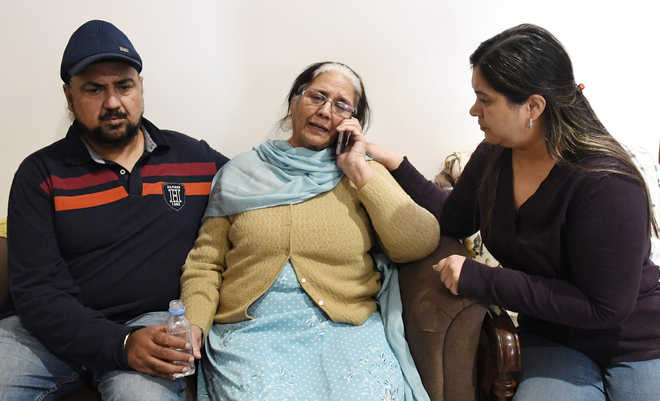
Brigadier Chandpuri’s wife Surinder Kaur (centre) along with her son Hardip and daughter-in-law at their residence in Chandigarh on Saturday. Tribune photo: Manoj Mahajan

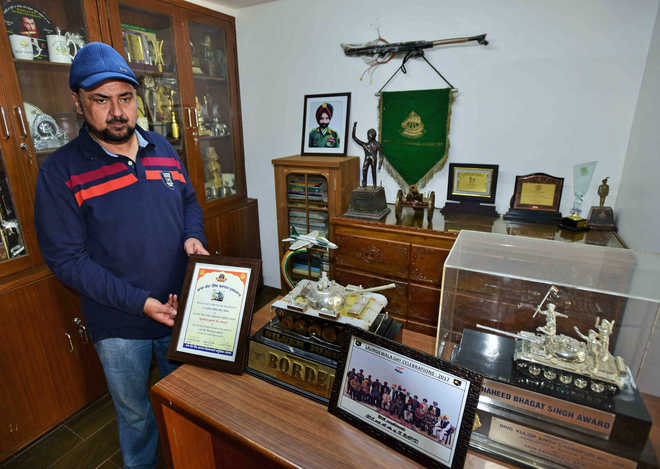
The war hero’s son shows the awards conferred on him during his exemplary career. Tribune photo: Manoj Mahajan

Ramkrishan Upadhyay

Tribune News Service

Chandigarh, November 17

While the hero of the 1971 Indo-Pak War, Brig Kuldip Singh Chandpuri (retd), will always be remembered for his bravery, those who worked with him during his tenure as a nominated councillor with the Chandigarh Municipal Corporation remembered him as a person who worked tirelessly for the welfare of society.

Nominated to the city MC as a councillor by the Chandigarh Administration in 2007, he won the hearts of one and all, cutting across the party lines.

Former Mayor Subhash Chawla said whenever the tempers ran high, Chandpuri restored decorum through his soothing words.

Former Mayor Pradeep Chhabra said they always sought his opinion on important issues. He raised many issues regarding the welfare of the ex-servicemen. It was he who demanded to exempt the ex-servicemen from paying property tax.

He commanded such as respect from his fellow coucillors that for the consecutive four years, he acted as the presiding officer for the mayoral poll in the city. The Martyrs’ Pillar, dedicated to 27 war heroes from the city, came up due to his efforts. He also promoted sports activities in the city.

Dr AP Sanbaria, a former nominated councillor, said as a solider, Chandpuri was committed to his work. They worked together for five years on different committees. Chandpuri was also instrumental in framing the pet dog bylaws. He took six months to frame the rules. Dr Sanbaria said he never lost cool on any issue.

Always humble, helpful 

Notwithstanding his exploits on the battlefield, he was a humble and respectable person. Even after retirement, he took active interest in the affairs of the Punjab Regiment, to which he belonged. He attended the meets of the association and never turned away any soldier who approached him for help or assistance, — Col Rajinder Singh (retd), President, Punjab Regimental Officers’ Association, Chandigarh

Led the life of saint-soldier  

He was a true leader and led the life of a saint-soldier. He did selfless service and a wonderful job in 1971. Jovial and helpful at all times, he was worth his weight in gold. His demise is a big loss for the nation as well as the Punjab Regiment. — Brig HS Ghuman (retd)

Acted as inspiration for youth 

Besides being a true soldier, Brigadier Chandpuri also contributed immensely towards nation building by motivating the youth of the Balachaur-Hoshiarpur belt, to which he belonged, to pursue developmental activities. In addition, he was very active in sports, serving as an umpire or referee for various games. — Brig KS Kahlon


India, China hold dialogue; agree to step up military exchanges

India, China hold dialogue; agree to step up military exchanges

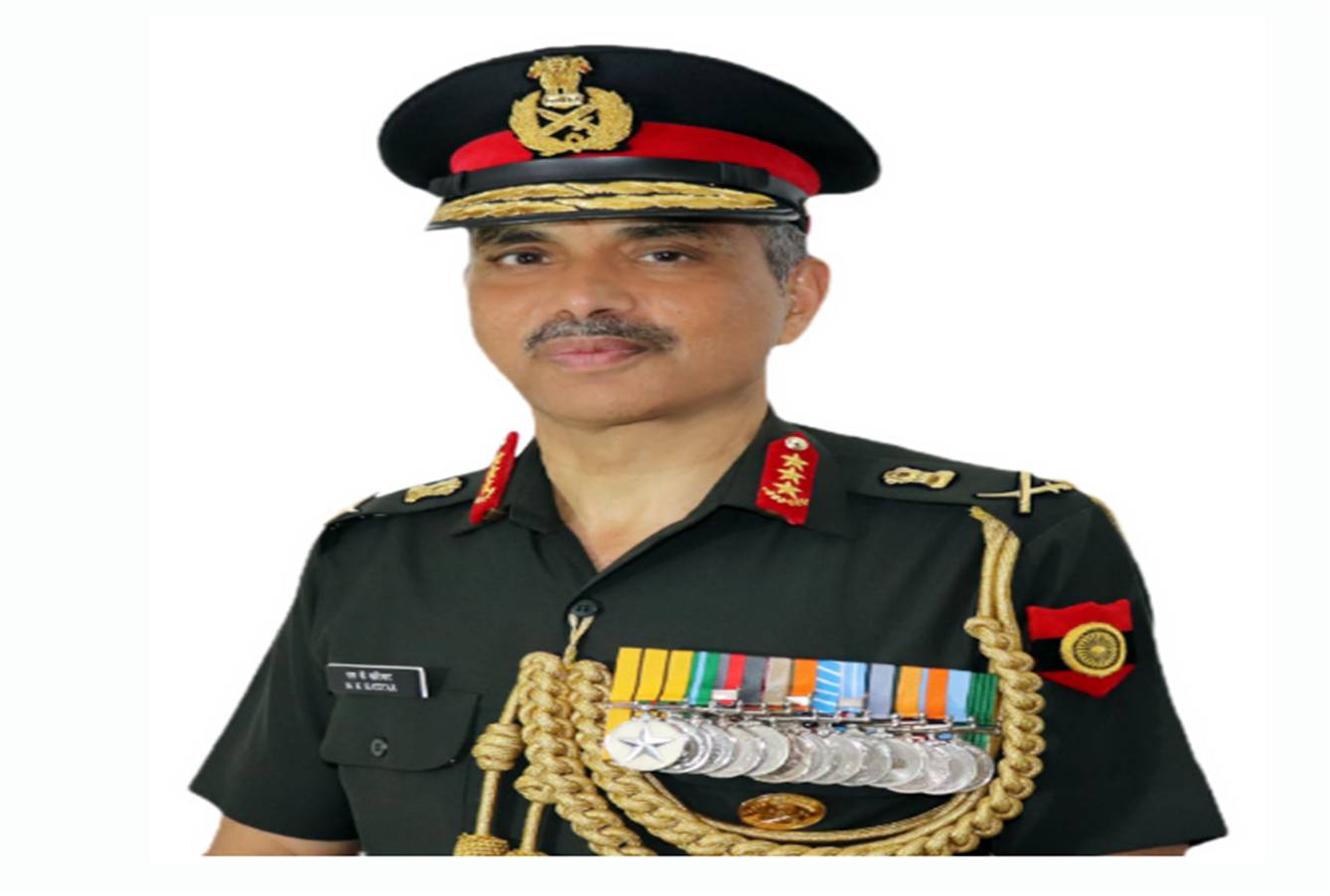
The dialogue on November 13 was held between the two defence delegations headed by Defence Secretary Sanjay Mitra and China’s Deputy Chief of Joint Staff Department of the Central Military Commission.

Beijing, November 15

Top officials of India and China held the ninth Annual Defence and Security Dialogue here after a one-year gap due to the Doklam standoff, as both countries agreed to enhance military exchanges and interactions.

The dialogue on November 13 was held between the two defence delegations headed by Defence Secretary Sanjay Mitra and China’s Deputy Chief of Joint Staff Department of the Central Military Commission.

At the talks both sides agreed on enhancing defence exchanges and interactions at different levels between the two militaries, a press release by the Indian Embassy here said on Thursday.

After the talks, Mitra called on Chinese State Councillor and Defence Minister General Wei Fenghe on Wednesday, the release said.

Mitra was accompanied by senior officials of the ministry of defence and Indian Army, Navy and Air Force.

The annual dialogue did not take place last year following the 73-day tense standoff between the two militaries at Doklam, which was triggered by the Chinese PLA’s plan to build a road close to the narrow Chicken’s Neck corridor connecting India’s northeastern states in an area also claimed by Bhutan besides China.

The standoff ended when Chinese troops stopped the road construction after which both countries stepped up efforts to normalise relations leading to the informal summit between Prime Minister Narendra Modi and President Xi Jinping at Wuhan in April this year.

The defence dialogue was also held ahead of the 21st round of border talks between the Special Representatives of the two countries in the Chinese city of Dujiangyan on November 23-24.

National Security Advisor Ajit Doval and Chinese State Councillor and Foreign Minister Wang Yi are the designated Special Representatives for the border talks.

Besides efforts to work out a solution to resolve the boundary dispute spanning 3,488 km, the border talks also focused on discussions on other aspects of India-China relations.

Also the two militaries are due to hold the annual ‘Hand-in-Hand’ drills next month in China after gap of one year.

During the dialogue, both sides also agreed on specific defence exchanges for 2019.

“Both sides agreed to enhance exchanges and interactions through reciprocal high-level visits between the two ministries of defence as well as between military commands, joint training exercises, mutual visits by defence personnel, including mid-level and cadet officers were also agreed upon,” the Indian Embassy’s press release said.

Both sides reiterated the importance of maintaining peace and tranquillity in the border areas, implementing the consensus reached between Modi and Xi and specific additional confidence-building measures at the operational level, it said.

The two sides also had exchange of views on regional and global issues.

“Both sides underlined the importance of this dialogue as an important mechanism between the two countries for consultations on defence and security matters. They emphasised the need to further strengthen military-to-military ties in order to strengthen political and strategic mutual trust between the two countries,” it said.

Both sides agreed to hold the next round of the dialogue at a mutually convenient time in India in 2019. PTI


Sukhbir told police to fire at protesters in 2015: Jakhar

http://

Ruchika M Khanna

Tribune News Service

Chandigarh, September 7

Two days before the Shiromani Akali Dal’s major rally on his home turf (Abohar), Punjab Congress chief Sunil Jakhar accused SAD president Sukhbir Singh Badal of orchestrating “pre-meditated violence on Sikh protesters at Kotkapura and Behbal Kalan in 2015”.

Referring to his political rival as Sukhbir Singh “Insan” – a suffix used by followers of Dera Sacha Sauda, Jakhar, during an interview with The Tribune, said it was his (Sukhbir’s) arrogance that was going to be his nemesis.

“It was in his arrogance that he asked the police to fire at peaceful Sikh protesters in Kotkapura and Behbal Kalan (in October 2015); it was this arrogance that led to his party’s crushing defeat in the 2017 elections; and it is this arrogance that seems to lead to ‘frittering away’ of the Akali Dal,” he said.

Jakhar further said: “Holding a rally is flexing his (political) muscles. It proves his political insecurity. Such a show of strength does not absolve him of the responsibility of opening fire on protesters, especially when he was donning two hats – Home Minister and president of a Panthic party like the Akali Dal.”

He added that Sukhbir had a lot to answer for, but was still not sensitive to his own reputation or the high position (SAD president) he held. ‘That’s why he keeps saying at each rally or public meeting — ‘Thok deyange, tang deyange’. He should learn humility from his father, and also the political acumen that Parkash Singh Badal has, if he wants to succeed,” the state Congress chief said.

Jakhar said the Badals may have rejected the Justice Ranjit Singh (retd) Commission report, but the (Justice Zora Singh) Commission set up by them, too, had come up with similar findings on innocent people being fired at from close range in Behbal Kalan.

“How can he (Sukhbir) run away from these facts? During the 10 years of the Akali-BJP rule, Sukhbir used to thunder that nothing could move in Punjab without his permission. Such a strong police action could not have taken place without his concurrence, as he was the de facto Chief Minister. Instead of controlling a law and order situation, he created a bigger law and order situation that threatened to tear apart the social fabric of Punjab,” Jakhar said.

Maintaining that it was Sukhbir who gave the order to use force and disperse the crowds, Jakhar said as the “co-conspirator” in the sacrilege cases, Sukhbir would not be forgiven by the people of the state.

“He held a meeting with the dera chief, Gurmeet Ram Rahim, where a deal on sharing profits of the latter’s movie was made. This is mentioned in the Justice Ranjit Singh Commission report. What is not mentioned is the reason for granting pardon to the dera chief eight years after he tried to imitate Guru (Gobind Singh) Sahib — the movie had to be released on Friday so that one week’s collections could be earned. Pardon was granted on Thursday (September 24), and the first week’s collections were Rs 104 crore. It was not just votes, but ‘notes’ that led to the maafinama (pardon),” he alleged.

On the charges being levelled against his party and Congress ministers of trying to usurp the “Panthic agenda” and flirting with Sikh radicals and radical ideology, Jakhar denied the same, saying that the Congress was a secular party. He also dismissed the claims made by two of his party’s ministers in the Vidhan Sabha of wresting control of the SGPC from the Akali Dal.

“We won’t allow anyone to disturb the hard-earned peace of Punjab. We are not getting the radical leaders’ dharna at Bargari lifted only to avoid any untoward incident. Our government is trying to get it lifted peacefully,” he said. Toeing the line of Chief Minister Capt Amarinder Singh, Jakhar said the ISI could have been involved in one or two cases of sacrilege after they saw trouble brewing in the border state.


SAD chief counters charges

  • On ordering use of force to lift dharna: Even the Ranjit Singh Commission report says I was out of the country. The report mentions my name only at three places, but never once in connection with the firing incident.
  • On monetary deal with Sirsa dera chief: Jakhar has gone berserk in making such allegations. Even in the report of a Commission set up by his party’s government, this incident is passed off as hearsay.
  • On being referred to as ‘Insan’: Jakhar has become frustrated after he saw that no one rejected Akalis in villages, as he had proclaimed after the Commission report came out. Rather, we are getting a stupendous response for our rally in his home town. Their government is so scared of us that they are not even allowing Akalis to file nomination papers for panchayat samiti and zila parishad elections.
  • On being called arrogant: His (Jakhar’s) defeat in Abohar in the 2017 elections was because of his arrogant nature. People still believe in the Akali Dal being the best bet for Punjab.