All posts by webadmin

War memorial’s Kargil gallery to be thrown open on July 15

AMRITSAR : The state-of-the-art Punjab State War Heroes’ Memorial-cum-Museum will throw open its eighth gallery dedicated to 1999 Kargil War for tourists on July 15 as the state government has sanctioned ₹8 crore for the completion of its pending works.

HT PHOTO■ History of Kargil War will be showcased in the Amritsar museum through paintings, art works, 2­D and 3­D projections.

There are nine galleries in the museum and right now, tourists have access to only six as the work of its two galleries — fourth and eighth — is under progress, while the work on the ninth and the last gallery is yet to begin.

Col HP Singh, who is managing the project, said, “We will soon complete the work of eighth gallery, which will be accessible for tourists from July 15 onwards.”

Singh said the gallery will display the history of Kargil War in the form of paintings, art works, and two and three-dimensional (2-D and 3-D) projections.

“Short movies made on the Kargil War are in their final stages in New Delhi, which has delayed the project. These will provide a live experience of the war to audience.”

The Kargil gallery will have projection of ‘The Ultimate Control over Siachen Glacier by Indian Army’, ‘Use of Helicopters in Kargil War’, ‘Causality and Evacuation During the War’, ‘Fighter Aircraft in the War’ and ‘The Tiger Hill’ among other episodes.

It will also have art depictions on how soldiers climbed the lofty hills through ropes with muskets on their shoulders, and pictures of 14 heroes, besides statistics of Kargil War.

The combination of silicon and fibre is being used in the gallery to craft hills, battlefield and faces of Kargil heroes to give real experience to visitors.

ABOUT THE FOURTH GALLERY

Col HP Singh said they have included the depiction of Battle of Saragarhi and Jallianwala Bagh massacre in fourth gallery, which was primarily dedicated to World War I. Col Singh said they have also come up with a plan of curating the ninth gallery with an aim to motivate youth to join armed services.

Pak has not honoured truce commitments, says BSF ADG

FLARE­UP The latest attack comes a week after a sector commander­level flag meeting in RS Pura sector

JAMMU: The Border Security Force (BSF) said Pakistan has betrayed India by not honouring its commitment made at the recent DGMOs level talk which was followed by a sector commander level flag meeting earlier this month. The reaction came after four BSF men were killed and three others severely injured in firing by Pakistan Rangers along the international border in Ramgarh sub sector of Samba district late Tuesday night.

HT PHOTOBSF personnel, Assistant Commandant Jitendra Singh (top left) SI Rajneesh Kumar(top right), ASI Ram Niwas (bottom left) and Constable Hans Raj Gujar, who were killed in a ceasefire violation by Pakistan in Ramgarh Sector of Samba district.

“Since the ceasefire was on, that is the time we use to strengthen our defences and the team was going with the defence material. Pak violated the ceasefire and fired at them with flat trajectory weapons followed by mortar fire. That is how the casualties happened,” said BSF Additional Director General (ADG) Kamal Nayan Choubey at the force’s headquarters here after a wreath laying ceremony for the four men.

The ADG said it was very unfortunate that Pakistan has again violated the truce deal. “It is very unfortunate. The ceasefire announcements were made, the decisions were taken. Our decisions are meant to be on and we have honoured them. Pakistan has not and what Pakistan does is its business. How we respond to the betrayal is our job,” he said. The latest attack comes barely a week after a sector commander level flag meeting at Octroi post in RS Pura sector of Jammu where Brigadier Amjad Hussain of Chenab Rangers had promised to uphold the sanctity of November 2003 Indo-Pak ceasefire agreement in letter and spirit.


Northern Command chief visits Siachen

Northern Command chief visits Siachen

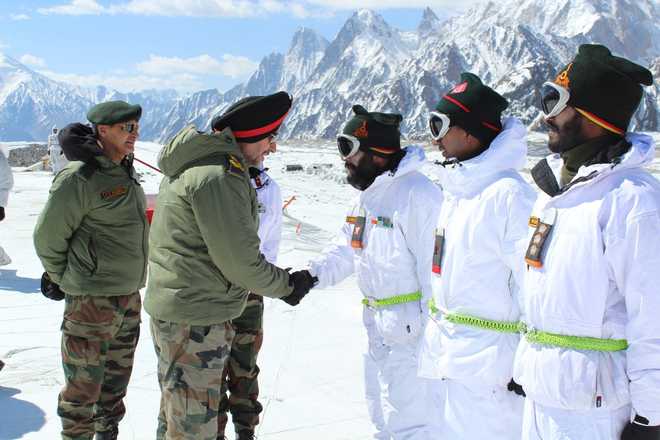
Lt Gen Ranbir Singh meets troops at Siachen Glacier on Tuesday. Tribune Photo

Tribune News Service

Srinagar, June 5

Army’s Northern Command chief Lt Gen Ranbir Singh on Tuesday visited Siachen Glacier, the highest battlefield in the world.The Army commander was briefed on the operational preparedness and the current situation, a Srinagar-based defence spokesman said.“The General Officer Commanding-in Chief interacted with troops at the Siachen base camp and complimented the tenacious resolve, unstinting commitment of the troops deployed in the extreme weather and inhospitable terrain,” he said.Lt Gen Ranbir Singh arrived in Srinagar on Monday and reviewed the overall security scenario in the Kashmir valley. The Army commander was briefed by Chinar Corps commander Lt Gen AK Bhatt at Badami Bagh Cantonment on the overall security situation and major operational, logistical and administrative aspects pertaining to the corps.


Four Army men among 26 injured in road mishap

Tribune News Service

Jammu, May 31

At least 26 persons, including four Army men, were injured when four vehicles collided near the vegetable market in the Narwal area of Jammu on Thursday.The police said the incident took place when an overspeeding truck hit an Army vehicle from behind, which, in turn, collided with two minibuses coming from the opposite side, leading to injuries to 22 persons.The Army vehicle suffered extensive damage in the collision while two minibuses turned turtle, causing injuries to several passengers travelling in the vehicles.“Four Army men who received injuries were shifted to Military Hospital, Satwari, while the passengers travelling in the minibuses were taken to Government Medical College and Hospital (GMCH), Jammu. Three persons have suffered critical injuries and are being treated at the GMCH,” a police official said.The official said the driver of the truck managed to escape from the spot while all four vehicles involved in the collision were seized.“A manhunt has been launched to arrest the driver of the truck,” he said.


SECURITY OF CANTONMENTS AND MILITARY STATIONS byPG Kamath (Veteran)

SECURITY OF CANTONMENTS AND MILITARY STATIONS
Dear RM,
Since the time, you have been elevated from a ‘Party Spokesperson’ to a cabinet rank minister, we were very happy with your phenomenal rise.  You surfed and rode over the ‘Mod Wave’ to your benefit.  Two years later you were made the RM, and you came in to the inner circle of the government.  You became the member of CCS and CCPA; the hallowed decision-making bodies of the Government of India.  However, since then something is amiss.  You were quiet junior in the party hierarchy and your elevation was not liked by your party colleagues.  Though, you had a high official recognition to your appointment, your own juniority in the party circles, and your inability to project the problems of your constituents has made you a mediocre RM, might be shade better than St Anthony; who is considered the second worst RM, the country ever had; next only to Krishan Menon.
You started off very well; with countless photo-opportunities on land, in air and at sea.  That has given you the confidence, but the sad part is that you have thought that you know everything and nothing more is there for you to learn! Such, an attitude inadvertently builds an ego, as there is no one to tell you the truth.  You start believing in your own infallibility.  Unless you have an intellect that sobers you down; you would have lost the plot.
In a series of your failing; the first was when you ganged up with Ms. Mufti to lodge an FIR against an Army officer, who was carrying out his legitimate duty in Kashmir.  The beauty is that you later became silent on it, making people believe that it was done by Ms. Mufti, in isolation.  Everyone knows that she rang you up before she filed a FIR.  Your own party member Mr. Subramanyam Swamy; believes it as such.   I will not labour on this issue further, as I have written about the incident before.
Next; you expressing satisfaction at the meager defence budget, that cannot pay even for the committed capital liabilities, let alone further modernisation; is indeed a cause for concern.  Obviously; you were not able to project your case to the Finance Minister; hence the meager allocation of 1.58 % of the defence budget.  It is not that we are not able to perceive your isolation and helplessness, in getting your point across to the other ministries; however, so be it.  I understand these issues take time, till the time you consolidate your position in the cabinet.
Next; your views on the appointment of ‘Chief of Defence Staff’:  At least, your predecessor tried his best and gave a number of statements in favour of the CDS.  You have been remarkable on it, by your stony silence!  Now that the PMO has appointed the Defence Planning Committee; whatever limited role you had in defence planning has further got marginalised.  The Committee is headed by NSA, who has the three service chiefs and your defence secretary as its members. Though the recommendations would be routed through you; you will have no powers even to change a line in it, as it would have already gone to the PMO.  The most you can do is put your initials and send it to the PMO.  Having failed to appoint a CDS; you have lost the powers of an RM? Now; you are limited to give administrative clearances to the functioning of three services and all the operational matters; the PMO would have arrogated the powers.
Next; you want to showcase to the PM that his decision to appoint you as the RM is the best decision that he had ever taken.  You have to prove to him that you are good; as a freshly appointed monitor of the class would like to impress her class teacher.   This attitude, I see in your unilateral opening of all the roads in Cantts indiscriminately; just because the MPs of Cantonment areas wanted it?  Do you know; what is the security of installations and military cantonments? On 9 Feb 18, the Sanjuwan terrorist strike takes place and the next day you released ₹1487 crores, after the MOD sleeping over the issue for two years; since the Pathankot Airfield strikes.
All cantonments are lungs of the cities in which they are located and now; you want to lose those lungs of the cities?  Next, a number of separated families live in cantonments, whose husbands are serving in the far-flung field and operational areas; all along the borders of the country.  You definitely want to make their lives insecure; so that the serving soldiers also need to worry for their families, living far away from them.  Third; soldiers living in peace areas do not come home every day for rest at their homes; as you probably believe!  They have sentry duties to guard armouries, ammunition magazines, unit treasure chests, perimeter patrolling and ensure the security of unit lines.  In addition, three to four months in a year, the soldiers go for subunit/unit and formation training outside their locations and to their respective operational areas on borders.  The entire cantonment is manned by only rear parties.  This is the time; the entire cantonments are highly vulnerable, as the families of the serving soldiers and those serving in field stations are located there.  It is so easy for any terrorist or antinational element to cause harm to military cantonments during these times.  You; definitely do not remember the Kalu Chak massacre of 2002?  Soldiers in peace stations are there not for rest and relief.  They train for war; night and day.  As also, when they are doing physical training and other routine activities they are highly vulnerable. They are also the soft targets as the anti-national elements would get resounding press should they cause any harm to any personnel or building located in a military station than causing harm to civilians outside.  It is for these reasons the Cantonments were established in the first place.   Hence, the security of the military establishments and cantonments has always been left to local commanders as they have the responsibility to safeguard their command.  This responsibility cannot be abdicated to anyone else, as they are legally, morally and constitutionally mandated to fulfill their sacred duty.  No; RM or anyone can take that away from them.  It tantamount to abnegating their responsibility towards their command.  Will RM or any bureaucrat would face the families of those, who get killed due to appeasement policy of the government?  The buck stops on the face of the local commander.
Then; who will tell the RM? It is sad that the Military top brass has not been able to brief the RM before she took this unilateral decision to propitiate MPs, who want to gain cheap popularity in their constituencies.  Any decision that is taken without consulting the stakeholders with vested interests in mind; the follies would haunt the decision makers; as their consequences would overwhelm whatever temporary gains that they have gained.  This is the divine law!
Yours sincerely
PG Kamath (Veteran)
(pgkamath11@yahoo.com)

Cessation Of Operations In Jammu And Kashmir: Stock Taking After Two Weeks by by Syed Ata Hasnain

An Indian Army soldier keeps a close watch on the Line of Control in Gurez, Kashmir. (Farooq Khan-Pool/GettyImages)

Snapshot
  • The cessation of operations with the freshly announced intent to implement the 2003 ceasefire can be a game changer in stabilisation of Jammu and Kashmir.

Almost two weeks have passed since the temporary cessation of operations, also referred by its older avatar Non-Initiation of Combat Operations (NICO), specifically brought in place for the period of Ramzan. NICO was spurned early by Lashkar-e-Taiba (LeT) and vaguely responded to by Hizbul Mujahideen and the Hurriyat, more in the negative. It is a measure aimed primarily at cooling down the security and social environment, allow the public to observe the rituals associated with Ramzan, create goodwill and hopefully bring a reduction (if not an end) in the unabated violence, which has afflicted Kashmir since the neutralisation of Burhan Wani on 8 Jully 2016.

As stated by the state Chief Minister Mehbooba Mufti, the next steps can be considered once there is success with NICO since the situation remains highly complex with multiple and diffused stakeholders. Pakistan’s none too strong commentary on NICO has also finally led to the decision to fully implement the unwritten and informal ceasefire of 2003. The approach of one step at a time is considered wise as committing too far with NICO can bounce back quite negatively. As it is public opinion in rest of India does not appear in favour of any holding back of the security forces (SF) because a perception persists that the momentum of success gained by the SF must not dilute.

The decision on NICO presumably presupposed that the security situation was well under control notwithstanding sporadic violence which took lives from time to time. It is the turbulence caused by frequent phases of stone throwing, which had caused more anguish as SF found the response to that a challenge far beyond the binaries of terrorist related situations. Specifically, the actions of flash mobs interfering in SF operations to allow terrorists to make their escape had brought about a serious challenge. However, to the credit of all the SF, despite the obvious discomfort of having to operate with interference by unarmed civilians their conduct was professional with employment of minimal force.

What was an even more disturbing trend which probably set government analysts to consider a change of tack and cool the operational environment was the switch in the threats. Through 28 years’ of terror in J&K, except for a brief period at the advent, the campaign had been driven by the strength of foreign terrorists, who successfully infiltrated through different Line of Control (LoC) routes. No longer is that the main threat because with quantum increase in local recruitment it is the Kashmiri youth who hold sway over the alienation factor, which is decidedly strong. While elimination of those who pick up the gun is also necessary, those operations must assist in the overall aim of finding peace and not exacerbate the situation. Serious analyses by government agencies reflect that attrition alone could not deliver as funerals of local terrorists became the cause celebre for driving motivation of youth, all hailing from the not too distant vicinity of the villages, where funerals are held.

Before looking at the effect of the LoC ceasefire decided on 29 May 2018, post the Director General Of Military Operations (DGMO) hotline interaction, it is important to review the situation through the first two weeks of the Ramzan NICO; at the half way mark. In the last 10 days, there has been an absence of violence in North Kashmir except for an unsuccessful but major infiltration bid through the Lipa Valley; NICO does not apply to the counter infiltration grid. One civilian was, however, killed by terrorists in Bandipura area. In South Kashmir, there have been two major incidents of attack on an army camp at Kakapura in Pulwama and an improvised explosive device (IED) blast on an army Mine Protected Vehicle (MPV) resulting in loss of a jawan and injuries to three more. Minor adjustment issues to the NICO have taken place in Shupiyan, where an army-organised iftaar ended up with some problems. All these are comparatively small in the context of the larger picture.

Most noticeably, there was a major bout of ceasefire violations (CFVs) across the Jammu International Border (IB) resulting in casualties and displacement of almost 95,000 people from their homes (NICO does not apply here either but the increase in ceasefire violations by Pakistan proved its lack of support for the Indian initiative). On the positive side, there has been a reduction in the number of stone-throwing incidents in Kashmir and tourism is picking up with airfares to Srinagar having substantially increased. Pakistan’s comments on NICO remained reasonably muted, indicating that there was either some dilemma about response or a positive step was in the offing. The marked increase in CFVs in the IB sector may have been an unnecessary and mischievous messaging about Pakistan capability, which under the circumstances is diluting as that country comes to terms with its adverse financial situation.

At no time was it expected that NICO will lead to a complete absence of violence. The army and other security forces are maintaining their vigil and domination having only ceased to execute cordon and search operations (CASO) and search and destroy operations (SADO). Ground reports do indicate a relatively calmer environment although the short period is insufficient to pass judgement on the failure of success of NICO.

Realistically, I am not hopeful for anything better; perhaps a worsening of the situation could occur if infiltration attempts are successful, although it takes a few weeks for freshly infiltrated elements to become effective. What appears heartening is that there are as yet no reports of fresh local recruitment making use of the relatively calm situation and absence of triggers, which evoke strong emotions; this really is the meaning of calming the environment. The real success of NICO will be evident if the conditions permit the extension into the period of the Amarnath Yatra. That will allow more public opinion to build in favour of NICO. It is something the authorities must work upon through effective communication and outreach to the people in and out of J&K.

The decision to implement the 2003 ceasefire in letter and spirit comes on the back of developments, which appeared to indicate a move towards the positive. It reinforces the decision for NICO and does indicate presence of strong back channel consultation. A couple of Track 2 dialogues have been active in examining the potential of a ceasefire for long, besides the national security advisers of both countries appear to have been in touch more than the reported number of times and for good measure.

Even as Pakistan comes under acute financial pressure and its political situation remains tenuous, the potential to pursue an overactive policy of attempting to calibrate the situation in J&K may not be feasible. Thus what India has is only a window at the moment. I would not recommend premature commitment to any process at the political level. In fact, the different voices which sometimes appear to emanate from leaders at high levels do contribute to obfuscation, which could be the right strategy for the moment until there is more on the plate.


Narrow the gender gap in global peacekeeping

India must help to bridge this lacunae and prevent crimes against women and girls in international conflicts

Ifeel much better prepared to be deployed as UN Peacekeeper to a peacekeeping mission, more accountable for preventing conflict-related sexual violence and responding to women’s socio-economic concerns in and post conflict,” said a graduate of a recently-concluded Female Military Officer’s Course, organised by UN Women and the Center for UN Peacekeeping, India. Recruitment, deployment and focused training of female officers is imperative to overcome existing barriers and for gender parity in UN peacekeeping. Women’s participation in UN peacekeeping is more likely to improve civilian protection, especially the prevention of sexual violence against women and girls. But UN Peacekeeping, whose mandate is civilian protection through military, police and civilian contingents from troop contributing countries, remains a male preserve. As of March 31, 2018, women constituted 5% of the 91,058-strong combined forces of military and police peacekeepers, making up 4% of the military and 11% of the police units.

UN PHOTOIn 2007, for the first time in UN history, the Indian first all­women UN peacekeeping police unit was deployed to Liberia, with subsequent deployments in 2008 and 2009

This is despite women’s demonstrated contribution to peacekeeping worldwide. In January 2007, for the first time in UN history, the Indian first all-women UN peacekeeping police unit was deployed to Liberia, with subsequent deployments in 2008 and 2009. They provided security at local events, engaged in riot control and patrols with local and UN police. They communicated with local women, nurturing trust between the police and local communities through community outreach. While this was hailed by the then UN secretary general Ban Ki Moon and Liberian president Ellen Johnson Sirleaf as precedent setting in peacekeeping missions, similar contributions of women peacekeepers from other countries have been recorded in West, East, North and South Africa, South America, and South and Central Asia.

From a rights standpoint, United Nations Security Council Resolution 2242 calls for doubling women’s participation in UN missions. While the landmark UN Security Council Resolution 1,325 emphasises integrating a gender perspective in all peace efforts, a global initiative was launched in 2009 to increase numbers of women police in UN peacekeeping. As one of the largest troop contributors, India can further lead in bridging the gender gap in UN Peacekeeping and preventing crimes against women and girls in international conflicts. A starter could be adopting a national gender sensitive force generation policy on UN peacekeeping, and examining barriers to recruitment and advancement of female officers, which perpetuate inequality in this sphere.

Jean D’Cunha is head, UN Women Myanmar. Ajita Vidyarthi is security and migration analyst at UN Women Multi Country Office in India. The views expressed are personal


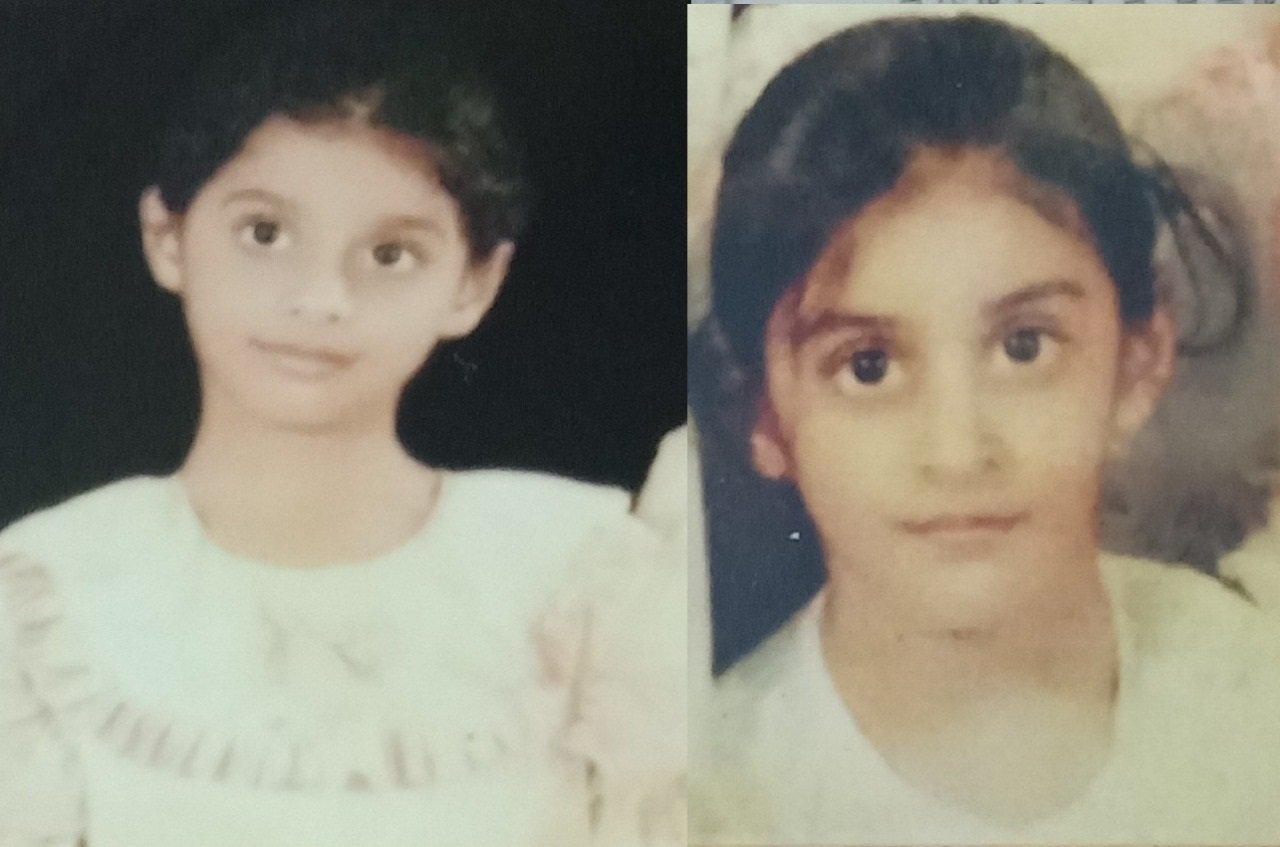
VETERANS PROVIDE FINANCIAL ASSISTANCE TO TWIN DAUGHTERS OF OFFICER UNDER HEAVY DEBT.:::

The financial assistance would be for a noble cause , they don’t have any source of income nor aware about their biological father since last 10 years.

(a) Don’t have enough money even to pay their rented accommodation hired for Rs 12000/- p.m with their mother and maternal Grandmother w/o Late Major Sarabjit SIngh An Arjuna awardee from EME Corps in 1962 and VSM recipient.

(b) Electricity Bill accumulated to  Rs 36000/- pending and paying in installments.

(c) Pending Rent Rs 48000/- .Landlord wants eviction.

(d) Passing time with One fan,NO use of AC to save electricity in this hot weather.

Veterans again requested to assist what ever little you can .

Please deposit directly by NEFT or by cash in their accounts as under. Details already uploaded in previous bulletins. Their father left them being Girls 10 years ago and now they are grown up helpless girls in need of Financial AssistanceUappeal1


Letter has been initiated to President,Prime Minister,Defence Minister,Allahabad Pension, Adjt Gen Br,COAS by Sanjha Morcha signed by the two daughters.

The details of father staying at Nioda need to be verified. Only Veterans of Nioda can confirm

IMG-20180512-WA0073


Cessation Of Anti-Terror Ops In Jammu And Kashmir Doesn’t Mean That Security Forces Go Back To Barracks by Syed Ata Hasnain

Chief Minister of Jammu and Kashmir Mehbooba Mufti (Left), Union Home Minister Rajnath Singh (Right)
Snapshot
  • What many are missing about the initiative is that it is not about ceding a military advantage, but about converting it into a strategic one.

In the midst of the Karnataka election drama at Bengaluru, there has come a very important and difficult decision by the central government; the temporary cessation of operations against terrorists in Jammu & Kashmir (J&K) for the period of Ramazan commencing 17 May 2018. It is at the instance of the state government of J&K after an all-party meeting endorsed Chief Minister Mehbooba Mufti’s initiative a week ago. Initial reports had indicated a refusal by the centre to the extent of the Defence Minister going on record to say that it was virtually unacceptable to the Army. The Army apparently was going by past records wherein the last time such cessation of operations took place in 2000-01 there was an increase in its casualty figures and the end result was the calling off of the cessation after inadequate response was received from terrorist ranks.

The government must have strong reasons to back the Chief Minister’s request and obviously this would have received the endorsement of the intelligence agencies, the interlocutor on J&K and probably the National Security Adviser’s office. However, the public perception on this has been negative for a couple of reasons which primarily emanate from the less informed circles. This perception needs correction.

First, none in the public and surprisingly very few from the Army itself seem to be aware of the nuances of the concept of cessation of operations. They seem to perceive a ceasefire like situation at the line of control(LoC) when the guns go silent from a given time. This essay will later dwell on the dynamics of cessation of operations.

Second, a perception prevails that the Army and other security forces had effectively bottled up the terrorists in Kashmir through offensive operations as part of Operation All Out. It was without doubt a very successful campaign that has led to the neutralisation of over 300 terrorists. As per perception, cessation of operations is going to upset the apple-cart and bring a halt to that momentum.

Is this a fair assessment? More is needed to be said on this. What is known is that the Army insisted that the concept would need to be on the lines that were adopted as part of the Non-Initiation of Combat Operations (NICO) of 2000-01. NICO was launched as a unilateral initiative during the tenure of Prime Minister Atal Bihari Vajpayee. Although it failed to extract anything substantial from the suspension of offensive operations, it gave the Army some experience in handling such a situation and provided immense clarity for the future.

It is that clarity with which the Army brass has approached the current initiative. The clarity essentially alludes to the fact that in a sub-conventional environment, cessation of operations does not mean a return to the barracks for the Army and other security forces. It is a far more sensitive time during which the Army gives peace-building a chance by ceasing to execute any offensive operations to target terrorists or over ground workers.

When the initiative was mooted by the all-party conference in J&K a week ago, it is unlikely that the members deliberated upon what exactly cessation of operations would involve. The Army clarified that in ample measure; that it would conduct just about everything except offensive operations such as cordon and search (CASO) and search and destroy (SADO) missions. That would mean that its counter-infiltration grid at the LoC would remain intact and active, all road securing operations will be conducted, various installations at Khundru and Khunmu, airfields and headquarters would be secured and the domination patrols would operate night and day, including night patrols and ambushes. That pretty much leaves very little. In effect, it translates into the meaning that, if for example there is information of unarmed terrorists in a location, the Army will not respond. The moment any presence of armed elements is reported there will be an immediate response.

Although the Lashkar-e-Taiba (LeT) has already negatively responded, in my perception the cessation of operations should anyway not include any foreign terrorists. The LeT’s ability to operate independently is any way suspect and in the course would probably suffer much more unlike 2000-01 when its numbers and operating infrastructure was much larger.

For those who perceive a let up in the stranglehold that the Army had established, it remains a fact that there will be some dilution in it. However, those in authority overseeing the larger strategy would in all probability look to make this up through matching psychological initiatives to project the national counter-narrative. The logic here is simple. Military operations may continue forever due to the terrorist capability to maintain their strength and enhance it through local recruitment. However, with military space reasonably well dominated, it is the social space which needs to be addressed. That cannot seriously be undertaken in the face of triggers for social unrest provided by everyday operations. Social unrest here alludes to the frequent stone-throwing, Friday prayer demonstrations, and flash mob interference in ongoing anti-terror operations.

To sum it up, the prevailing rationale for the centre to approve cessation of operations appears to be the following.

1. First, domination achieved through Operation All Out must go beyond military achievement and translate into strategic advantage.

2. Second, the military space is secured but the social space is in turbulence. This social space needs to be calmed and addressed for which daily triggers from military operations need to be avoided.

3. Third, military operations can continue interminably without peace in sight as the focus of ensuring numerical strength of terrorists has shifted from infiltration to local recruitment. More than the number neutralised is being locally recruited. This needs to be addressed through larger engagement with youth.

4. Fourth, for all the criticism of the centre’s ‘robust only’ policy, an opportunity has now been created to spell out counter-narratives to neutralise the dominant separatist narrative that Azadi is attainable.

5. Fifth, with Pakistan under severe pressure from the Financial Action Task Force (FATF) perhaps this could be an extendable window during which balancing our approach may fetch better response without commensurate negative Pakistani response.

6. Sixth, the timing appears symbolically most suitable in sync with Ramazan although the inclusion of Sri Amarnath Yatra period even at the outset should have been considered. Chief Minister Mehbooba Mufti has stated that it will be one step at a time and could extend to the period of the Amarnath Yatra if the response from the anti-national elements is positive.

The centre’s strategy has a reasonable rationale which cannot be completely faulted but success or failure like 2000-01 is contingent upon response. The anti-national elements may not wish to give the centre and state the advantage of a stable environment to work on psychological initiatives which have been characteristically missing. Yet, by adopting this strategy, the governments have definitely achieved a higher moral ground to work from. On the face of it, we still await the initial response from those who are lined up against the nation. All eyes would be on the visit of Prime Minister Narendra Modi to Kashmir on 19 May 2018 and how he exploits this opportunity which could be considered an extension of his doctrine – Na Goli Se, Na Gali Se, Kashmir Jeetenge Gale Lagaane Se.



Navy back in troubled Maldives INS Sumedha reaches Male for exclusive economic zone surveillance

Navy back in troubled Maldives

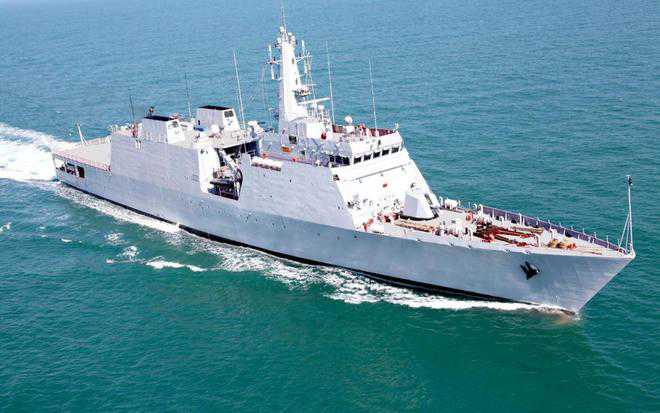
The vessel will undertake joint surveillance of the Maldives EEZ from May 9-17 as part of Navy’s ‘mission-based deployments’. File photo

Tribune News Service

New Delhi, May 11

The Indian Navy has deployed INS Sumedha, a Naval Offshore Patrol Vessel, for patrolling of the exclusive economic zone (EEZ) of the Maldives. The vessel will undertake joint surveillance of the Maldives EEZ from May 9 to May 17 as part of the Indian Navy’s ‘mission-based deployments’.The ship on Friday undertook an Operational Turnaround at Male port, during which the Navy personnel would interact and impart training to Maldives’ National Defence Forces (MNDF) personnel. INS Sumedha would embark MNDF personnel onboard and undertake joint EEZ surveillance of the Maldives from May 12 to 15 May.The joint EEZ surveillance of the Maldives is an endeavour of the Indian government and the Indian Navy to ensure the safety and security of the vast EEZ of the island nation.In February, the Maldives declined an invitation to join the MILAN series of multilateral exercises hosted by India in Andaman and Nicobar islands. Male declined it citing Emergency at home. MILAN is a congregation of littoral navies conducted biennially by the Indian Navy. It began in 1995.Two officers and eight sailors of the Navy’s Marine Commando cadre are currently conducting the second Asymmetric Warfare Training Exercise ‘Ekatha 2018’ at the Maldives.


Army needs a fine balance

As India buys new equipment, capital expenditure must rise

It is not surprising to find India among the world’s top five military spenders, given that the country has been grappling for some time with the urgent requirement of modernising its armed forces to cope with a challenging security environment. The Stockholm International Peace Research Institute (SIPRI) has placed India behind only the US, China, Saudi

Arabia and Russia in terms of defence spending. India’s military expenditure last year was about $63.9 billion, far less than the spending of the US ($610 billion) and China (an estimated $228 billion) but more than the spending by countries widely seen as global military powers, such as the UK ($47.2 billion) and France ($57.8 billion).

India faces a shortage of combat aircraft. It also needs new warships, aircraft carriers, submarines, artillery and a host of equipment for the army. However, military hardware is not bought off the shelf. It is built and supplied over several years, and payments too are made over an extended period. Therefore, as India inducts more new equipment, the outlay for capital expenditure should increase over the coming years. This will also require sustained growth of the GDP so that adequate funds can be set aside for big ticket defence deals. In fact, the defence budget to GDP ratio for 2018-19 is 1.49%, the second lowest since 1950, while most experts believe it should be around the 3% mark.

Reports on defence spending such as the one by SIPRI do not always present the complete picture. For instance, a chunk of India’s defence budget goes towards the salaries of around 1.4 million serving personnel and pensions for some two million veterans. In 2017 67% of the defence budget went towards these heads and only 33% was spent on new acquisitions of hardware. There is a need for a healthier ratio here, which can be achieved by increasing the outlay for capital expenditure. It may be imperative for the government to hike the allocation for capital expenditure if it wishes to go ahead with the speedy acquisition of new platforms such as Predator drones from the US. This is all the more necessary to keep the military prepared for all eventualities, especially challenges from China and Pakistan.